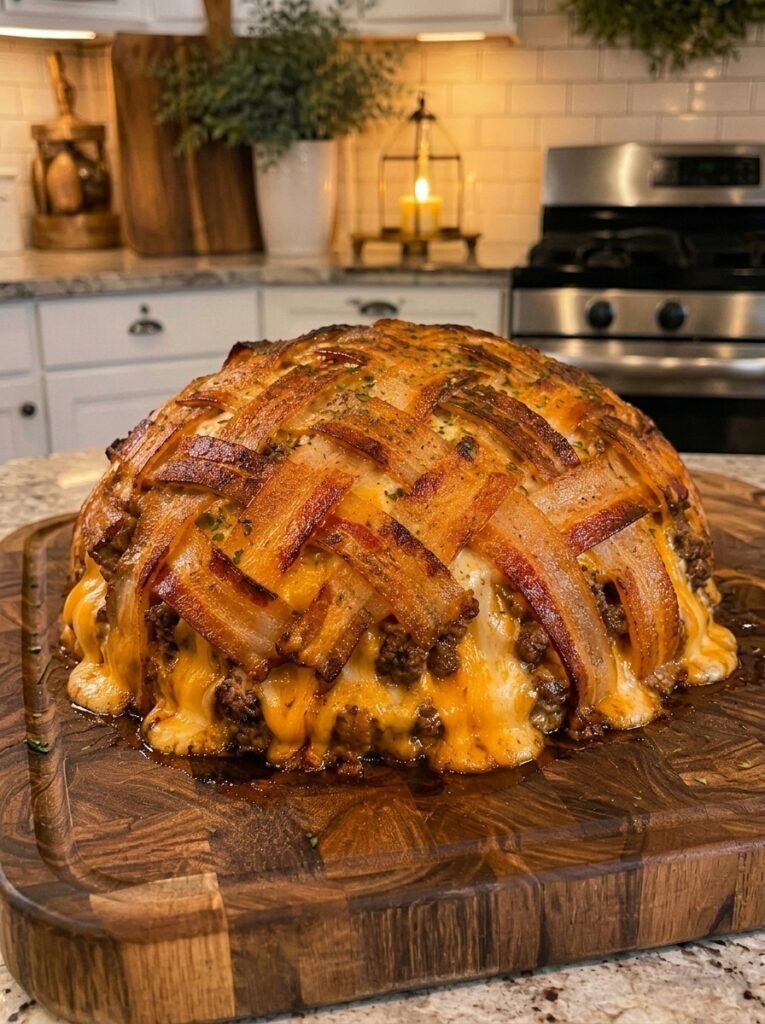
Bacon-Wrapped Beef Meatloaf: The Ultimate Comfort Food Recipe
There’s a reason meatloaf has stuck around on family dinner tables for generations — it’s warm, hearty, endlessly customizable, and it turns humble ground beef into something genuinely craveable. But if you really want to elevate classic meatloaf into something worthy of a Sunday supper centerpiece, you wrap it in bacon. This Bacon-Wrapped Beef Meatloaf takes everything you love about traditional meatloaf — the tender, well-seasoned interior, the tangy glaze — and adds a smoky, crispy bacon exterior that locks in moisture and adds a punch of flavor in every single bite.
In this article, you’ll find a complete step-by-step guide to making the best bacon-wrapped meatloaf of your life, along with ingredient breakdowns, pro tips, common mistakes to avoid, storage and reheating instructions, ideas for side dishes, and answers to the most frequently asked questions about making meatloaf. Whether you’re a first-time cook or a seasoned home chef looking for a new weeknight staple, this recipe is designed to be foolproof, flavorful, and family-approved.
Why You’ll Love This Bacon-Wrapped Meatloaf Recipe
Meatloaf sometimes gets a bad reputation for being dry, bland, or boring — but this recipe fixes all of that. Here’s why this version stands out from the rest:
- It’s incredibly juicy. The combination of milk-soaked breadcrumbs, eggs, and a moderate fat content in the ground beef keeps the loaf moist from edge to edge, while the bacon wrapping seals in even more moisture as it bakes.
- The bacon does double duty. Not only does it add smoky flavor and a satisfying textural contrast (crispy on the outside, tender within), it also bastes the meatloaf in rendered fat as it cooks, which keeps the interior succulent.
- The glaze is sweet, tangy, and slightly sharp. A mix of ketchup, brown sugar, Dijon mustard, and Worcestershire sauce creates a sticky, caramelized glaze that balances the richness of the beef and bacon.
- It’s a complete one-pan comfort meal. Pair it with mashed potatoes and roasted vegetables, and you’ve got a nostalgic, stick-to-your-ribs dinner that satisfies the whole family.
- It’s easy to prep ahead. You can assemble the loaf earlier in the day (or even the night before) and pop it in the oven when you’re ready to cook.
This recipe strikes the perfect balance between nostalgic comfort food and something special enough to serve to guests. It’s the kind of dish that disappears fast at the dinner table and gets requested again and again.
Ingredients You’ll Need
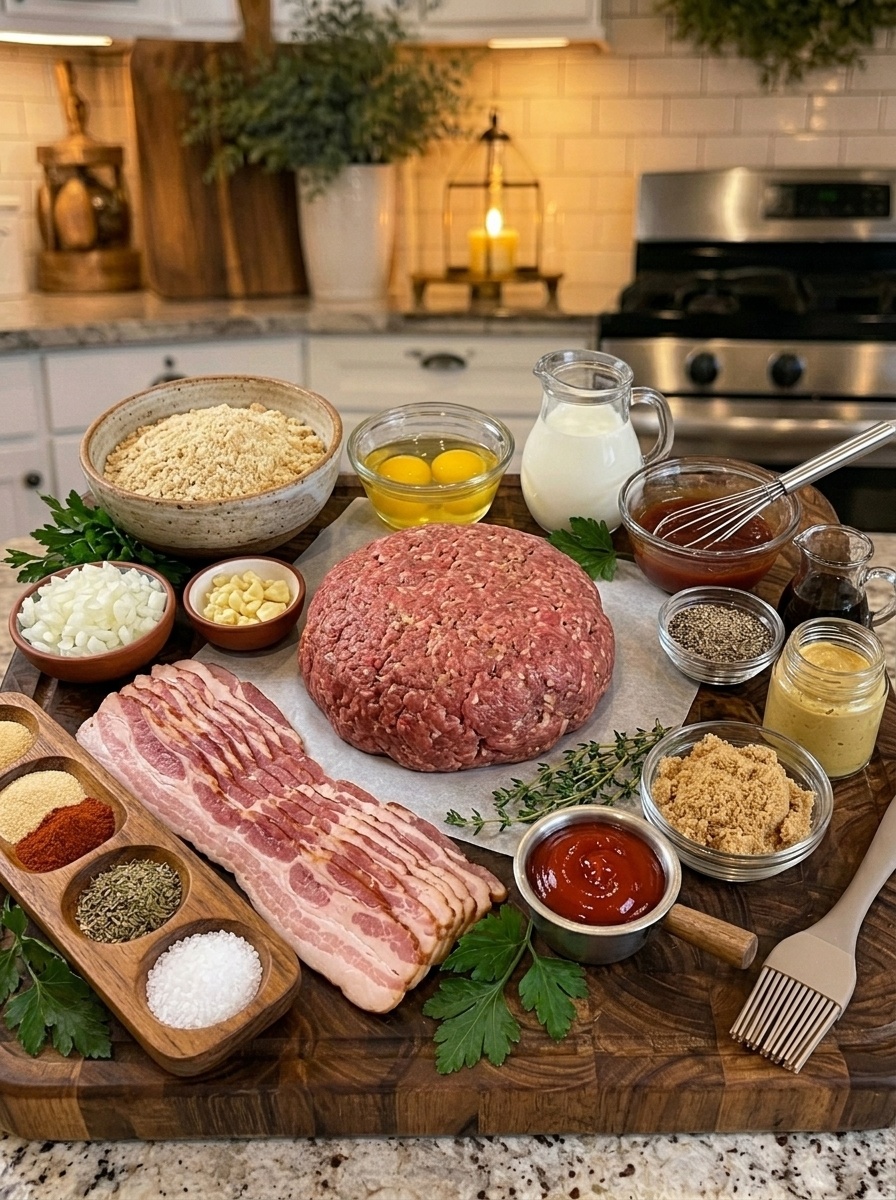
Here’s everything required to build this bacon-wrapped masterpiece. Most of these ingredients are pantry staples, which makes this a great “no special trip to the store” recipe.
For the Meatloaf
- 2 lbs ground beef – An 80/20 blend (80% lean, 20% fat) works best here. Enough fat keeps the loaf moist, but not so much that it becomes greasy.
- 1 cup breadcrumbs – These act as a binder and help absorb moisture, giving the meatloaf its tender, cohesive texture. Plain or Italian-seasoned breadcrumbs both work.
- 2 large eggs – Eggs bind the mixture together so it holds its shape while baking.
- ½ cup whole milk – Milk softens the breadcrumbs (creating what’s sometimes called a “panade”), which is the secret to an ultra-moist meatloaf.
- 1 small onion, finely diced – Adds sweetness, moisture, and aromatic depth.
- 3 cloves garlic, minced – For a punch of savory flavor throughout the loaf.
- 2 tbsp Worcestershire sauce – Brings umami and a subtle tang that deepens the overall flavor.
- ¼ cup ketchup – Adds sweetness and moisture directly into the meat mixture, plus a subtle tomato flavor.
- 1 tsp garlic powder – Reinforces the garlic flavor throughout every bite.
- 1 tsp onion powder – Same idea as garlic powder — it distributes onion flavor evenly.
- 1 tsp smoked paprika – Adds a subtle smokiness that complements the bacon beautifully.
- 1 tsp Italian seasoning – A blend of herbs like basil, oregano, and thyme that rounds out the flavor profile.
- Salt and black pepper, to taste – Essential for seasoning the meat properly; don’t skip this.
- 10–12 slices bacon – Regular-cut bacon works best for wrapping; it’s flexible enough to mold around the loaf while still crisping up nicely.
For the Glaze
- ½ cup ketchup – The tangy, tomato-forward base of the glaze.
- 2 tbsp brown sugar – Adds caramelized sweetness that balances the tang of the ketchup and mustard.
- 1 tbsp Dijon mustard – Provides a sharp, slightly spicy contrast that keeps the glaze from being overly sweet.
- 1 tbsp Worcestershire sauce – Ties the glaze flavor back into the meatloaf itself for a cohesive taste.
Step-by-Step Instructions
Step 1: Preheat the Oven and Prep Your Pan
Preheat your oven to 375°F (190°C). Line a baking sheet with parchment paper, or lightly grease a standard loaf pan. Using a baking sheet rather than a loaf pan allows the bacon to crisp up more evenly on all sides, since it isn’t trapped against the pan walls — but either method works well.
Step 2: Mix the Meatloaf Base
In a large mixing bowl, combine the ground beef, breadcrumbs, eggs, milk, diced onion, minced garlic, Worcestershire sauce, ketchup, garlic powder, onion powder, smoked paprika, Italian seasoning, salt, and black pepper. Use clean hands or a sturdy spatula to mix everything together gently.
The key word here is gently. Overmixing ground beef activates the proteins and compresses the fat, which results in a dense, tough, rubbery meatloaf instead of a tender one. Mix just until the ingredients are evenly distributed — you shouldn’t need more than a minute or two.
Step 3: Shape the Loaf
Turn the mixture out onto your prepared baking sheet and shape it into a loaf — roughly 9 inches long, 5 inches wide, and 2 to 3 inches tall works well. Try to keep the shape even so it cooks uniformly; a lumpy, uneven loaf will have some sections that overcook while others are still underdone.
Step 4: Wrap It in Bacon
This is where the magic happens. Lay the bacon slices over the top of the meatloaf, slightly overlapping each strip so there are no gaps. Work your way down the length of the loaf, tucking the ends of each bacon slice underneath so they stay secured during baking. If you like a fully “wrapped” presentation, you can also bring the bacon down and slightly under the sides of the loaf.
Step 5: Make the Glaze
In a small bowl, whisk together the ketchup, brown sugar, Dijon mustard, and Worcestershire sauce until smooth and fully combined. This glaze is what gives the finished meatloaf its glossy, caramelized top layer.
Step 6: First Glaze Application
Brush half of the glaze evenly over the bacon-wrapped meatloaf. This initial layer will begin to caramelize during the first bake, creating a flavorful base coat.
Step 7: Bake
Place the meatloaf in the preheated oven and bake for 45 minutes.
Step 8: Second Glaze Application
Remove the meatloaf from the oven and brush on the remaining glaze, making sure to coat the bacon evenly. This second layer builds up the sticky, caramelized crust that makes bacon-wrapped meatloaf so irresistible.
Step 9: Finish Baking
Return the meatloaf to the oven and bake for another 15–20 minutes, or until the bacon is crispy and beautifully browned, and the internal temperature of the meatloaf reaches 160°F (71°C) when checked with an instant-read meat thermometer inserted into the center.
Step 10: Rest Before Slicing
This step is non-negotiable: let the meatloaf rest for 10–15 minutes before cutting into it. Resting allows the juices to redistribute throughout the loaf. Skip this step, and you’ll end up with a puddle of juices on your cutting board instead of inside your meatloaf.
Step 11: Serve
Slice into thick, hearty portions and serve warm. This meatloaf pairs beautifully with creamy mashed potatoes, roasted vegetables, or a fresh garden salad for a well-rounded, comforting meal.
Pro Tips for the Best Bacon-Wrapped Meatloaf
Use an instant-read thermometer. Guessing doneness by color or texture alone can lead to an overcooked, dry meatloaf or an unsafe undercooked one. A thermometer takes the guesswork out completely — pull the loaf when it hits 160°F (71°C) in the thickest part.
Don’t skip the milk-soaked breadcrumbs. This panade technique is the single biggest factor in achieving a moist meatloaf. The breadcrumbs absorb the milk and distribute it evenly through the meat as it cooks.
Choose the right ground beef. 80/20 ground beef offers the best balance of flavor and moisture. Leaner beef (90/10 or higher) can result in a drier finished product, while very fatty blends can make the loaf greasy and cause it to fall apart more easily.
Use regular-cut bacon, not thick-cut. Thick-cut bacon takes longer to crisp and can leave the meatloaf’s exterior soggy or undercooked by the time it’s done. Standard-cut bacon crisps up in the same timeframe as the meatloaf cooks through.
Let the bacon get properly crispy. If your bacon isn’t as crisp as you’d like by the end of the bake time, run the meatloaf under the broiler for 1–2 minutes at the very end, watching closely to prevent burning.
Freeform loaf vs. loaf pan. Shaping the meatloaf freeform on a baking sheet rather than baking it in an enclosed loaf pan allows more of the bacon’s surface area to crisp up, and it also lets excess fat drain away rather than pooling around the base of the loaf.
Rest before slicing — always. As mentioned above, this step keeps your meatloaf juicy instead of watery.
Common Mistakes to Avoid
Even a simple recipe like meatloaf has a few common pitfalls. Here’s what to watch out for:
- Overmixing the meat. This compacts the proteins and results in a dense, tough texture rather than a tender, crumbly one.
- Skipping the resting period. Cutting into the loaf too soon releases all the juices onto the cutting board instead of keeping them locked inside.
- Not using a thermometer. Visual cues aren’t reliable enough for ground meat dishes — always confirm doneness with a thermometer.
- Using bacon that’s too thick. As noted above, thick-cut bacon won’t crisp in time and can leave a chewy, undercooked layer on your loaf.
- Applying all the glaze at once, too early. Splitting the glaze into two applications (as this recipe does) prevents the sugars from burning during the long bake time while still building a rich, caramelized crust.
Ingredient Substitutions and Variations
One of the best things about meatloaf is how adaptable it is. Here are some easy variations to try:
- Swap the ground beef. Ground turkey, ground pork, or a beef-and-pork blend all work well in this recipe, though leaner meats may need slightly less bake time.
- Gluten-free version. Substitute gluten-free breadcrumbs or crushed gluten-free crackers for the regular breadcrumbs.
- Cheese-stuffed meatloaf. Add a layer of shredded cheddar or mozzarella down the center of the loaf before shaping for a gooey, melty surprise in the middle.
- Spicy kick. Add a diced jalapeño or a teaspoon of cayenne pepper to the meat mixture, or mix a dash of hot sauce into the glaze.
- Barbecue-style glaze. Swap the glaze recipe for your favorite barbecue sauce for a smokier, tangier finish.
- Vegetable add-ins. Finely grated carrot, zucchini, or bell pepper can be mixed into the meat mixture for added nutrition and moisture — just be sure to squeeze out excess liquid first.
What to Serve with Bacon-Wrapped Meatloaf
This meatloaf is hearty and rich, so it pairs best with sides that either complement its comfort-food nature or add some lightness to balance the meal. Here are some ideas:
- Creamy mashed potatoes – The classic pairing. The smooth, buttery texture is perfect for soaking up any extra glaze.
- Roasted vegetables – Try roasted carrots, Brussels sprouts, or green beans for an easy, hands-off side dish that bakes alongside the meatloaf.
- Fresh garden salad – A crisp, acidic salad with a vinaigrette dressing helps cut through the richness of the bacon and beef.
- Buttered egg noodles – A simple, comforting starch that pairs beautifully with the savory glaze.
- Garlic bread – For those who want an extra indulgent, carb-heavy meal.
- Steamed broccoli or asparagus – A lighter, healthier vegetable side that balances out the richness of the dish.
How to Store and Reheat Leftovers
Refrigerating: Store any leftover meatloaf in an airtight container in the refrigerator for up to 4 days.
Freezing: Bacon-wrapped meatloaf freezes very well. Wrap individual slices tightly in plastic wrap, then place them in a freezer-safe bag or container. It will keep for up to 3 months. Thaw overnight in the refrigerator before reheating.
Reheating in the oven: For the best texture (and to keep the bacon from getting soggy), reheat slices in a 325°F (163°C) oven, covered loosely with foil, for about 15–20 minutes, or until warmed through.
Reheating in the microwave: For a quicker option, microwave individual slices on medium power in 30-second intervals until heated through. Note that this method may soften the bacon slightly.
Reheating in an air fryer: An air fryer set to 350°F (175°C) for about 5–7 minutes is a great way to reheat leftover slices while keeping the bacon crisp.
Frequently Asked Questions
Can I make this meatloaf ahead of time? Yes. You can assemble the entire loaf — including the bacon wrap — up to 24 hours in advance. Cover it tightly and store it in the refrigerator, then add the glaze and bake when you’re ready to serve.
Why did my meatloaf fall apart when I sliced it? This usually happens when the loaf wasn’t rested long enough before slicing, or when there wasn’t enough binder (breadcrumbs and eggs) relative to the amount of meat. Make sure to follow the ingredient ratios closely and let the loaf rest for a full 10–15 minutes.
Can I use a loaf pan instead of a baking sheet? Yes, a loaf pan works fine, though the bacon on the sides won’t crisp up quite as much since it’s pressed against the pan walls. If you use a loaf pan, consider broiling the top for a minute or two at the end to crisp the bacon further.
What’s the best way to check if the meatloaf is done? Use an instant-read meat thermometer inserted into the thickest part of the loaf. It should read 160°F (71°C) for safely cooked ground beef.
Can I make this recipe with ground turkey or chicken instead of beef? Absolutely. Ground turkey or chicken can be substituted in equal amounts, though the cooking time may need slight adjustment since poultry cooks a bit faster and can dry out more easily — keep a close eye on internal temperature (poultry should reach 165°F/74°C).
Do I need to pre-cook the bacon before wrapping the meatloaf? No, raw bacon slices are wrapped directly around the loaf. The extended bake time is enough to cook the bacon fully and crisp it up.
Why is my glaze burning before the meatloaf is done? This can happen if the oven runs hot or if too much glaze is applied too early. Following the two-stage glazing method in this recipe — applying half before baking and the rest partway through — helps prevent this issue.
Can I double this recipe for a larger crowd? Yes, though it’s best to make two separate loaves rather than one giant one, since a single oversized loaf will cook unevenly. Two medium loaves will cook more consistently and allow the bacon to crisp properly.
Final Thoughts
Bacon-Wrapped Beef Meatloaf takes a beloved classic and turns it into something truly memorable. The juicy, well-seasoned beef, the smoky crisped bacon, and that sweet-tangy glaze come together to create a dish that feels both nostalgic and indulgent at the same time. It’s simple enough for a weeknight dinner yet impressive enough to serve when you have guests over. Once you try this version, it might just become your new go-to meatloaf recipe for good.
Whether you’re cooking for a busy weeknight or a cozy Sunday family dinner, this bacon-wrapped meatloaf delivers comfort, flavor, and a little bit of showmanship — all in one pan. Give it a try, and don’t be surprised if it becomes a permanent fixture in your dinner rotation.
Print
Bacon-Wrapped Beef Meatloaf
Ingredients
Here’s everything required to build this bacon-wrapped masterpiece. Most of these ingredients are pantry staples, which makes this a great “no special trip to the store” recipe.
For the Meatloaf
- 2 lbs ground beef – An 80/20 blend (80% lean, 20% fat) works best here. Enough fat keeps the loaf moist, but not so much that it becomes greasy.
- 1 cup breadcrumbs – These act as a binder and help absorb moisture, giving the meatloaf its tender, cohesive texture. Plain or Italian-seasoned breadcrumbs both work.
- 2 large eggs – Eggs bind the mixture together so it holds its shape while baking.
- ½ cup whole milk – Milk softens the breadcrumbs (creating what’s sometimes called a “panade”), which is the secret to an ultra-moist meatloaf.
- 1 small onion, finely diced – Adds sweetness, moisture, and aromatic depth.
- 3 cloves garlic, minced – For a punch of savory flavor throughout the loaf.
- 2 tbsp Worcestershire sauce – Brings umami and a subtle tang that deepens the overall flavor.
- ¼ cup ketchup – Adds sweetness and moisture directly into the meat mixture, plus a subtle tomato flavor.
- 1 tsp garlic powder – Reinforces the garlic flavor throughout every bite.
- 1 tsp onion powder – Same idea as garlic powder — it distributes onion flavor evenly.
- 1 tsp smoked paprika – Adds a subtle smokiness that complements the bacon beautifully.
- 1 tsp Italian seasoning – A blend of herbs like basil, oregano, and thyme that rounds out the flavor profile.
- Salt and black pepper, to taste – Essential for seasoning the meat properly; don’t skip this.
- 10–12 slices bacon – Regular-cut bacon works best for wrapping; it’s flexible enough to mold around the loaf while still crisping up nicely.
For the Glaze
- ½ cup ketchup – The tangy, tomato-forward base of the glaze.
- 2 tbsp brown sugar – Adds caramelized sweetness that balances the tang of the ketchup and mustard.
- 1 tbsp Dijon mustard – Provides a sharp, slightly spicy contrast that keeps the glaze from being overly sweet.
- 1 tbsp Worcestershire sauce – Ties the glaze flavor back into the meatloaf itself for a cohesive taste.
Instructions
Preheat your oven to 375°F (190°C). Line a baking sheet with parchment paper, or lightly grease a standard loaf pan. Using a baking sheet rather than a loaf pan allows the bacon to crisp up more evenly on all sides, since it isn’t trapped against the pan walls — but either method works well.
In a large mixing bowl, combine the ground beef, breadcrumbs, eggs, milk, diced onion, minced garlic, Worcestershire sauce, ketchup, garlic powder, onion powder, smoked paprika, Italian seasoning, salt, and black pepper. Use clean hands or a sturdy spatula to mix everything together gently.
The key word here is gently. Overmixing ground beef activates the proteins and compresses the fat, which results in a dense, tough, rubbery meatloaf instead of a tender one. Mix just until the ingredients are evenly distributed — you shouldn’t need more than a minute or two.
Turn the mixture out onto your prepared baking sheet and shape it into a loaf — roughly 9 inches long, 5 inches wide, and 2 to 3 inches tall works well. Try to keep the shape even so it cooks uniformly; a lumpy, uneven loaf will have some sections that overcook while others are still underdone.
This is where the magic happens. Lay the bacon slices over the top of the meatloaf, slightly overlapping each strip so there are no gaps. Work your way down the length of the loaf, tucking the ends of each bacon slice underneath so they stay secured during baking. If you like a fully “wrapped” presentation, you can also bring the bacon down and slightly under the sides of the loaf.
In a small bowl, whisk together the ketchup, brown sugar, Dijon mustard, and Worcestershire sauce until smooth and fully combined. This glaze is what gives the finished meatloaf its glossy, caramelized top layer.
Brush half of the glaze evenly over the bacon-wrapped meatloaf. This initial layer will begin to caramelize during the first bake, creating a flavorful base coat.
Place the meatloaf in the preheated oven and bake for 45 minutes.
Remove the meatloaf from the oven and brush on the remaining glaze, making sure to coat the bacon evenly. This second layer builds up the sticky, caramelized crust that makes bacon-wrapped meatloaf so irresistible.
Return the meatloaf to the oven and bake for another 15–20 minutes, or until the bacon is crispy and beautifully browned, and the internal temperature of the meatloaf reaches 160°F (71°C) when checked with an instant-read meat thermometer inserted into the center.
This step is non-negotiable: let the meatloaf rest for 10–15 minutes before cutting into it. Resting allows the juices to redistribute throughout the loaf. Skip this step, and you’ll end up with a puddle of juices on your cutting board instead of inside your meatloaf.
Slice into thick, hearty portions and serve warm. This meatloaf pairs beautifully with creamy mashed potatoes, roasted vegetables, or a fresh garden salad for a well-rounded, comforting meal.