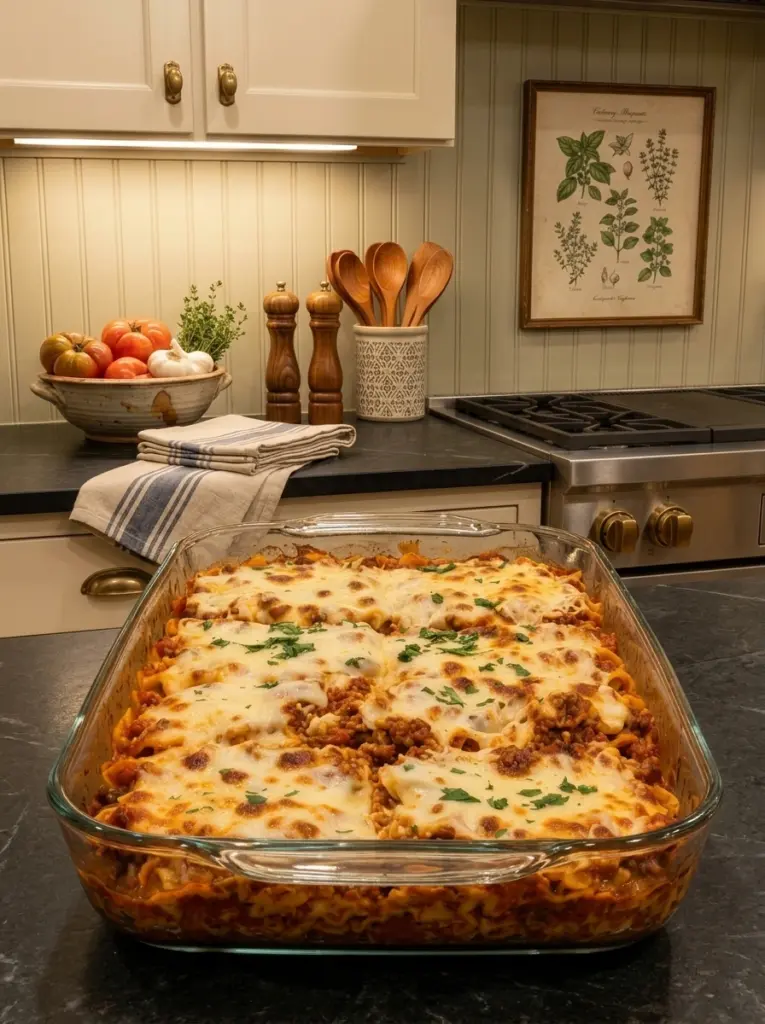
Classic Cheesy Meat Lasagna with Beef and Italian Sausage
There’s a reason lasagna remains one of the most requested comfort foods at family gatherings, potlucks, and Sunday dinners alike. Classic Cheesy Meat Lasagna layers tender pasta sheets with a hearty beef and Italian sausage sauce, a creamy egg-bound ricotta filling, and generous amounts of melted mozzarella and Parmesan. The combination of two meats gives this version an extra layer of savory, herby depth that a single-protein lasagna can’t quite match, while the classic three-layer structure delivers that satisfying, sliceable presentation everyone loves.
What sets this lasagna apart is the pairing of ground beef with Italian sausage in the meat sauce. The sausage brings built-in seasoning and a slightly spicier, more herbaceous quality, while the beef adds richness and body. Combined with a simmered marinara base, a rich ricotta and egg filling, and a generous topping of two cheeses, this lasagna achieves real depth of flavor in every bite, all while remaining approachable enough for a weeknight when you plan ahead, or a special centerpiece for a weekend gathering.
In this article, we’ll walk through a complete ingredient breakdown, detailed step-by-step instructions for building and assembling the lasagna, expert tips for avoiding common pitfalls like watery layers or bland sauce, creative variation ideas, make-ahead and freezing instructions, and answers to the most frequently asked questions about making the perfect lasagna at home.
Why This Recipe Works So Well
Lasagna has earned its place as a beloved comfort food classic for generations, and this beef and sausage version brings a few smart touches that make it stand out:
The dual-meat sauce adds extra depth. Combining ground beef with Italian sausage means you get the rich, hearty quality of beef alongside the built-in herb and spice blend that sausage naturally carries, resulting in a more complex-tasting sauce without much extra effort.
The egg-bound ricotta filling holds together beautifully. Adding an egg to the ricotta helps it set properly during baking, preventing the filling from becoming loose or watery — a common issue with simpler ricotta fillings.
It uses a generous, double-cheese finish. Between the ricotta filling and the mozzarella and Parmesan layered throughout and on top, this lasagna achieves that perfect balance of creamy, gooey, and salty-nutty flavor in every bite.
It’s a fantastic make-ahead and freezer-friendly meal. Lasagna is one of those rare dishes that often tastes even better the next day, once the layers have had time to set and the flavors have melded together further.
It feeds a crowd. With 12 lasagna noodles and layers of hearty meat sauce and cheese, this recipe is perfectly sized for family dinners, potlucks, or meal prepping for the week ahead.
Ingredients You’ll Need
Here’s everything required to make this dish, organized by component.
- 12 lasagna noodles — forms the structural layers of the dish
- 1 lb (450g) ground beef — the hearty, savory base of the meat sauce
- ½ lb (225g) Italian sausage — adds built-in seasoning and a slightly spicier, herbier depth of flavor; removed from its casing if using links
- 1 small onion, diced — forms the aromatic foundation of the sauce
- 3 cloves garlic, minced — adds essential savory depth
- 3 cups marinara sauce — provides the rich, saucy base that binds the meat sauce together
- 1½ cups ricotta cheese — creates the creamy, rich filling layer
- 1 egg — helps bind and set the ricotta filling during baking
- 2½ cups shredded mozzarella — creates that classic gooey, stretchy cheese pull throughout the layers and on top
- ½ cup grated Parmesan — adds salty, nutty depth to both the filling and the finished top layer
- 1 tsp Italian seasoning — a blend of herbs essential to the sauce’s flavor profile
- ½ tsp garlic powder — reinforces the savory, garlicky flavor throughout the dish
- Salt & black pepper — essential for properly seasoning the dish throughout
- Fresh parsley or basil — adds a pop of color and freshness, both stirred into the ricotta filling and used as a garnish
Step-by-Step Instructions
Step 1: Cook the Noodles
Bring a large pot of well-salted water to a boil and cook the lasagna noodles according to the package instructions until al dente. Drain and lay them flat on a lightly oiled baking sheet or parchment paper to prevent sticking while you prepare the rest of the dish.
Step 2: Sauté the Aromatics
Heat a large skillet or pot over medium heat. Add the diced onion and sauté for 3 to 4 minutes, stirring occasionally, until softened and translucent. Add the minced garlic and cook for another 30 to 60 seconds, until fragrant.
Step 3: Brown the Meat
Add the ground beef and Italian sausage (removed from casing, if applicable) to the pot with the onion and garlic. Break the meat apart with a wooden spoon or spatula as it cooks. Season with a pinch of the salt and pepper at this stage to help the meat absorb flavor as it browns. Cook for 8 to 10 minutes, stirring occasionally, until fully browned with no pink remaining.
If there’s excess grease in the pot, drain most of it off, leaving just a thin coating to help build flavor in the next step.
Step 4: Build the Sauce
Pour the marinara sauce into the pot with the browned meat, stirring well to combine. Add the Italian seasoning and garlic powder, stirring thoroughly to distribute the seasoning evenly throughout the sauce.
Bring the sauce to a gentle simmer, then reduce the heat to low. Partially cover the pot and let it simmer for at least 15 to 20 minutes, stirring occasionally, allowing the flavors to meld and the sauce to thicken slightly. Taste and adjust the seasoning as needed.
Step 5: Make the Ricotta Filling
While the sauce simmers, prepare the ricotta filling. In a medium mixing bowl, combine the ricotta cheese, egg, ¼ cup of the grated Parmesan (reserving the rest for topping), and 2 tablespoons of chopped fresh parsley or basil. Stir until fully combined and smooth. Set aside.
Step 6: Preheat the Oven
Preheat your oven to 375°F (190°C). Lightly grease a 9×13-inch baking dish with olive oil or nonstick spray to prevent sticking.
Step 7: Assemble the Lasagna
Building the layers in the right order is key to a lasagna that holds together beautifully when sliced. Here’s the layering method:
Layer 1 (bottom): Spread a thin layer of the meat sauce across the bottom of the baking dish — just enough to lightly coat it. This prevents the noodles from sticking to the pan.
Layer 2: Place 3 to 4 lasagna noodles over the sauce, slightly overlapping if needed to cover the surface evenly.
Layer 3: Spread roughly one-third of the ricotta filling evenly over the noodles, using the back of a spoon to spread it gently without tearing the pasta.
Layer 4: Spoon roughly one-third of the remaining meat sauce over the ricotta layer, spreading it evenly.
Layer 5: Sprinkle about ¾ cup of shredded mozzarella evenly over the sauce.
Repeat this layering process — noodles, ricotta, meat sauce, mozzarella — two more times, until you’ve used all the noodles, ricotta, and meat sauce. For the final top layer, finish with a generous layer of meat sauce followed by the remaining shredded mozzarella and the remaining grated Parmesan, ensuring even coverage across the top for that perfect golden, bubbly finish.
Step 8: Bake the Lasagna
Cover the baking dish tightly with aluminum foil, making sure it doesn’t touch the cheese (tenting it slightly if needed to prevent sticking). Bake for 25 minutes covered, which allows the layers to heat through evenly without over-browning the cheese too early.
Remove the foil and continue baking uncovered for another 20 to 25 minutes, until the cheese on top is melted, golden, and bubbling at the edges.
Step 9: Rest Before Slicing
This step is crucial: let the lasagna rest for at least 15 to 20 minutes after removing it from the oven before slicing. This resting period allows the layers to set, making it much easier to cut clean, structured slices rather than having everything slide apart on the plate.
Garnish with a bit of extra fresh parsley or basil before serving.
Expert Tips for the Best Results
Combine two meats for extra depth. The pairing of ground beef and Italian sausage in this recipe is one of the easiest ways to add complexity to your meat sauce without extra ingredients, since sausage typically comes pre-seasoned with its own herb and spice blend.
Let the sauce simmer before assembling. Even a quick 15 to 20 minute simmer helps concentrate the flavors and thicken the sauce, resulting in a more flavorful, less watery final dish.
Add an egg to your ricotta filling. This is one of the most important tricks for preventing watery, runny ricotta layers. The egg helps the filling set properly as it bakes, giving you clean, structured layers.
Always let the lasagna rest before cutting. Cutting into a lasagna straight out of the oven, no matter how tempting, will almost always result in a messy, sliding pile rather than clean slices. Patience here pays off significantly.
Use freshly shredded mozzarella and grated Parmesan when possible. Pre-shredded cheeses are coated in anti-caking agents that can affect melting texture. Freshly grated and shredded cheese will give you a smoother, creamier finish.
Don’t overfill each layer. It can be tempting to pile on more sauce or cheese in each layer, but overfilling can make the lasagna difficult to slice and cause it to fall apart. Spread ingredients in thin, even layers for the best structural integrity.
Cover with foil for the first part of baking. This prevents the cheese from over-browning or drying out before the inside of the lasagna is fully heated through.
Delicious Variations to Try
While this classic version is a timeless favorite, here are some popular ways to switch things up:
Spicy Version: Use hot Italian sausage in place of mild, or add ½ teaspoon of red pepper flakes to the sauce for a bolder, spicier kick throughout.
Vegetable-Loaded Lasagna: Add a layer of sautéed spinach, zucchini, or mushrooms between the ricotta and meat sauce layers for added nutrition and texture.
Extra Herb-Forward Version: Increase the fresh parsley or basil in the ricotta filling, or add a layer of fresh basil leaves between the noodle layers for a brighter, more herbaceous finish.
Three-Cheese Boost: Add a layer of shredded provolone alongside the mozzarella for an even richer, more complex cheese pull.
Individual Lasagna Portions: Assemble the layers in individual ramekins or a muffin tin lined with parchment for perfectly portioned, single-serving lasagnas — great for meal prepping or portion control.
Lighter Version: Substitute lean ground turkey for the beef and use a milder turkey or chicken sausage in place of Italian sausage, along with part-skim ricotta and mozzarella, to lighten the dish while keeping the core flavors intact.
What to Serve With Classic Cheesy Meat Lasagna
Lasagna is hearty and rich enough to be the centerpiece of the meal, but a few well-chosen sides can round out the table beautifully:
- A crisp Caesar or arugula salad with a bright, acidic dressing helps balance the richness of the cheese and meat sauce
- Garlic bread or a crusty Italian loaf for scooping up any extra sauce left on the plate
- Roasted or steamed vegetables, such as green beans, broccoli, or asparagus, add color and freshness to the meal
- A glass of medium-to-full-bodied red wine, like Chianti, Sangiovese, or Cabernet Sauvignon, pairs beautifully with the rich tomato, beef, and sausage flavors
Make-Ahead, Storage, and Freezing Instructions
Making ahead: This lasagna can be fully assembled up to 24 hours in advance. Cover tightly with foil or plastic wrap and refrigerate unbaked. When ready to bake, add about 10 to 15 extra minutes to the covered baking time, since it will be starting from cold.
Refrigerating leftovers: Store baked, cooled lasagna in an airtight container or tightly wrapped in the refrigerator for up to 5 days.
Freezing before baking: Assemble the lasagna in a freezer-safe dish, wrap tightly with plastic wrap and then foil, and freeze for up to 3 months. Thaw overnight in the refrigerator before baking as directed, adding extra time as needed since it will still be quite cold.
Freezing after baking: Baked lasagna can also be frozen, either whole or in individual portions. Wrap tightly and freeze for up to 3 months. Thaw overnight in the refrigerator before reheating.
Reheating in the oven: Cover with foil and reheat at 350°F (175°C) for 20 to 30 minutes, or until heated through, removing the foil for the last 5 minutes to re-crisp the top.
Reheating in the microwave: Place a single portion on a microwave-safe plate and heat in 1-minute intervals, checking frequently, until warmed through.
Frequently Asked Questions
Why combine ground beef and Italian sausage instead of using just one? The combination adds more complexity to the sauce than either meat alone. Sausage typically comes pre-seasoned with fennel, garlic, and other herbs, contributing built-in flavor, while beef adds richness and a heartier texture.
Can I use no-boil (oven-ready) lasagna noodles? Yes. If substituting oven-ready noodles, you may want to ensure your sauce layers are a bit more generous, as these noodles absorb moisture from the surrounding sauce while baking to soften properly.
Why is my lasagna watery? Watery lasagna is often caused by using ricotta without an egg to help it set, not simmering the meat sauce long enough to reduce excess liquid, or not letting the finished lasagna rest before slicing. This recipe addresses all three of those common issues.
Can I make this lasagna without ricotta? Yes, though the texture and flavor will change. Cottage cheese is a common substitute — simply blend it briefly for a smoother texture if desired, or use it as-is for a slightly different consistency.
How do I keep my lasagna layers from sliding apart? The key is letting the lasagna rest for at least 15 to 20 minutes after baking before slicing. This resting period allows the layers to set and firm up, making for much cleaner slices.
Can I make this recipe gluten-free? Yes, simply substitute your favorite gluten-free lasagna noodles. The rest of the ingredients in this recipe are naturally gluten-free, though it’s worth double-checking your specific sausage brand for any hidden additives.
How many servings does this recipe make? This recipe, made in a standard 9×13-inch baking dish with three layers, typically yields 8 to 12 servings, depending on portion size.
Final Thoughts
Classic Cheesy Meat Lasagna brings together everything that makes lasagna such a beloved comfort food: tender pasta, a rich and herby beef and sausage sauce, creamy ricotta, and generous amounts of melted mozzarella and Parmesan, all coming together into one of the most satisfying meals in the Italian-American culinary tradition. The combination of two meats in the sauce gives this version an extra layer of depth that makes it stand out from a more basic lasagna recipe.
Whether you’re making this for a special family dinner, a holiday gathering, or simply because nothing else will satisfy a lasagna craving quite like the real thing, this recipe is one worth saving. Bookmark it, print it, or share it with someone who deserves a truly great homemade lasagna — because once you make this from scratch, it’s hard to go back to anything less.