Creamy Garlic Butter Salmon & Shrimp: An Elegant, Restaurant-Style Seafood Dinner
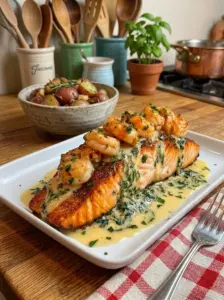
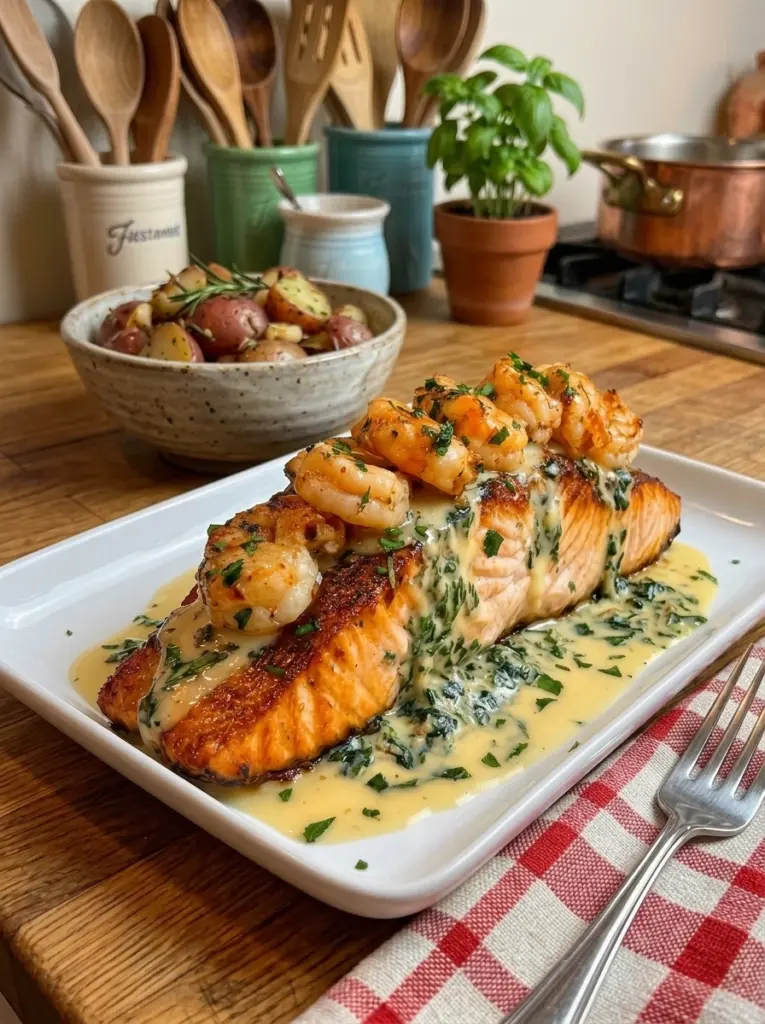
Few dishes feel as luxurious yet remain as achievable at home as a beautifully seared piece of salmon paired with plump, garlicky shrimp, all bathed in a rich, herb-flecked cream sauce. Creamy Garlic Butter Salmon & Shrimp brings together two of the most beloved proteins in seafood cooking, seasoned with a smoky spice rub and finished in a velvety garlic Parmesan sauce studded with fresh spinach and parsley. It’s the kind of dish that looks and tastes like something from a special-occasion dinner menu, yet comes together in about 30 minutes using one skillet.
What makes this dish so appealing is the way it balances indulgence with freshness. The salmon and shrimp are seasoned with a smoky, savory spice rub and seared until beautifully golden, while the sauce itself is built from garlic, broth, cream, and Parmesan, then finished with fresh spinach and parsley for color, brightness, and a boost of nutrition. The result is a dish that feels rich and celebratory without being heavy or one-dimensional — perfect for date nights, special occasions, or simply treating yourself to something a little more elevated on a weeknight.
In this article, we’ll walk through everything you need to make this dish a success: a complete ingredient breakdown, detailed step-by-step instructions, expert tips for perfectly cooked salmon and shrimp and a silky sauce, creative variation ideas, storage and reheating instructions, and answers to the most frequently asked questions about this recipe.
Why This Recipe Works So Well
Creamy garlic butter seafood dishes have become a favorite for good reason, and this salmon and shrimp combination brings together several elements that make it especially memorable:
Two proteins create a more dynamic, satisfying dish. Salmon offers a rich, buttery texture, while shrimp adds a slightly firmer bite and quick-cooking convenience — together they create a more interesting plate than either protein alone.
The spice rub adds real depth before the sauce even begins. Seasoning the seafood with smoked paprika, garlic powder, salt, and pepper before searing ensures every bite has built-in flavor, rather than relying on the sauce to do all the work.
The sauce balances richness with freshness. Fresh spinach and parsley stirred into the cream sauce add color, brightness, and nutrition, keeping the dish from feeling overly heavy despite its creamy base.
It’s genuinely quick for how elegant it feels. From searing the seafood to finishing the sauce, this dish comes together in about 30 minutes, making it achievable for a weeknight while still feeling special enough for guests.
It’s a naturally lower-carb, protein-forward meal. With salmon, shrimp, and a rich cream sauce as the stars, this dish works beautifully on its own or paired with a simple side, without needing pasta or heavy starches to feel complete.
Ingredients You’ll Need
This recipe comes together in two components: the seasoned seafood and the creamy herb sauce. Here’s exactly what you’ll need for each.
For the Seafood
- 1 large salmon fillet (skin-on or off, depending on preference) — the richer of the two proteins, salmon sears beautifully and pairs wonderfully with the creamy sauce
- 6–8 medium shrimp, peeled and deveined — quick-cooking and tender, shrimp add a satisfying textural contrast to the salmon
- 1 tbsp olive oil — used to help sear the seafood
- 1 tbsp butter — adds richness to the sear and helps build flavor in the pan
- 1 tsp smoked paprika, salt, black pepper, and garlic powder (for the spice rub) — this blend seasons both the salmon and shrimp, giving them a smoky, savory crust once seared
For the Creamy Herb Sauce
- 2 tbsp butter — the base for sautéing the garlic and starting the sauce
- 3 cloves garlic, minced — the aromatic core of the sauce’s flavor
- ½ cup chicken or vegetable broth — deglazes the pan and adds savory depth to the sauce
- 1 cup heavy cream (or half-and-half for a lighter option) — creates the rich, velvety texture the sauce is known for
- ½ cup grated Parmesan cheese — adds salty, nutty depth and helps naturally thicken the sauce
- 1 cup fresh spinach, finely chopped — adds fresh color, texture, and nutrition, wilting down into the sauce
- 2 tbsp fresh parsley, finely chopped (plus extra for garnish) — brightens the finished sauce with fresh, herbaceous flavor
- Salt and pepper to taste — for final seasoning adjustments
Step-by-Step Instructions
Step 1: Season the Seafood
Pat the salmon fillet and shrimp dry with paper towels — this small step helps them sear properly rather than steaming. In a small bowl, combine the smoked paprika, salt, black pepper, and garlic powder. Season the salmon fillet generously on all sides with this spice blend, and toss the shrimp in the remaining seasoning until evenly coated.
Step 2: Sear the Salmon
Heat the olive oil and 1 tablespoon of butter in a large skillet over medium-high heat. Once hot, add the salmon fillet, skin-side down if using skin-on salmon. Sear for 4 to 5 minutes on the first side, until golden and crisp, then carefully flip and cook for another 3 to 4 minutes, until cooked through to your desired doneness (an internal temperature of about 125–130°F/52–54°C for medium, keeping in mind it will continue cooking slightly as it rests).
Remove the salmon from the skillet and transfer it to a plate, tenting loosely with foil to keep warm.
Step 3: Sear the Shrimp
In the same skillet, add the seasoned shrimp in a single layer. Sear for 1½ to 2 minutes per side, until pink, opaque, and just cooked through — shrimp cook very quickly, so keep a close eye on them to avoid overcooking, which can make them tough. Remove the shrimp from the skillet and set aside with the salmon.
Step 4: Build the Garlic Base
In the same skillet, reduce the heat to medium and add the 2 tablespoons of butter for the sauce. Once melted, add the minced garlic and sauté for about 60 seconds, stirring constantly, until fragrant and lightly golden. Be careful not to let it burn, as this can turn the flavor bitter.
Step 5: Deglaze and Add the Cream
Pour in the chicken or vegetable broth, stirring and scraping up any browned bits stuck to the bottom of the skillet — these bits are packed with flavor from searing the salmon and shrimp. Let the broth simmer for 1 to 2 minutes to reduce slightly.
Reduce the heat to medium-low and pour in the heavy cream (or half-and-half), stirring well to combine. Let the mixture come to a gentle simmer, being careful not to let it boil too vigorously, as this can cause the dairy to separate.
Step 6: Melt in the Parmesan
Reduce the heat to low. Add the grated Parmesan cheese gradually, a bit at a time, stirring continuously until fully melted and incorporated into the sauce. This gradual approach helps prevent clumping and ensures a smooth, silky texture.
Step 7: Add the Spinach and Parsley
Add the chopped fresh spinach to the skillet, stirring gently until it wilts down into the sauce, which should only take 1 to 2 minutes. Stir in the fresh chopped parsley. Taste and adjust the seasoning with additional salt and pepper as needed.
Step 8: Combine and Serve
Return the seared salmon and shrimp to the skillet, nestling them into the creamy herb sauce, or spoon the sauce generously over the top if serving them plated separately. Let everything warm together for 1 to 2 minutes over low heat.
Serve immediately, garnished with extra fresh parsley and, if desired, an additional sprinkle of Parmesan.
Expert Tips for the Best Results
Pat the seafood dry before searing. Excess surface moisture is the biggest obstacle to achieving a deep, golden crust on both the salmon and shrimp. A few extra seconds with a paper towel makes a noticeable difference.
Don’t overcook the shrimp. Shrimp cook very quickly and can turn rubbery if left in the pan too long. Watch for them to turn pink and opaque, and remove them promptly.
Sear the salmon skin-side down first, if using skin-on. This helps render the skin crispy and makes it easier to flip without the fillet sticking or falling apart.
Use a meat thermometer for the salmon if you’re unsure of doneness. Salmon is a fairly forgiving protein, but an internal temperature of around 125–130°F (52–54°C) for medium ensures it stays moist and tender rather than overcooked and dry.
Add the spinach at the very end. Fresh spinach wilts down very quickly, so stirring it in during the final minute or two of cooking prevents it from becoming overly soft or losing its vibrant color.
Keep the heat moderate once the cream and cheese go in. High heat can cause a dairy-based sauce to break or turn oily. Medium-low to low heat allows the sauce to come together smoothly.
Use freshly grated Parmesan when possible. Pre-shredded cheese is coated with anti-caking agents that can prevent smooth melting. Freshly grated Parmesan will give you the smoothest, creamiest sauce.
Delicious Variations to Try
This recipe is a wonderful base for experimentation. Here are some popular ways to switch things up:
Sun-Dried Tomato Addition: Stir in a handful of chopped sun-dried tomatoes along with the spinach for a burst of tangy, concentrated flavor.
Lemon Garlic Twist: Add the zest of one lemon to the sauce and finish with a squeeze of fresh lemon juice just before serving for a bright, tangy contrast to the rich cream.
Spicy Version: Add ¼ to ½ teaspoon of red pepper flakes to the sauce for a subtle, warming kick that plays nicely against the richness of the cream.
Pasta Addition: Serve this dish over a bed of cooked fettuccine or linguine, tossing the pasta directly in the sauce, to turn it into a heartier, more filling meal.
Mushroom Addition: Sauté sliced mushrooms in the skillet after searing the seafood, before building the garlic base, for an earthy, umami-rich addition to the sauce.
Lighter Version: Use half-and-half in place of heavy cream (as suggested in the ingredient list) and reduce the butter slightly to lighten the dish while keeping the core garlic herb flavor intact.
What to Serve With Creamy Garlic Butter Salmon & Shrimp
This dish is rich and elegant enough to be the centerpiece of a special dinner, but a few well-chosen sides can round out the table beautifully:
- Rice or creamy mashed potatoes are perfect for soaking up the rich garlic Parmesan sauce
- Pasta, such as fettuccine or linguine, tossed directly in the sauce turns this into a hearty, complete pasta dinner
- Roasted or steamed vegetables, such as asparagus, green beans, or broccoli, add color, fiber, and freshness
- Crusty bread for scooping up every last bit of sauce left on the plate
- A chilled glass of white wine, like Sauvignon Blanc or a light Chardonnay, pairs beautifully with the seafood and creamy garlic sauce
Storage and Reheating Instructions
Refrigerating: Store leftovers in an airtight container in the refrigerator for up to 2 days. Since this dish contains seafood, it’s best enjoyed within a couple of days for optimal freshness and texture.
Freezing: Freezing is not recommended for this dish, as both the delicate texture of the salmon and shrimp and the cream-based sauce can suffer significantly upon thawing.
Reheating on the stovetop: Warm leftovers gently in a skillet over low heat, adding a small splash of broth or cream if needed to loosen the sauce. Reheat just until warmed through, being careful not to overcook the seafood further, as it can quickly become tough.
Reheating in the microwave: Place a portion in a microwave-safe bowl, cover loosely, and heat in short 20 to 30-second intervals, checking frequently, until just warmed through.
Frequently Asked Questions
Can I use a different type of fish instead of salmon? Yes. Cod, halibut, or another firm, mild white fish can be substituted for salmon in this recipe, though cooking times may vary slightly depending on the thickness of the fillet.
Can I use frozen shrimp? Yes, just be sure to thaw the shrimp fully and pat them very dry before seasoning and searing, as excess moisture can prevent them from developing a good sear.
Why did my cream sauce turn grainy or oily? This typically happens when the heat is too high while melting the cheese. Keep the heat low and use freshly grated Parmesan for the smoothest results.
Can I use frozen spinach instead of fresh? Yes, though you’ll want to thaw it first and squeeze out as much excess liquid as possible before adding it to the sauce, since frozen spinach releases significantly more water than fresh spinach.
How do I know when the salmon is fully cooked? Salmon is best enjoyed at an internal temperature of about 125–130°F (52–54°C) for medium, checked with a meat thermometer inserted into the thickest part of the fillet. It should flake easily with a fork once fully cooked.
Can I make this recipe dairy-free? The cream and Parmesan are fairly central to this dish’s sauce, so a dairy-free version would require experimenting with plant-based cream and cheese alternatives, and results may vary in terms of richness and how well the sauce comes together.
How many servings does this recipe make? This recipe as written typically serves 2, given the single salmon fillet and 6 to 8 shrimp. It can easily be doubled for a larger group by using two salmon fillets and additional shrimp.
Final Thoughts
Creamy Garlic Butter Salmon & Shrimp delivers an elegant, restaurant-quality seafood dinner using straightforward technique and a relatively short ingredient list. The combination of smoky, seared salmon and shrimp with a rich, herb-flecked garlic Parmesan sauce creates a dish that feels genuinely special, yet comes together in about 30 minutes in a single skillet.
Whether you’re planning a romantic dinner at home, celebrating a special occasion, or simply want to treat yourself to something a bit more elevated on a weeknight, this recipe delivers every time. Save it, bookmark it, or print it out — because once this creamy, garlicky salmon and shrimp dish hits your table, it’s guaranteed to become a favorite for special meals.