Creamy Garlic Parmesan Chicken Pasta with Broccoli and Sun-Dried Tomatoes
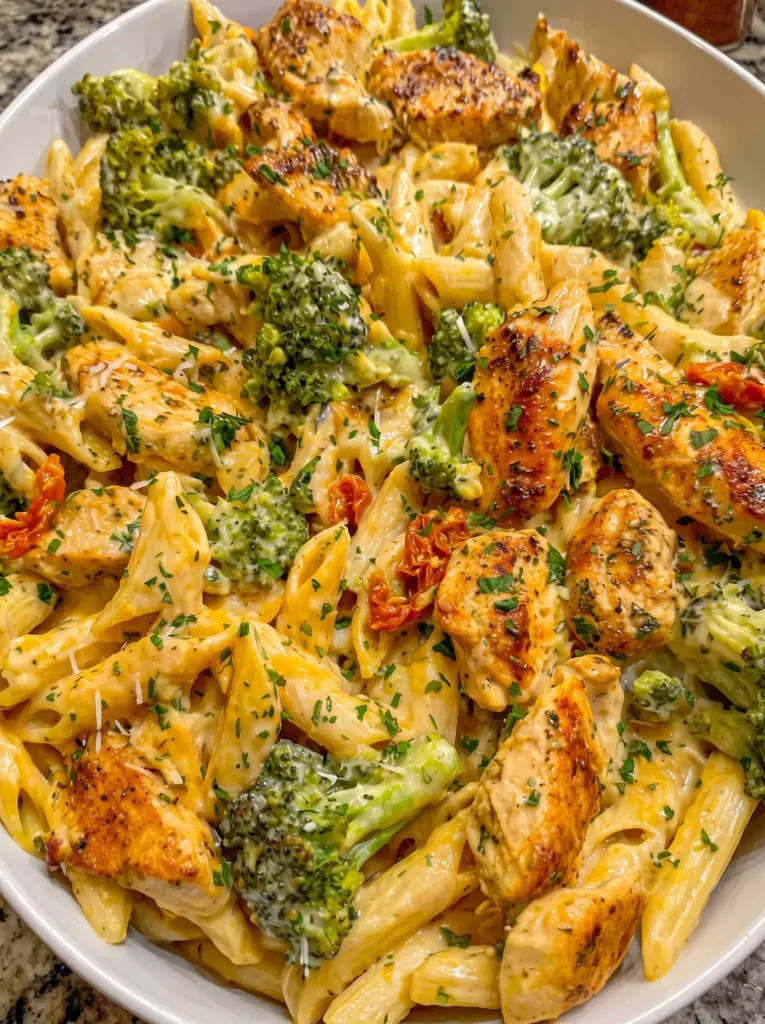
Some dinners taste like they took all evening to make, when in reality they came together in a single skillet in less time than it takes to watch an episode of your favorite show. This Creamy Garlic Parmesan Chicken Pasta with Broccoli and Sun-Dried Tomatoes is one of those recipes. Juicy chunks of seared chicken, tender-crisp broccoli, and tangy sun-dried tomatoes are tossed with penne pasta in an unbelievably silky garlic Parmesan sauce built from heavy cream, chicken broth, cream cheese, mozzarella, and Parmesan. It’s rich, comforting, and layered with just enough brightness to keep every forkful interesting.
What sets this dish apart from a basic creamy pasta is the sheer depth of the sauce. Instead of simply melting cheese into cream, this recipe builds the base in stages — first with a savory chicken broth reduction, then cream cheese for tang and body, and finally two more cheeses melted in gradually for maximum smoothness. The result is a sauce with real structure and flavor complexity, not just richness for richness’s sake. Add in the natural sweetness of blanched broccoli and the concentrated, tangy punch of sun-dried tomatoes, and you’ve got a well-balanced dinner that doesn’t feel one-note despite how indulgent it is.
Below, you’ll find the full ingredient list, a detailed walkthrough of the cooking process, troubleshooting tips for common sauce mishaps, ways to customize the recipe, storage advice, and answers to frequently asked questions — everything you need to make this dish a weeknight regular.
What Makes This Dish So Craveable
A sauce built in layers, not dumped together. Reducing the broth first, then whisking in cream cheese, and finally melting in mozzarella and Parmesan gradually gives this sauce a smoothness and depth that a one-step cream-and-cheese sauce can’t match.
Real textural contrast in every bite. Between the tender pasta, juicy chicken, crisp-tender broccoli, and slightly chewy sun-dried tomatoes, this dish avoids the monotony that can plague heavy cream sauces.
Big flavor without a long ingredient list. Garlic, Italian seasoning, and quality cheese do most of the heavy lifting here — there’s no need for a dozen specialty ingredients to achieve restaurant-level flavor.
A near-complete meal in one bowl. Protein, vegetables, and carbohydrates are all accounted for, so this dish rarely needs more than a light side to round out dinner.
Approachable for weeknights, impressive enough for guests. The technique is straightforward, but the finished result looks and tastes like something from a neighborhood Italian spot.
What You’ll Need
- 12 oz penne pasta — its ridges and hollow center are built to trap a creamy sauce
- 3 cups broccoli florets — adds color, crunch, and freshness against the rich sauce
- 2 tablespoons unsalted butter — for searing the chicken and building the garlic base
- 1½ lbs boneless, skinless chicken breasts, cut into bite-sized pieces — smaller pieces sear quickly and evenly
- 1 teaspoon Italian seasoning — seasons the chicken with classic herby flavor
- ½ teaspoon black pepper — adds gentle warmth
- 5 garlic cloves, minced — the backbone of the dish’s flavor
- 2 cups heavy cream — the rich foundation of the sauce
- ½ cup chicken broth — adds savory depth and helps control the sauce’s thickness
- 4 oz cream cheese, softened — lends tang and an extra-velvety texture
- 1½ cups shredded mozzarella cheese — for that gooey, stretchy pull
- 1 cup freshly grated Parmesan cheese — salty, nutty, and helps thicken the sauce naturally
- ½ cup chopped sun-dried tomatoes — adds tangy, concentrated bursts of flavor throughout
How to Make It
Get the Pasta and Broccoli Going
Boil a large, well-salted pot of water and cook the penne until al dente, following the package timing. About two to three minutes before the pasta is done, drop the broccoli florets directly into the same pot. This lets the broccoli soften just enough while staying bright and slightly crisp, and it means one less pot to wash. Drain both together and set aside.
Sear the Chicken
Pat the chicken pieces dry — this matters more than it seems, since a dry surface is what allows real browning to happen instead of steaming. Season with the Italian seasoning, black pepper, and a pinch of salt.
Melt the butter in a large, deep skillet over medium-high heat. Working in batches if your pan is on the smaller side, sear the chicken for 5 to 7 minutes, until golden outside and cooked through to 165°F (74°C) internally. Toss in the minced garlic during the last minute so it softens and perfumes the pan without scorching. Transfer the chicken to a plate.
Build the Sauce, Step by Step
Deglaze the same skillet with the chicken broth over medium heat, scraping up the flavorful browned bits stuck to the pan. Let it reduce for a minute or two, then stir in the heavy cream and bring it to a gentle simmer — nothing near a hard boil, which risks breaking the dairy.
Add the softened cream cheese in small pieces, stirring or whisking until fully melted and smooth. This is much easier if the cream cheese has had 20 to 30 minutes at room temperature beforehand.
Lower the heat and add the mozzarella in handfuls, stirring until each addition disappears before adding more. Repeat the same process with the Parmesan. This patient, gradual approach is what keeps the sauce silky instead of clumpy.
Bring It All Together
Slide the chicken back into the skillet along with any accumulated juices. Add the drained pasta and broccoli, tossing gently until everything is coated in sauce. Fold in the chopped sun-dried tomatoes so they’re distributed throughout rather than clumped in one spot. Let it all simmer together on low for a couple of minutes so the flavors settle in, then taste and adjust the seasoning as needed.
Serve right away, while the sauce is at its silkiest — a little extra Parmesan and cracked pepper on top never hurts.
Troubleshooting and Technique Tips
- Cream cheese won’t melt smoothly? It’s almost always a temperature issue — make sure it’s fully softened before it goes into the pan.
- Sauce turned grainy? The heat was likely too high while the cheese was melting, or pre-shredded cheese (with anti-caking starches) was used instead of freshly grated.
- Broccoli went mushy? It probably sat in the boiling water too long — two to three minutes at the very end of the pasta’s cook time is plenty.
- Sauce too thick or too thin? Thin it with a splash of reserved pasta water or broth; thicken it by letting it simmer a minute or two longer, keeping in mind it will continue to thicken as it cools.
- Chicken came out rubbery instead of juicy? Overcrowding the pan is the usual culprit — sear in batches so each piece actually browns instead of steaming.
Ways to Switch It Up
Turn up the heat: a pinch of red pepper flakes stirred into the sauce adds a gentle warmth that plays well against the richness.
Add smoky bacon: crisped, crumbled bacon folded in at the end brings a salty crunch that contrasts nicely with the creamy sauce.
Swap in mushrooms: sautéed sliced mushrooms, cooked in the skillet right after the chicken comes out, add an earthy note.
Try it with spinach: baby spinach can stand in for some or all of the broccoli, wilting in during the final toss.
Make it seafood-forward: shrimp works beautifully in place of chicken — just reduce the sear time to 2 to 3 minutes per side.
Lighten it up: half-and-half in place of heavy cream, and half the amount of cream cheese, trims some richness without losing the core flavor.
Serving Suggestions
- A simple arugula or mixed green salad with a sharp vinaigrette cuts through the richness nicely
- Crusty bread or garlic knots are perfect for the last bit of sauce on the plate
- A crisp white wine like Pinot Grigio or an unoaked Chardonnay complements the garlic and cream beautifully
- A light citrus-based side salad offers a refreshing contrast if you want something extra bright on the table
Storing and Reheating Leftovers
This dish keeps well in an airtight container in the fridge for up to four days. The sauce will firm up as it chills — that’s expected. Freezing is possible for up to two months, though cream sauces can shift slightly in texture after thawing, so plan to thaw overnight in the fridge before reheating.
To reheat, a low, slow warm-up on the stovetop with a splash of milk or cream stirred in regularly will bring the sauce back to life far better than the microwave. If microwaving is your only option, add a splash of liquid, cover loosely, and heat in short 30-second bursts, stirring in between.
Frequently Asked Questions
Can I swap the penne for another pasta shape? Absolutely — rotini, farfalle, and rigatoni all work well here. Just aim for a shape with some texture or hollow space to catch the sauce.
Is frozen broccoli okay to use? Yes, just thaw and drain it well first, or stir it directly into the finished sauce for the last few minutes to warm through rather than boiling it with the pasta.
Can chicken thighs replace the chicken breast? Yes, and they’ll likely stay even juicier. The cook time is roughly the same.
Is there a substitute for sun-dried tomatoes? Drained, chopped roasted red peppers make a decent stand-in, offering similar color and a touch of sweetness, though the tang will be milder.
Can this be made gluten-free? Yes — use a gluten-free penne and confirm your chicken broth doesn’t contain hidden gluten additives.
Does this reheat well for meal prep? It does reasonably well, though like most cream sauces it’s best within the first few days and benefits from a splash of extra liquid when reheating.
The Bottom Line
Creamy Garlic Parmesan Chicken Pasta with Broccoli and Sun-Dried Tomatoes hits that rare sweet spot between comforting and genuinely flavorful. The layered sauce technique — broth, then cream cheese, then two more cheeses melted in gradually — is what elevates this from a basic weeknight cream sauce into something that tastes considerably more special than the effort it takes to make. Between the juicy chicken, bright broccoli, and tangy sun-dried tomatoes, there’s a lot happening in each bite, and none of it competes.
This is the kind of recipe worth keeping on repeat: quick enough for a Tuesday, good enough for company, and flexible enough to make your own over time.