Crusty Homemade Mini Italian Baguettes 🥖🇮🇹
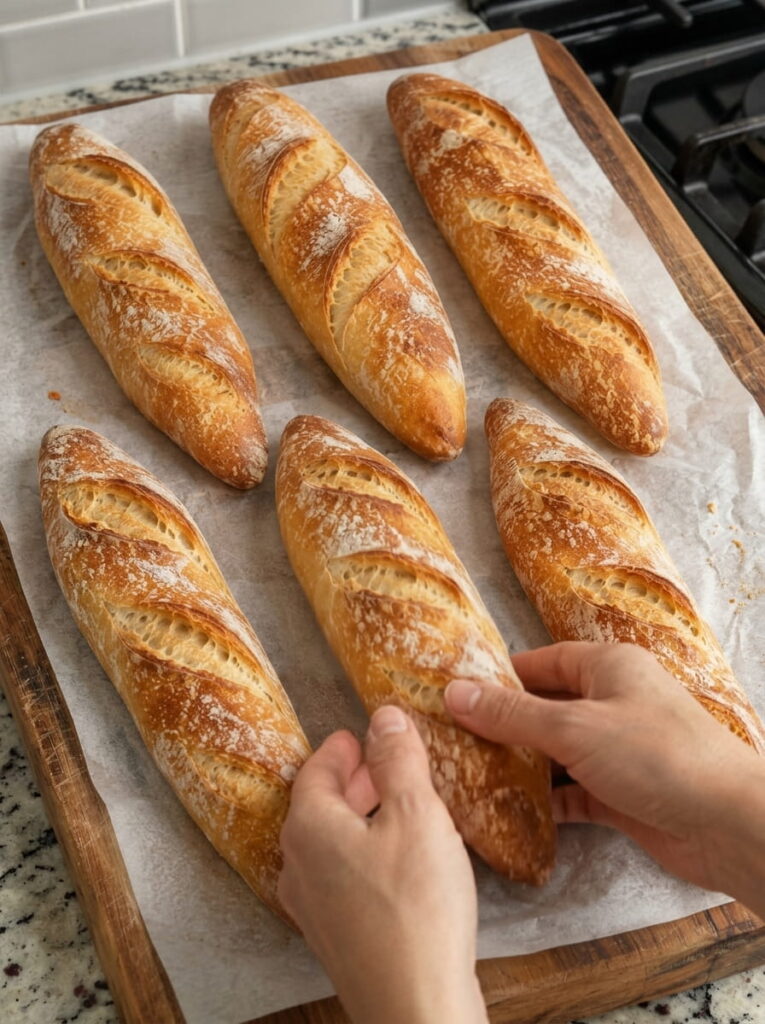
There’s something special about tearing into a loaf with a shatteringly crisp crust and a soft, airy, chewy middle. These mini Italian baguettes give you that bakery experience at home, with simple pantry ingredients and no special equipment. Each little loaf is golden, crackly, and just the right size for a sandwich, a side of garlic bread, or a dunk in your favorite soup.
Baguettes have a reputation for being tricky, but this recipe breaks the process into easy steps: mix, knead, let the dough rise, shape, rise again, score, and bake with steam. Making the baguettes mini also makes them easier to handle than a full-length loaf, and they fit on a standard baking tray without any special pans.
This guide covers the full recipe, step-by-step instructions, and the techniques that create a crisp crust and an open, chewy crumb. You’ll also find ingredient notes, troubleshooting, variations, serving ideas, storage and freezing advice, and answers to common questions.
Recipe at a Glance
- Makes: 6 mini baguettes
- Prep time: 20 minutes
- Rising time: 1½ to 2 hours
- Bake time: 18 to 22 minutes
- Difficulty: Beginner to intermediate
Why You’ll Love These Mini Italian Baguettes
Crispy outside, soft inside. Steam in the oven gives the crust its crackle, while the well-kneaded dough bakes into a tender, chewy crumb.
Simple pantry ingredients. Flour, water, yeast, salt, a little olive oil, and a touch of sugar are all you need.
Perfect mini size. Six small baguettes are easy to shape, quick to bake, and ideal for individual sandwiches or serving at the table.
Ready in about 3 hours. Most of that is hands-off rising time.
Incredibly versatile. Use them for sandwiches, garlic bread, bruschetta, soup dippers, or a simple board with olive oil.
Great for sharing. They’re lovely for dinner parties, holidays, picnics, and gifts, since each person gets their own loaf.
Freezer-friendly. Bake a batch and freeze extras for fresh-tasting bread any time.
Ingredients for Mini Italian Baguettes
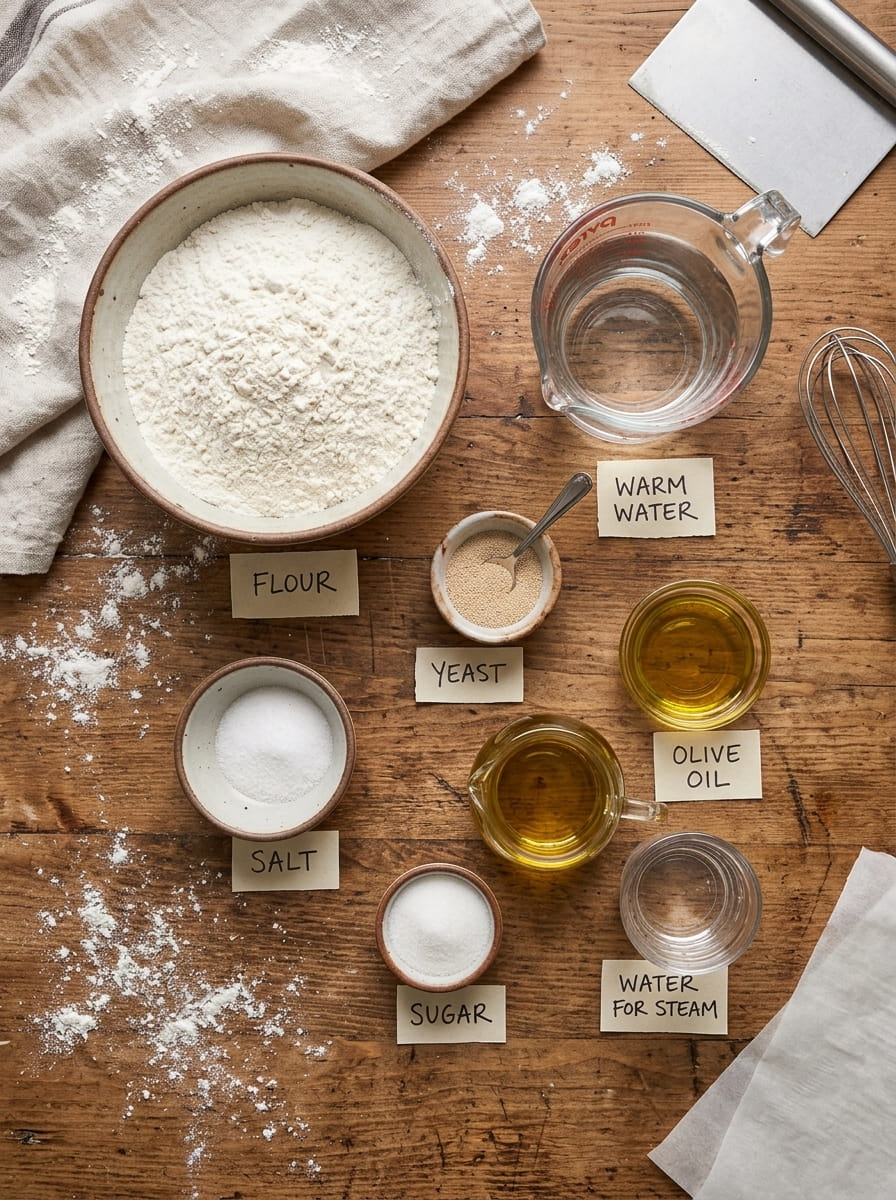
For the Dough
- 4 cups (500 g) bread flour or all-purpose flour
- 1½ cups (360 ml) warm water
- 2 teaspoons instant yeast (7 g)
- 1½ teaspoons salt (9 g)
- 1 tablespoon olive oil
- 1 teaspoon sugar or honey
For the Crust
- Extra water for creating steam in the oven
- A little flour for dusting
Ingredient Notes and Tips
Flour. Bread flour has more protein, which builds stronger gluten and gives a chewier crumb and a crisper crust. All-purpose flour also works and gives a slightly softer, more tender loaf. Weigh the flour if you can (500 g). If you’re using cups, spoon the flour into the cup and level it off, because scooping packs in extra flour and makes the dough dry.
Warm water. Aim for about 105–110°F (40–43°C), warm to the touch but not hot. Water that’s too hot can kill the yeast, and water that’s too cold slows the rise.
Instant yeast. Instant yeast works reliably and, as the recipe notes, can be mixed directly into the flour. Active dry yeast also works in the same amount, but it should be dissolved in the warm water first. Always check the expiration date.
Salt. Salt gives flavor, strengthens the dough, and controls the yeast. Without it, baguettes taste flat and can rise unevenly.
Olive oil. A single tablespoon adds a little tenderness and a subtle Italian flavor without making the crust soft.
Sugar or honey. A small amount feeds the yeast, helps with browning, and adds a hint of flavor. It’s not enough to make the bread taste sweet.
Water for steam. Steam in the first minutes of baking keeps the crust flexible so the loaf can expand fully, then helps form a thin, glossy, crackly crust.
Equipment You’ll Need
- A large mixing bowl
- A wooden spoon or stand mixer with a dough hook
- A baking tray (large rimmed sheet pan) lined with parchment paper
- A sharp knife, razor blade, or bread lame for scoring
- A heatproof pan (such as a cast iron skillet or metal baking dish) for steam
- A bench scraper (helpful but optional)
- A wire cooling rack
- Optional: a kitchen scale and an instant-read thermometer
How to Make Mini Italian Baguettes (Step by Step)
Step 1: Activate the Yeast
In a large mixing bowl, combine the warm water, yeast, and sugar. Stir gently and let it stand for 5 minutes, until slightly foamy. This shows the yeast is alive and ready to work.
If you’re using instant yeast, you can skip this step and mix the yeast directly with the flour. Many bakers do, but the foaming step is a useful check if you’re unsure how fresh your yeast is.
Step 2: Make the Dough
Add the flour, salt, and olive oil to the bowl. Mix with a wooden spoon until a rough, slightly sticky dough forms.
Knead for about 8–10 minutes by hand, or 5–6 minutes in a stand mixer, until the dough is smooth and elastic. To knead by hand, push the dough away with the heel of your hand, fold it back over itself, give it a quarter turn, and repeat.
Test the dough with the windowpane test: pinch off a small piece and gently stretch it. If it stretches thin enough to see light through without tearing, the gluten is well developed.
Step 3: First Rise
Place the dough in a lightly oiled bowl and turn it once to coat the top. Cover the bowl and let it rise in a warm place for 60–90 minutes, until doubled in size. The dough should look puffy, and a finger pressed gently into it should leave a dent that springs back slowly.
Step 4: Shape the Mini Baguettes
Turn the dough out onto a lightly floured surface and divide it into 6 equal portions. A kitchen scale makes this easy, with each piece weighing around 140–150 g.
Flatten each portion gently into a rectangle. Fold the top edge down toward the center, press, then fold the bottom edge up and press again. Roll the dough tightly into a log, and pinch the seam closed. Gently roll the log back and forth with your palms, working from the center outward, until it is 6–8 inches long with slightly tapered ends. Keep the surface tension tight so the loaf holds its shape.
Step 5: Second Rise
Place the baguettes seam-side down on a parchment-lined baking tray, leaving space between them. Cover loosely with a clean towel or lightly oiled plastic wrap, and let them rise for 25–35 minutes, until puffy but not doubled. They should look soft and slightly swollen.
Step 6: Score the Bread
Preheat the oven to 450°F (230°C) with a rack in the middle and an empty heatproof pan on the bottom rack. Preheat for at least 15–20 minutes.
With a sharp blade or bread lame, make 3–4 shallow diagonal cuts along the top of each baguette, about ¼ inch deep, at a slight angle and slightly overlapping. Scoring lets steam escape and controls where the bread expands. Dust lightly with flour if you like.
Step 7: Create Steam and Bake
Slide the tray of baguettes onto the middle rack. Carefully pour about 1 cup of hot water into the preheated pan on the bottom rack, and close the oven door right away. Be careful with the rising steam.
Bake for 18–22 minutes, until the baguettes are deeply golden brown and sound hollow when tapped on the bottom. For an even crisper crust, you can remove the steam pan after the first 10 minutes.
Step 8: Cool and Serve
Transfer the baguettes to a wire rack and let them cool for at least 15 minutes before slicing. The crumb continues to set as it cools, and the crust crackles as it comes to room temperature. Enjoy the crunchy crust and soft, airy interior.
Expert Tips for Bakery-Style Baguettes
1. Don’t skip the steam. Steam is the secret to a crisp, glossy crust and a good oven spring. Without it, the crust sets too early and can look pale and dull.
2. Knead properly. The dough needs real gluten development to give a chewy crumb. If it tears when stretched, knead a few more minutes.
3. Keep the dough slightly sticky. Resist adding too much flour while kneading and shaping. A slightly tacky dough gives a softer, more open crumb.
4. Shape with tension. A tightly rolled baguette rises upward instead of spreading flat. Pinch the seam well.
5. Score with confidence. Use a very sharp blade and make quick, shallow cuts. A dull knife drags and deflates the dough.
6. Preheat thoroughly. A fully heated oven delivers the strong initial heat that creates oven spring.
7. Watch the second rise. Over-proofed baguettes lose their shape and may collapse when scored. Bake them when puffy, not fully doubled.
8. Bake until deeply golden. A pale baguette will lack crunch and flavor. A dark golden color means a crisp crust.
9. Don’t cover the cooling bread. Let the baguettes cool uncovered on a rack so the crust stays crisp.
10. Use a thermometer if you’re unsure. Baguettes are done at about 205–210°F (96–99°C) inside.
Troubleshooting Common Baguette Problems
My crust isn’t crisp. Make sure your oven is fully preheated, add steam, and bake until deeply golden. Cool the loaves uncovered, and don’t store them in plastic while warm.
My baguettes spread out flat. The dough may have been too wet, shaped too loosely, or over-proofed. Roll with more tension and shorten the second rise slightly.
The scoring didn’t open up. The blade may have been dull, the cuts too deep or too shallow, or the dough may have over-proofed. Use a sharp blade and make quick, shallow cuts.
The bread is dense. Possible causes include old yeast, too much flour, not enough kneading, or an under-proofed dough. Check your yeast, weigh the flour, and let the dough rise fully.
The inside is gummy. The bread was likely underbaked or cut too soon. Bake until the crust is deep golden and the bottom sounds hollow, and let the baguettes cool for at least 15 minutes.
The crust is too hard or too thick. Too much steam or too long a bake can make the crust heavy. Reduce the baking time slightly and remove the steam pan earlier.
The dough is too sticky to handle. Lightly flour your hands and the counter, and use a bench scraper. Avoid kneading in lots of extra flour.
The baguettes didn’t rise. The yeast may be dead, the water may have been too hot or cold, or the room may be too cool. Test your yeast and give the dough more time in a warmer spot.
Recipe Variations
Garlic herb baguettes. Knead 1 teaspoon of garlic powder and 1 teaspoon of dried Italian seasoning into the dough, or brush the baked loaves with garlic butter.
Cheesy baguettes. Sprinkle shredded Parmesan or mozzarella on top before baking, or press a little cheese into the dough while shaping.
Seeded baguettes. Brush the tops with water and sprinkle with sesame seeds, poppy seeds, or an everything bagel blend before scoring.
Whole wheat version. Replace up to 1 cup (about 125 g) of the flour with whole wheat flour. Add a splash more water if the dough feels stiff.
Rosemary olive oil baguettes. Add 1 tablespoon of chopped fresh rosemary and brush the baked loaves with olive oil.
Make-ahead overnight dough. After kneading, let the dough rise in the refrigerator for 8–12 hours. This slow, cold rise develops deeper flavor. Let it warm up for about 30–45 minutes before shaping.
Make full-size baguettes. Divide the dough into 3 or 4 portions, shape each into a 12-inch loaf, and bake for 22–28 minutes. Adjust the time until deeply golden.
Make sub or sandwich rolls. Shape the dough into 6 shorter, thicker rolls and bake for 15–20 minutes.
What to Serve with Mini Italian Baguettes
- Italian-style sandwiches with salami, provolone, tomato, lettuce, and a drizzle of oil and vinegar
- Olive oil and balsamic vinegar for dipping, with a sprinkle of herbs and flaky salt
- Homemade garlic bread made with butter, garlic, and parsley
- Tomato soup, minestrone, or creamy soups for dunking
- Pasta dishes like spaghetti and meatballs, lasagna, or creamy Alfredo
- Bruschetta topped with chopped tomatoes, fresh basil, and a little olive oil
- A cheese and charcuterie board with cured meats, olives, and fruit
- Breakfast with butter and jam, or with eggs and avocado
How to Store, Freeze, and Refresh
Room temperature: Store the cooled baguettes in a paper bag or bread bag for up to 2 days. Paper keeps the crust crisp, while plastic softens it. Homemade baguettes have no preservatives, so they’re best enjoyed fresh.
Freezer: Freeze completely cooled baguettes in an airtight freezer bag for up to 2 months. You can also slice them first for easy portioning.
To refresh: Warm baguettes in a 350°F (175°C) oven for 5–8 minutes to bring back the crispy crust. If they’re frozen, thaw at room temperature for about 30 minutes first, or warm them straight from the freezer for a few extra minutes.
Using leftovers: Day-old baguettes make excellent croutons, breadcrumbs, bruschetta, French toast, or bread pudding.
Nutrition Overview
Homemade baguettes are made from simple ingredients: flour, water, yeast, salt, and a little oil. They provide carbohydrates for energy and some protein, and they’re low in fat. Using bread flour adds a bit more protein, and swapping in whole wheat flour increases the fiber. Nutrition varies with ingredients and portion size. If you’re managing a health condition, check with your healthcare provider about how bread fits your meal plan.
Frequently Asked Questions
Can I use all-purpose flour instead of bread flour?
Yes. All-purpose flour makes a slightly softer loaf with a less chewy crumb. Bread flour gives more structure and chew.
Do I have to activate the yeast first?
Not with instant yeast, which can be mixed straight into the flour. Activating it first is a useful way to confirm that the yeast is alive.
Can I use active dry yeast?
Yes. Use the same amount and dissolve it in the warm water with the sugar for 5–10 minutes until foamy.
Why do I need steam?
Steam keeps the surface of the dough soft during the first minutes of baking, which allows the baguettes to expand fully. It also helps form a thin, shiny, crisp crust.
How do I make steam without special equipment?
Place a heatproof pan on the bottom rack while the oven preheats, and pour hot water into it just before baking. You can also spray the baguettes and oven walls with water before closing the door.
What if I don’t have a bread lame?
A sharp serrated knife or a clean razor blade works. The key is to use quick, shallow cuts.
Can I make the dough ahead of time?
Yes. Refrigerate the dough after kneading for 8–12 hours for a slow rise, then shape, proof, and bake. The flavor improves with the longer rise.
How do I know the baguettes are baked through?
They should be deeply golden brown, sound hollow when tapped on the bottom, and measure around 205–210°F (96–99°C) inside.
Can I double the recipe?
Yes. Double the ingredients, and bake in batches or on two trays, rotating them halfway through for even browning.
Why is my crust soft the next day?
Bread absorbs moisture from the air and from the crumb. Store the baguettes in a paper bag, and refresh them in the oven before serving.
Can I bake these on a baking stone?
Yes. Preheat the stone for 30 minutes and slide the baguettes, on parchment, onto it. A stone gives extra oven spring and a crisper bottom.
Can I use a stand mixer?
Absolutely. Knead with the dough hook on medium-low speed for 5–6 minutes, until smooth and elastic.
How long do the baguettes take from start to finish?
Roughly 3 to 3½ hours, including kneading, two rises, shaping, and baking. Most of that is hands-off time.
Are these baguettes vegan?
Yes, as long as you use sugar instead of honey. The rest of the recipe is plant-based.
Why are my baguettes pale?
The oven may not be hot enough, or the bake may have been too short. Bake until deep golden, and check your oven’s actual temperature with an oven thermometer.
Final Thoughts
These mini Italian baguettes prove that bakery-quality bread is within reach of any home kitchen. With a handful of pantry ingredients, a little kneading, and a splash of steam in the oven, you get golden, crackly loaves with a soft, airy, chewy middle.
Serve them warm with olive oil, turn them into sandwiches, or tear them alongside a big bowl of soup. Once you’ve baked a batch, you’ll find any excuse to make them again. ❤️
If you try this recipe, leave a comment and a star rating, and share it with a friend who loves fresh bread. Happy baking! 🥖🇮🇹
Print
Crusty Homemade Mini Italian Baguettes
Ingredients
For the Dough
- 4 cups (500 g) bread flour or all-purpose flour
- 1½ cups (360 ml) warm water
- 2 teaspoons instant yeast (7 g)
- 1½ teaspoons salt (9 g)
- 1 tablespoon olive oil
- 1 teaspoon sugar or honey
For the Crust
- Extra water for creating steam in the oven
- A little flour for dusting
Instructions
In a large mixing bowl, combine the warm water, yeast, and sugar. Stir gently and let it stand for 5 minutes, until slightly foamy. This shows the yeast is alive and ready to work.
If you’re using instant yeast, you can skip this step and mix the yeast directly with the flour. Many bakers do, but the foaming step is a useful check if you’re unsure how fresh your yeast is.
Add the flour, salt, and olive oil to the bowl. Mix with a wooden spoon until a rough, slightly sticky dough forms.
Knead for about 8–10 minutes by hand, or 5–6 minutes in a stand mixer, until the dough is smooth and elastic. To knead by hand, push the dough away with the heel of your hand, fold it back over itself, give it a quarter turn, and repeat.
Test the dough with the windowpane test: pinch off a small piece and gently stretch it. If it stretches thin enough to see light through without tearing, the gluten is well developed.
Place the dough in a lightly oiled bowl and turn it once to coat the top. Cover the bowl and let it rise in a warm place for 60–90 minutes, until doubled in size. The dough should look puffy, and a finger pressed gently into it should leave a dent that springs back slowly.
Turn the dough out onto a lightly floured surface and divide it into 6 equal portions. A kitchen scale makes this easy, with each piece weighing around 140–150 g.
Flatten each portion gently into a rectangle. Fold the top edge down toward the center, press, then fold the bottom edge up and press again. Roll the dough tightly into a log, and pinch the seam closed. Gently roll the log back and forth with your palms, working from the center outward, until it is 6–8 inches long with slightly tapered ends. Keep the surface tension tight so the loaf holds its shape.
Place the baguettes seam-side down on a parchment-lined baking tray, leaving space between them. Cover loosely with a clean towel or lightly oiled plastic wrap, and let them rise for 25–35 minutes, until puffy but not doubled. They should look soft and slightly swollen.
Preheat the oven to 450°F (230°C) with a rack in the middle and an empty heatproof pan on the bottom rack. Preheat for at least 15–20 minutes.
With a sharp blade or bread lame, make 3–4 shallow diagonal cuts along the top of each baguette, about ¼ inch deep, at a slight angle and slightly overlapping. Scoring lets steam escape and controls where the bread expands. Dust lightly with flour if you like.
Slide the tray of baguettes onto the middle rack. Carefully pour about 1 cup of hot water into the preheated pan on the bottom rack, and close the oven door right away. Be careful with the rising steam.
Bake for 18–22 minutes, until the baguettes are deeply golden brown and sound hollow when tapped on the bottom. For an even crisper crust, you can remove the steam pan after the first 10 minutes.
Transfer the baguettes to a wire rack and let them cool for at least 15 minutes before slicing. The crumb continues to set as it cools, and the crust crackles as it comes to room temperature. Enjoy the crunchy crust and soft, airy interior.