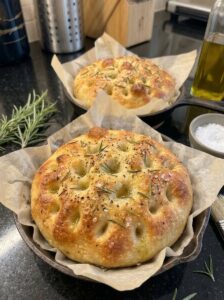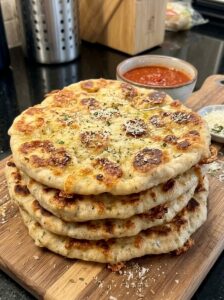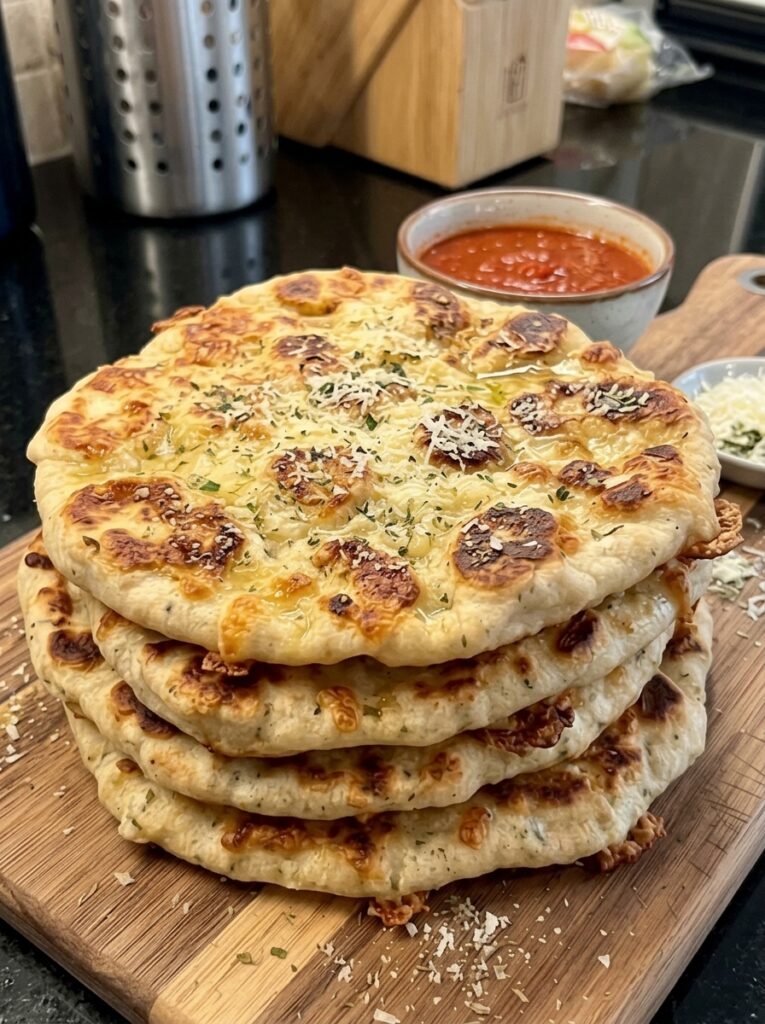
Cottage cheese, eggs, and Parmesan blend into a simple batter that bakes into a thin, savory flatbread. The edges become golden while the center stays soft and flexible, making it useful for light wraps, open-faced toppings, or a warm snack.
There is no yeast, flour, or kneading in this version. A blender smooths the cottage cheese, and the oven sets the egg-and-cheese mixture into a sheet. Parmesan adds a distinctly savory flavor, with optional garlic powder and Italian seasoning if you want an herbal finish.
The texture differs from wheat flatbread. Expect a tender, egg-based wrap with browned edges rather than chewy pita or a crisp pizza crust. The most important steps are spreading the batter evenly, baking until set, and letting it cool before lifting it from the parchment.
Recipe at a Glance
- Prep time: About 5 minutes
- Bake time: Approximately 30–40 minutes
- Cooling time: 10–15 minutes
- Total time: Approximately 45–60 minutes
- Yield: One approximately 9 × 12-inch sheet, cut into 2 large or 4 smaller pieces
- Servings: 2 substantial portions or 4 small side portions
- Equipment: Blender or food processor, rimmed baking sheet, parchment, and spatula
This suggested formula was developed from the dish title and has not been kitchen-tested. Cottage cheese moisture and batter thickness affect baking time and flexibility, so follow the doneness cues rather than the clock alone.
Why You’ll Love This Recipe
- A short ingredient list: Cottage cheese, eggs, and Parmesan make the base.
- No dough handling: Blend and spread rather than knead and roll.
- Savory cheese flavor: Parmesan gives the mild cottage cheese more character.
- Flexible serving: Use as a soft wrap or a base for open-faced toppings.
- Easy portions: Cut the sheet according to your meal.
- No flour in the base: The structure comes from eggs and cheese rather than a wheat dough.
What Kind of Flatbread Is This?
This is a baked egg-and-cheese sheet. Blending makes the cottage cheese smoother, and the eggs bind the mixture as it cooks. Parmesan contributes flavor and some additional body.
It is not a substitute with identical behavior to every bread product. It can tear under heavy fillings, soften beneath wet toppings, or become brittle if spread very thin and overbaked. Use it according to its texture rather than expecting the stretch of gluten-based bread.
Blending also does not remove moisture from cottage cheese. A very watery product may take longer to set and can produce a more delicate sheet.
Ingredients
For the Flatbread
- 1 cup plain cottage cheese, preferably 2% or full-fat
- 2 large eggs
- ¼ cup finely grated Parmesan cheese
- ¼ teaspoon garlic powder, optional
- ½ teaspoon dried Italian seasoning, optional
- ⅛ teaspoon black pepper, optional
For the Pan
- A light coating of cooking spray or oil, if needed for the parchment
Additional salt is usually unnecessary because cottage cheese and Parmesan already contain salt.
Ingredient Notes
Cottage cheese: Use a plain product you enjoy. Pour off any pooled liquid before measuring, but do not squeeze it completely dry. Small or large curds can work because they will be blended. Very low-fat or unusually wet products may behave differently.
Eggs: Two large eggs provide the main binding structure. Egg size matters in such a small formula. An egg-white-only or egg-free version would need separate adjustments.
Parmesan: Finely grated cheese distributes more evenly than large shreds. Freshly grated Parmesan is a useful choice; shelf-stable grated products can contain additional ingredients and may change texture.
Seasonings: Garlic powder, herbs, and pepper are optional. Keep additions restrained because the thin sheet carries concentrated flavor.
Parchment: Use a reliable baking parchment rated for 350°F. Wax paper is not a substitute. A lightly greased surface can help release the sheet, though performance differs by product and pan.
How to Make Cottage Cheese Parmesan Flatbread
1. Prepare the Oven and Tray
Heat the oven to 350°F with a rack near the center. Line a rimmed baking sheet with parchment and lightly grease the paper if it tends to stick.
A rimmed sheet gives you room to spread the batter without it running over an edge. You do not need to cover the entire tray.
2. Blend the Batter
Add cottage cheese, eggs, Parmesan, and optional seasonings to a blender or food processor. Blend just until smooth and evenly combined, stopping to scrape safely as needed.
The batter should be pourable but not watery. Do not add milk or water to help it blend; that introduces moisture the formula does not need.
3. Spread Evenly
Pour onto the prepared parchment and spread into an approximately 9 × 12-inch rectangle. Aim for even coverage rather than an exact measurement at the expense of thin spots.
Keep the center and edges a similar thickness. A very thin border can become brittle while a thick center remains wet. Avoid holes or bare patches through which the parchment is exposed.
4. Bake Until Set
Bake for approximately 30–40 minutes, beginning to check around 25–30 minutes because thin areas can brown quickly.
The surface should look set rather than wet, and the edges should be golden. The center should reach 160°F when checked with a suitable food thermometer, although measuring a thin sheet can be awkward. Do not confuse a dry-looking browned rim with a fully set middle.
If the outer edges darken too quickly, reduce exposure with a small foil shield if practical and continue until the center is ready. Large wet areas indicate more cooking is needed, while a fully dry, dark sheet may have gone beyond the flexible stage.
5. Cool Before Peeling
Let stand on the tray for about 10–15 minutes. The sheet becomes easier to handle as it settles.
Loosen an edge gently with a thin spatula. Peel the parchment away from the flatbread gradually rather than pulling hard on the bread. If the middle remains wet and tears immediately, assess whether it was fully baked.
6. Cut and Serve
Cut into two large pieces or four smaller portions. Add fillings only after it is cool enough to handle comfortably.
For wraps, use a modest amount of filling and fold gently. For a sheet that is firmer or more fragile, serve open-faced rather than forcing a tight roll.
Tips for a Flexible Sheet
Start with reasonably thick cottage cheese. Excess loose liquid makes the batter harder to set evenly.
Use the intended spread area. A much larger sheet becomes thin and brittle; a much smaller one can stay soft and eggy in the middle.
Check the center separately. The edges finish first and can hide a wet interior.
Avoid overbaking for crispness. A crisp sheet is less likely to fold without cracking.
Cool before lifting. An egg-based sheet is delicate straight from the oven.
Keep fillings dry. Pat sliced tomatoes, cucumbers, and other wet ingredients before adding, and use sauces sparingly.
Troubleshooting
| Problem | Possible cause | Helpful adjustment |
|---|---|---|
| Flatbread sticks | Parchment performance, underbaking, or early peeling | Use suitable parchment, bake until set, and cool before releasing. |
| Center is wet | Thick center or watery cottage cheese | Spread evenly and allow more baking time. |
| Edges crack | Batter spread too thin or baked too long | Keep thickness consistent and check earlier. |
| Sheet tears under fillings | Heavy filling or delicate texture | Use less filling or serve open-faced. |
| Strong egg flavor | Expected character of the base or mild cheese | Use Parmesan and optional herbs; do not expect wheat-bread flavor. |
| Surface is oily | Cheese fat separating during baking | Use measured cheese and avoid excessive added oil. |
| Sheet becomes soggy | Wet toppings or storage condensation | Cool fully before packaging and assemble just before eating. |
Variations
Garlic Herb
Include the optional garlic powder and Italian seasoning. Avoid adding large amounts of fresh wet herbs to the first batch.
Peppery Parmesan
Add a little more freshly ground pepper at serving time. This gives a clear pepper accent without changing the batter substantially.
Chive Version
Fold in a small amount of finely chopped, well-dried chives after blending. They add mild onion flavor and visible green flecks.
Mild Heat
Add a small pinch of red pepper flakes. Serve extra heat separately so the cheese flavor remains noticeable.
Open-Faced Cheese Toast
Top a baked piece lightly with cheese and return briefly to the oven until melted. Watch carefully and expect the extra heating to make the edges firmer.
Large additions of vegetables, shredded cheese, or liquid sauces change the moisture and structure. Keep the first batch close to the base formula before experimenting.
Serving Suggestions
Fill a piece with turkey, chicken, lettuce, and a thin spread of hummus or mayonnaise. Keep layers modest so the flatbread can support them.
For breakfast, serve a smaller piece alongside eggs and tomatoes rather than trying to wrap a large filling. It also works as a savory side to salad or soup.
For a Mediterranean-inspired plate, add a little hummus, cucumber, and drained roasted pepper. Pat vegetables dry and assemble shortly before serving.
This is not designed to support a heavy layer of pizza sauce and toppings like a firm pizza crust. Light open-faced toppings are a better match.
Storage and Reheating
Cool before placing in a covered container, with parchment between pieces if needed. Refrigerate within 2 hours of baking and use within 3–4 days.
Keep fillings separate during storage. A plain sheet retains its texture more predictably than a prepared wrap filled with wet vegetables and sauce.
Warm gently in a skillet or toaster oven until heated through. For leftovers, reheat to 165°F. Avoid prolonged heating, which can make the egg-based texture rubbery or the edges brittle. If heating to that temperature reduces flexibility, serve open-faced rather than forcing a wrap.
Freezing can change the texture and moisture distribution. For a first batch, refrigerated storage is the more predictable option. If experimenting with freezing, wrap individual cooled pieces, use within about one month for best quality, and thaw in the refrigerator before assessing texture.
Frequently Asked Questions
Is this a traditional flatbread?
No. It is an egg-and-cheese preparation baked into a thin sheet. The name describes its shape and use, not the structure of a wheat dough.
Do I need a blender?
Blending is recommended for a smooth batter. Hand mixing leaves cottage cheese curds and can make the sheet less uniform.
Can I omit the Parmesan?
That changes flavor and body. A cottage-cheese-and-egg sheet is a different variation, so do not expect identical baking behavior.
Can I substitute mozzarella?
Mozzarella has different moisture and melting properties. It is not an identical replacement for finely grated Parmesan in this small formula.
Can I use fat-free cottage cheese?
It may work differently, especially if watery. The suggested base uses 2% or full-fat cottage cheese. Product thickness matters as well as fat percentage.
Is it gluten-free?
The basic ingredients do not require wheat flour, but check cheese, seasonings, and other packaged products and avoid cross-contact if preparing for someone who must avoid gluten.
How much protein does it contain?
Using illustrative values, cottage cheese may provide 24–28 grams per cup, eggs about 12 grams together, and Parmesan roughly 7–9 grams in the measured amount. The batch could therefore supply around 43–49 grams, or approximately 21–25 grams per half. Check actual labels and portions.
How many calories are in a serving?
The full batch may be around 420–500 calories before pan oil and fillings, depending on cheese brands and fat content. That is roughly 210–250 per half or 105–125 per quarter. These are estimates rather than a verified nutrition analysis.
Recipe Card
Easy Cottage Cheese Parmesan Flatbread
A soft, savory egg-based flatbread made with blended cottage cheese and Parmesan. Use for light wraps or open-faced toppings.
Prep: 5 minutes | Bake: 30–40 minutes | Cool: 10–15 minutes
Total: Approximately 45–60 minutes
Yield: One approximately 9 × 12-inch sheet; 2 large or 4 smaller portions
Ingredients
- 1 cup plain cottage cheese, preferably 2% or full-fat
- 2 large eggs
- ¼ cup finely grated Parmesan
- ¼ teaspoon garlic powder, optional
- ½ teaspoon Italian seasoning, optional
- ⅛ teaspoon black pepper, optional
- A light coating of oil or spray for parchment, if needed
Instructions
- Heat the oven to 350°F. Line a rimmed tray with suitable parchment and grease lightly if needed.
- Blend cottage cheese, eggs, Parmesan, and optional seasonings until smooth.
- Spread into an even rectangle approximately 9 × 12 inches, avoiding thin edges and a thick middle.
- Bake for 30–40 minutes, checking earlier if the edges brown quickly, until the center is set and the edges golden. The egg mixture should reach 160°F.
- Cool for 10–15 minutes, then gently peel away the parchment and cut.
- Serve with modest, well-drained fillings or as an open-faced base.
Notes
- This suggested formula has not been kitchen-tested.
- Expect an egg-based texture, not chewy wheat bread or a crisp pizza crust.
- Do not add extra liquid to the batter.
- Refrigerate promptly for 3–4 days and store fillings separately. Reheat leftovers to 165°F.
- Approximate nutrition per half: 210–250 calories and 21–25 grams protein before pan oil and fillings. Calculate from actual ingredients for precision.
Final Thoughts
An evenly spread batter and a properly set center make this flatbread easier to handle. Let it cool before peeling, use light fillings, and serve open-faced if the sheet is too delicate to roll. Cottage cheese and Parmesan provide a simple savory base with no dough preparation required.
Print
Easy Cottage Cheese Parmesan Flatbread
Ingredients
- 1 cup plain cottage cheese, preferably 2% or full-fat
- 2 large eggs
- ¼ cup finely grated Parmesan
- ¼ teaspoon garlic powder, optional
- ½ teaspoon Italian seasoning, optional
- ⅛ teaspoon black pepper, optional
- A light coating of oil or spray for parchment, if needed
Instructions
- Heat the oven to 350°F. Line a rimmed tray with suitable parchment and grease lightly if needed.
- Blend cottage cheese, eggs, Parmesan, and optional seasonings until smooth.
- Spread into an even rectangle approximately 9 × 12 inches, avoiding thin edges and a thick middle.
- Bake for 30–40 minutes, checking earlier if the edges brown quickly, until the center is set and the edges golden. The egg mixture should reach 160°F.
- Cool for 10–15 minutes, then gently peel away the parchment and cut.
- Serve with modest, well-drained fillings or as an open-faced base.