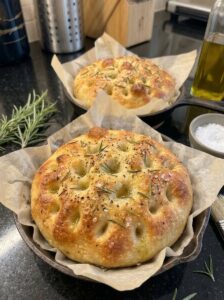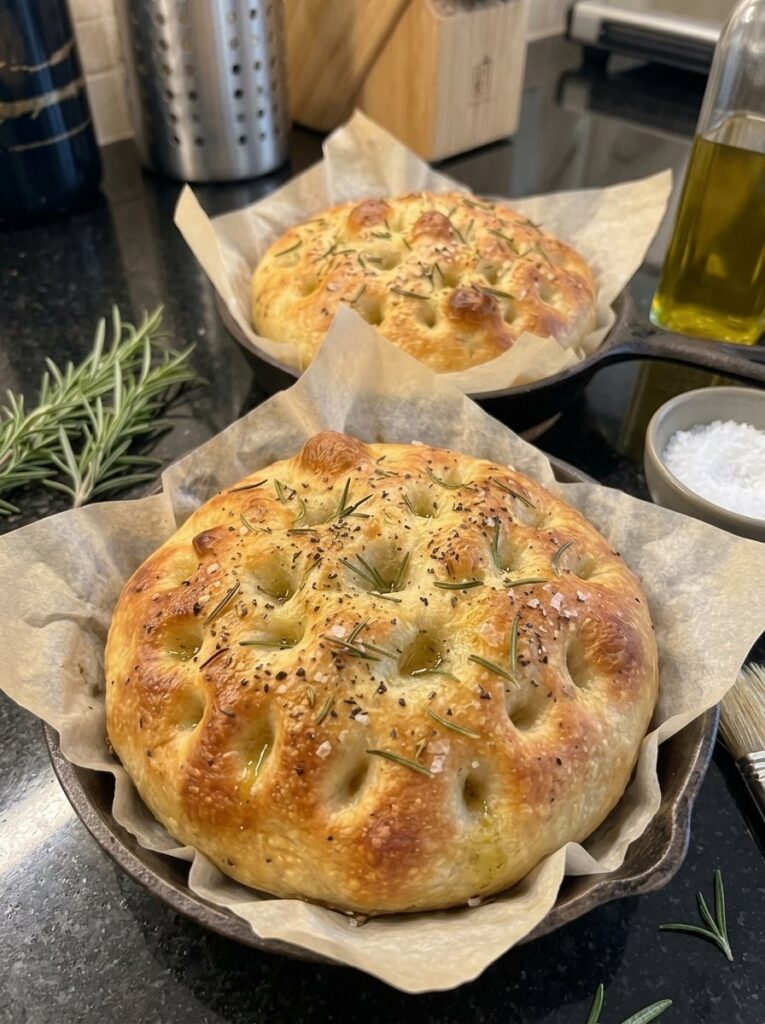
Easy Mini Rosemary Olive Oil Focaccia
There’s something deeply comforting about the smell of bread baking with rosemary and olive oil. It’s the scent of an Italian bakery at dawn, and it can fill your own kitchen with just a handful of ingredients and a little patience. This easy mini rosemary olive oil focaccia gives you that experience without a huge loaf, a stand mixer, or an afternoon of kneading.
These little breads have a soft, airy middle, crisp golden edges, and a savory, herby flavor in every bite. They’re a small-batch recipe that makes two mini focaccias, which is ideal when you want fresh bread tonight without leftovers sitting around for days. Serve them warm alongside soup, tear them open for a relaxed lunch, or slice them horizontally for the best homemade sandwich of your week.
If you’ve ever been intimidated by yeast bread, this is a good place to start. The dough is mixed in one bowl with a spoon, and the oven does most of the work.
Why You’ll Love This Mini Focaccia Recipe
Plenty of focaccia recipes exist, but this one earns a spot in your regular rotation for several reasons:
- No kneading required. The dough is stirred together until no dry flour remains. Time and yeast develop the structure for you.
- Pantry-friendly ingredients. You need flour, yeast, sugar, salt, water, and olive oil. The rosemary topping is the only “special” part, and even that works with dried herbs.
- Small batch. The recipe makes two mini focaccias, so there’s no waste and no pressure to feed a crowd.
- Fast for a yeast bread. From start to finish it takes about 1 hour 35 minutes to 2 hours, and most of that is hands-off rising time.
- Beginner-friendly. There’s no shaping skill, scoring, or special equipment involved. You press dimples into the dough with your fingertips.
- Endlessly versatile. It’s a side dish, a sandwich base, a snack, and a dipping vehicle in one.
What Is Focaccia, and Why Make It Mini?
Focaccia is a flat, oven-baked Italian bread that’s generously dressed with olive oil, salt, and often herbs. Its signature look comes from the dimples pressed into the dough before baking. Those little pockets catch pools of olive oil and herbs, which crisp up the surface while keeping the inside tender and airy.
Traditional focaccia is usually baked in a large sheet pan and cut into squares. That’s wonderful for a gathering, but it’s a lot of bread for one or two people. Making mini focaccias solves that problem in three ways:
- Better portion control. Two small breads are easy to serve, share, or freeze.
- More crust per bite. Smaller shapes mean more golden, crispy edges, which many people consider the best part.
- Even baking. Dividing the dough into two equal portions helps both breads cook at the same rate and makes serving simple.
Ingredients You’ll Need
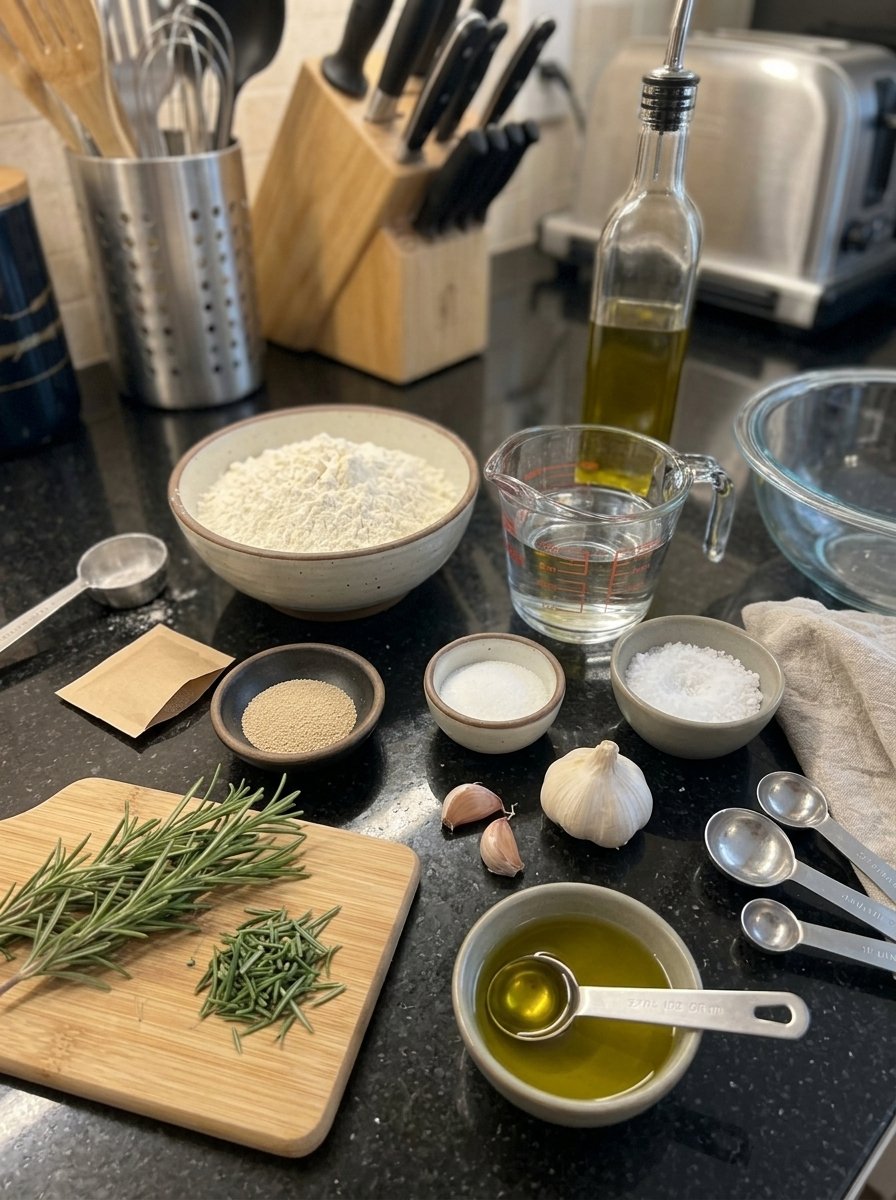
The ingredient list is short, and each item has a job. Here’s what you need and why it matters.
For the Dough
- 1 cup (120 g) all-purpose flour. All-purpose flour gives you a tender, soft crumb without needing bread flour. For a slightly chewier bite, you can substitute bread flour.
- ½ teaspoon instant yeast. Instant yeast can be mixed straight into warm water and works reliably in this recipe.
- ½ teaspoon granulated sugar. The sugar gives the yeast a little food to wake up and encourages a good rise. It also adds a hint of browning.
- ¼ teaspoon salt. Salt strengthens flavor and helps control the yeast.
- ⅓ cup (80 ml) warm water, about 100–110°F (38–43°C). The water should feel comfortably warm, like a bath, not hot. Water that’s too hot can kill the yeast.
- 1 tablespoon olive oil. Oil in the dough keeps the crumb soft and adds richness.
For the Rosemary Olive Oil Topping
- 1½ tablespoons extra-virgin olive oil. This is the flavor star, so use one you enjoy tasting.
- 1 teaspoon fresh rosemary, finely chopped (or ½ teaspoon dried). Fresh rosemary is more fragrant, but dried rosemary works well when finely crushed.
- ¼ teaspoon flaky sea salt or coarse salt. This adds a pleasant crunch and a burst of seasoning on top.
- 1 small garlic clove, finely minced (optional). Garlic adds savory depth, though it’s completely optional.
- A little extra olive oil, for greasing and brushing.
How to Make Mini Rosemary Olive Oil Focaccia
Step 1: Combine the Wet Ingredients
In a small mixing bowl, stir together the warm water, instant yeast, and sugar. Let the mixture stand for about 3 to 5 minutes. You may see a little foam or small bubbles forming, which is a good sign that the yeast is active. Add the tablespoon of olive oil and mix to combine.
Step 2: Mix the Dough
Add the flour and salt to the bowl. Stir with a spoon or spatula until a soft dough forms and no dry flour remains. The dough should look slightly sticky and rough. That’s exactly what you want, and there’s no need to knead it.
Step 3: Let the Dough Rise
Cover the bowl with plastic wrap or a clean kitchen towel. Leave it in a warm, draft-free spot for about 45 to 60 minutes, or until the dough has doubled in size. If your kitchen is cool, the rise may take a little longer, so judge by the dough’s size rather than the clock.
Step 4: Prepare the Mini Focaccias
Lightly grease a small baking tray or line it with parchment paper, then drizzle a little olive oil over the surface. Transfer the risen dough to a lightly floured work surface and divide it into two equal portions.
Gently shape each portion into a small oval or round. Handle the dough softly and avoid pressing too firmly, since you want to keep as much air inside as possible.
Step 5: Let the Dough Rest Again
Place the dough portions on the prepared tray with some space between them. Cover loosely and let them rest for another 15 to 20 minutes, until slightly puffy. While they rest, preheat your oven to 400°F (200°C).
Step 6: Prepare the Rosemary Oil
In a small bowl, mix the extra-virgin olive oil with the chopped rosemary and minced garlic, if using. Let it sit for a few minutes so the flavors can blend. If you’re using fresh garlic, keep an eye on the bread while it bakes, because small pieces can brown quickly.
Step 7: Add the Topping and Make Dimples
Drizzle the rosemary olive oil over the dough portions. With lightly oiled fingertips, gently press dimples across each surface. Press deeply enough to create little pockets, but not so hard that you tear the dough. Finish by sprinkling with flaky sea salt or coarse salt.
Step 8: Bake Until Golden
Bake for approximately 15 to 20 minutes, until the mini focaccias are puffed and golden around the edges. The tops should be lightly browned and the centers cooked through. If they’re browning too quickly, lower the oven temperature slightly and continue baking until done.
Step 9: Finish With Olive Oil
Remove the focaccias from the oven and let them rest on the tray for about 5 minutes. Brush lightly with a little extra olive oil while they’re still warm for a soft, flavorful finish. For extra fragrance, add a few fresh rosemary leaves after baking.
Step 10: Serve Warm and Enjoy
Move the mini focaccias to a serving board. Tear them open to reveal the soft centers, or slice them horizontally for small sandwiches. They’re at their best while still warm, when the rosemary and olive oil are most fragrant.
Tips for the Best Mini Focaccia
A few small habits make a big difference with this recipe:
- Use fresh rosemary if you can. Fresh rosemary gives a wonderful fragrance. If you only have dried, crush it finely between your fingers first so it distributes evenly and doesn’t feel sharp.
- Keep the dough soft. It should feel slightly tacky. Add extra flour only if it’s too sticky to handle, because too much flour leads to a denser bread.
- Give it enough time to rise. Proper rising creates the light, airy texture that makes focaccia special. If the dough hasn’t doubled, give it more time.
- Don’t skip the dimples. Pressing your fingertips into the dough forms pockets for olive oil and herbs, and it keeps the surface from puffing unevenly.
- Choose a good olive oil. Extra-virgin olive oil adds rich flavor and helps the crust turn beautifully golden.
- Divide the dough evenly. Two equal portions bake at the same pace and make serving easy.
- Watch the garlic. Tiny pieces of fresh garlic can brown or burn quickly, so check the bread near the end of baking.
Troubleshooting Common Focaccia Problems
Even simple bread can misbehave sometimes. Here’s how to fix the most common issues.
My dough didn’t rise. The most likely culprits are old yeast or water that was too hot or too cold. Check the expiration date on your yeast, and aim for water around 100–110°F (38–43°C). Also make sure the dough rests somewhere warm and free of drafts. In a cool kitchen, it may simply need extra time.
The focaccia turned out dense. This usually means too much flour was added, the dough didn’t rise enough, or it was pressed too firmly during shaping. Keep the dough slightly tacky and handle it gently so you preserve the air bubbles.
The tops are browning too fast. Reduce the oven temperature slightly and keep baking until the centers are done. Ovens vary, so it’s worth checking the bread a few minutes before the suggested time is up.
The garlic burned. Fresh minced garlic can brown quickly on top of bread. Press it into the dimples, mix it into the oil well, or leave it out if you prefer a milder flavor.
The bread is too dry. Overbaking is the usual cause. Pull the focaccias when they’re puffed and lightly golden, then brush them with olive oil while still warm.
Delicious Variations to Try
Once you’ve made the classic version, this little recipe is easy to customize. The dough stays the same, and you change only the topping:
- Garlic and Parmesan. Sprinkle finely grated Parmesan over the oil before baking for a nutty, savory crust.
- Cherry tomato and basil. Press halved cherry tomatoes into the dimples and finish with fresh basil after baking.
- Olive and thyme. Swap the rosemary for thyme and press in sliced olives.
- Lemon and herb. Add a little lemon zest to the rosemary oil for a bright, fresh note.
- Chili and honey. Add a pinch of red pepper flakes before baking and drizzle with a little honey afterward for a sweet and spicy finish.
- Caramelized onion. Top with soft, sweet onions for a richer, more rustic flavor.
What to Serve With Mini Focaccia
These breads are flexible, so they fit nearly any meal:
- With soup. They pair well with tomato soup, minestrone, or creamy vegetable soup. Use them to scoop up every last spoonful.
- For an Italian-inspired lunch. Serve with a fresh salad, a bowl of olives, and your favorite cheese.
- As mini sandwiches. Slice horizontally and fill with mozzarella, tomatoes, and basil, or with grilled vegetables for a heartier bite.
- With dipping oil. Offer extra-virgin olive oil, a splash of balsamic vinegar, and a pinch of herbs for dunking.
- Alongside pasta. They’re a natural partner for spaghetti, lasagna, or creamy pasta dishes.
How to Store and Reheat Focaccia
Focaccia is best fresh, but you can keep leftovers with a few simple steps.
- Room temperature: Store completely cooled focaccia in an airtight container for up to 2 days.
- Refrigerator: If necessary, refrigerate in a sealed container for up to 4 days. The bread may become firmer.
- Freezer: Wrap each cooled mini focaccia individually and freeze for up to 2 months.
- Reheating: Warm in a 350°F (175°C) oven for 5 to 8 minutes, or heat briefly in a covered skillet over low heat.
- For the best texture: A light drizzle of olive oil before reheating helps restore moisture and brings back that just-baked softness.
Frequently Asked Questions
Can I make this focaccia without kneading?
Yes. This recipe is completely no-knead. Stirring the ingredients until no dry flour remains is enough, and the rising time develops the texture for you.
Can I use dried rosemary instead of fresh?
Absolutely. Use ½ teaspoon of dried rosemary in place of 1 teaspoon of fresh, and crush it finely so it blends into the oil well.
Can I use active dry yeast instead of instant yeast?
Active dry yeast can work, but it may take a bit longer to activate and rise. Let it stand in the warm water and sugar until foamy before continuing, and allow extra rising time.
Why is my dough sticky?
Focaccia dough is meant to be soft and slightly tacky. Resist adding too much flour, since a wetter dough produces a lighter, airier crumb. Lightly floured or oiled hands make it easier to handle.
Can I double the recipe?
Yes. Doubling the ingredients makes four mini focaccias, or you can shape the dough into one larger focaccia and bake it a little longer. Keep an eye on the color and check that the center is cooked through.
Do I need a special pan?
No. A small baking tray lined with parchment paper or lightly greased with olive oil works well.
Can I freeze the dough?
This recipe is written for freezing the baked focaccia. Wrap each cooled mini focaccia individually and freeze for up to 2 months, then reheat in the oven.
How do I know when the focaccia is done?
Look for puffed, golden edges, a lightly browned top, and a cooked-through center. This usually takes about 15 to 20 minutes at 400°F (200°C).
Can I make this recipe vegan?
Yes. As written, the recipe uses no eggs, butter, or dairy, so it’s naturally vegan.
Recipe Summary
- Prep time: 15 minutes
- First rise: 45–60 minutes
- Second rise: 15–20 minutes
- Bake time: 15–20 minutes
- Cooling time: 5 minutes
- Total time: Approximately 1 hour 35 minutes to 2 hours
- Yield: 2 mini focaccias
- Difficulty: Easy
Final Thoughts
This easy mini rosemary olive oil focaccia proves that great bread doesn’t have to be complicated. With a handful of pantry ingredients, a bowl, and a spoon, you can bake soft, fragrant, golden loaves that taste like they came from a little Italian bakery. The small size makes them perfect for weeknight dinners, cozy lunches, or whenever a bread craving strikes.
Give it a try, press those dimples with your fingertips, and let the aroma of rosemary and olive oil take over your kitchen. If you make it, I’d love to hear how you served yours, so leave a comment and share your favorite topping variation!
Print
Easy Mini Rosemary Olive Oil Focaccia
Ingredients
The ingredient list is short, and each item has a job. Here’s what you need and why it matters.
For the Dough
- 1 cup (120 g) all-purpose flour. All-purpose flour gives you a tender, soft crumb without needing bread flour. For a slightly chewier bite, you can substitute bread flour.
- ½ teaspoon instant yeast. Instant yeast can be mixed straight into warm water and works reliably in this recipe.
- ½ teaspoon granulated sugar. The sugar gives the yeast a little food to wake up and encourages a good rise. It also adds a hint of browning.
- ¼ teaspoon salt. Salt strengthens flavor and helps control the yeast.
- ⅓ cup (80 ml) warm water, about 100–110°F (38–43°C). The water should feel comfortably warm, like a bath, not hot. Water that’s too hot can kill the yeast.
- 1 tablespoon olive oil. Oil in the dough keeps the crumb soft and adds richness.
For the Rosemary Olive Oil Topping
- 1½ tablespoons extra-virgin olive oil. This is the flavor star, so use one you enjoy tasting.
- 1 teaspoon fresh rosemary, finely chopped (or ½ teaspoon dried). Fresh rosemary is more fragrant, but dried rosemary works well when finely crushed.
- ¼ teaspoon flaky sea salt or coarse salt. This adds a pleasant crunch and a burst of seasoning on top.
- 1 small garlic clove, finely minced (optional). Garlic adds savory depth, though it’s completely optional.
- A little extra olive oil, for greasing and brushing.
Instructions
In a small mixing bowl, stir together the warm water, instant yeast, and sugar. Let the mixture stand for about 3 to 5 minutes. You may see a little foam or small bubbles forming, which is a good sign that the yeast is active. Add the tablespoon of olive oil and mix to combine.
Add the flour and salt to the bowl. Stir with a spoon or spatula until a soft dough forms and no dry flour remains. The dough should look slightly sticky and rough. That’s exactly what you want, and there’s no need to knead it.
Cover the bowl with plastic wrap or a clean kitchen towel. Leave it in a warm, draft-free spot for about 45 to 60 minutes, or until the dough has doubled in size. If your kitchen is cool, the rise may take a little longer, so judge by the dough’s size rather than the clock.
Lightly grease a small baking tray or line it with parchment paper, then drizzle a little olive oil over the surface. Transfer the risen dough to a lightly floured work surface and divide it into two equal portions.
Gently shape each portion into a small oval or round. Handle the dough softly and avoid pressing too firmly, since you want to keep as much air inside as possible.
Place the dough portions on the prepared tray with some space between them. Cover loosely and let them rest for another 15 to 20 minutes, until slightly puffy. While they rest, preheat your oven to 400°F (200°C).
In a small bowl, mix the extra-virgin olive oil with the chopped rosemary and minced garlic, if using. Let it sit for a few minutes so the flavors can blend. If you’re using fresh garlic, keep an eye on the bread while it bakes, because small pieces can brown quickly.
Drizzle the rosemary olive oil over the dough portions. With lightly oiled fingertips, gently press dimples across each surface. Press deeply enough to create little pockets, but not so hard that you tear the dough. Finish by sprinkling with flaky sea salt or coarse salt.
Bake for approximately 15 to 20 minutes, until the mini focaccias are puffed and golden around the edges. The tops should be lightly browned and the centers cooked through. If they’re browning too quickly, lower the oven temperature slightly and continue baking until done.
Remove the focaccias from the oven and let them rest on the tray for about 5 minutes. Brush lightly with a little extra olive oil while they’re still warm for a soft, flavorful finish. For extra fragrance, add a few fresh rosemary leaves after baking.
Move the mini focaccias to a serving board. Tear them open to reveal the soft centers, or slice them horizontally for small sandwiches. They’re at their best while still warm, when the rosemary and olive oil are most fragrant.