Easy No-Knead Potato Sandwich Bread: Soft, Moist Homemade Loaf 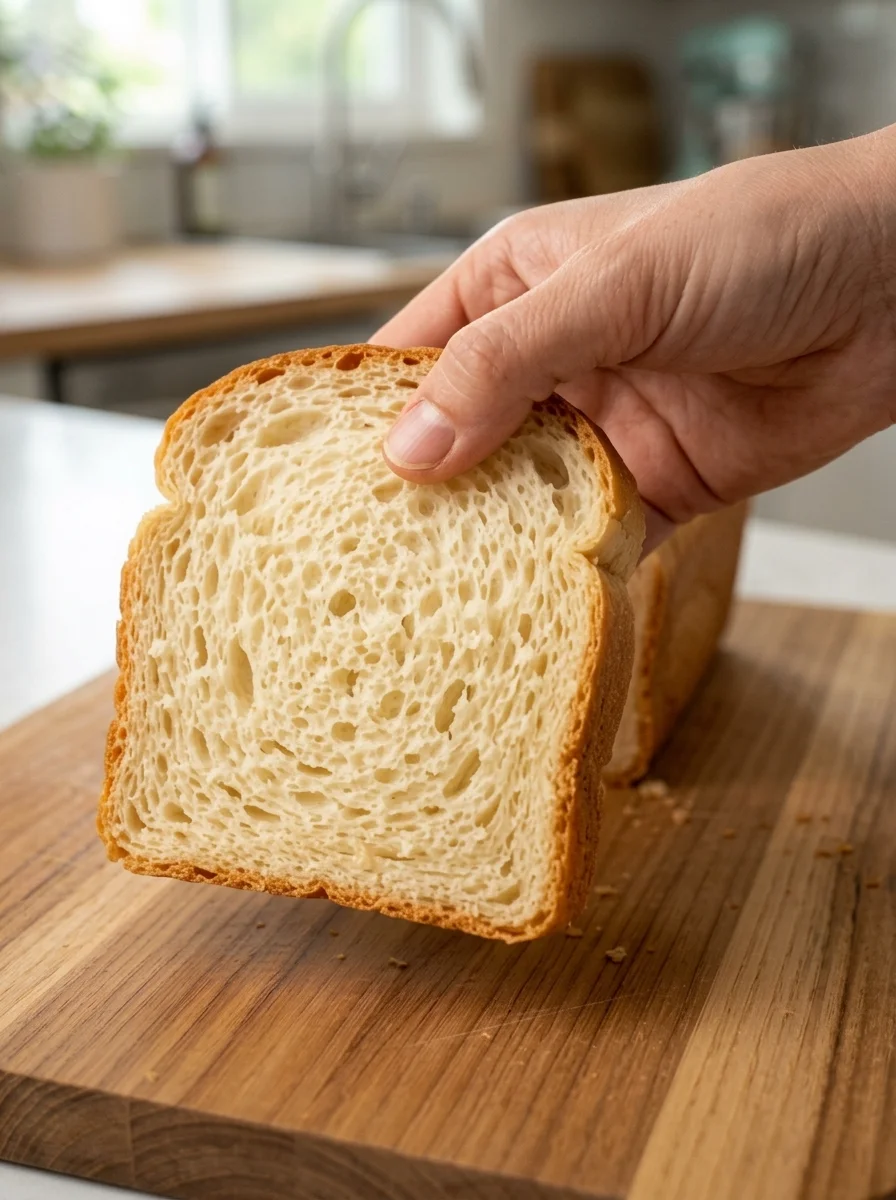
· @oussama
Soft, fluffy and wonderfully moist, this easy potato sandwich bread uses mashed potatoes to create a tender crumb that stays fresh longer than many ordinary homemade loaves. There is no kneading, no stand mixer and no complicated technique. It is perfect for sandwiches, toast, breakfast or serving alongside your favorite soups and dinners.
Potato bread has been a home-baking favorite for generations, and for good reason. The starch in mashed potato holds on to moisture, so the loaf bakes up soft and stays that way for days. This no-knead version makes it even easier: you stir the dough in one bowl, let it rise twice, pour it into a loaf pan and bake. The whole process takes about 2½ to 3½ hours, with only about 15 minutes of hands-on time.
Why you will love this potato sandwich bread
This loaf is simple, forgiving and delicious. Here is what makes it worth baking.
- No kneading and no mixer. A wooden spoon and a large bowl are all you need.
- Soft, moist crumb. Mashed potato keeps the bread tender and slightly springy.
- Stays fresh longer. The moisture from the potato slows staling, so slices stay soft for days.
- A sturdy sandwich slice. The loaf holds fillings well and slices cleanly once cooled.
- Simple ingredients. Flour, potato, milk or water, yeast, sugar, salt and butter are all you need.
- Flexible recipe. It works with milk or water, sugar or honey, and with or without an egg.
- Great for beginners. The dough is easy to handle, and the visual cues make it clear when each stage is done.
Why add potato to bread?
Mashed potato adds both moisture and starch. The starch absorbs water and holds it through baking and storage, which gives the bread a plush, tender crumb. Potato also gives the yeast a little extra food, so the dough rises well. The result is a loaf that tastes mild and slightly sweet, not like potato, and that resists drying out far longer than a basic white loaf.
What does potato sandwich bread taste like?
Potato bread tastes soft, mild and lightly buttery, with a thin golden crust and a fine, even crumb. It is neutral enough to pair with sweet toppings like jam and honey as well as savory fillings like cheese, chicken and eggs. It toasts beautifully, and it makes excellent grilled cheese.
No-knead potato bread recipe details
This recipe makes 1 loaf of about 10 to 12 slices. Most of the time is hands-off rising.
- Prep time: 15 minutes
- Rise time: 1½-2½ hours
- Bake time: 35-40 minutes
- Total time: about 2½-3½ hours
- Oven temperature: 350°F (175°C)
- Loaf pan size: 9 x 5 inches (23 x 13 cm)
- Yield: 1 loaf, about 10-12 slices
Ingredients for potato sandwich bread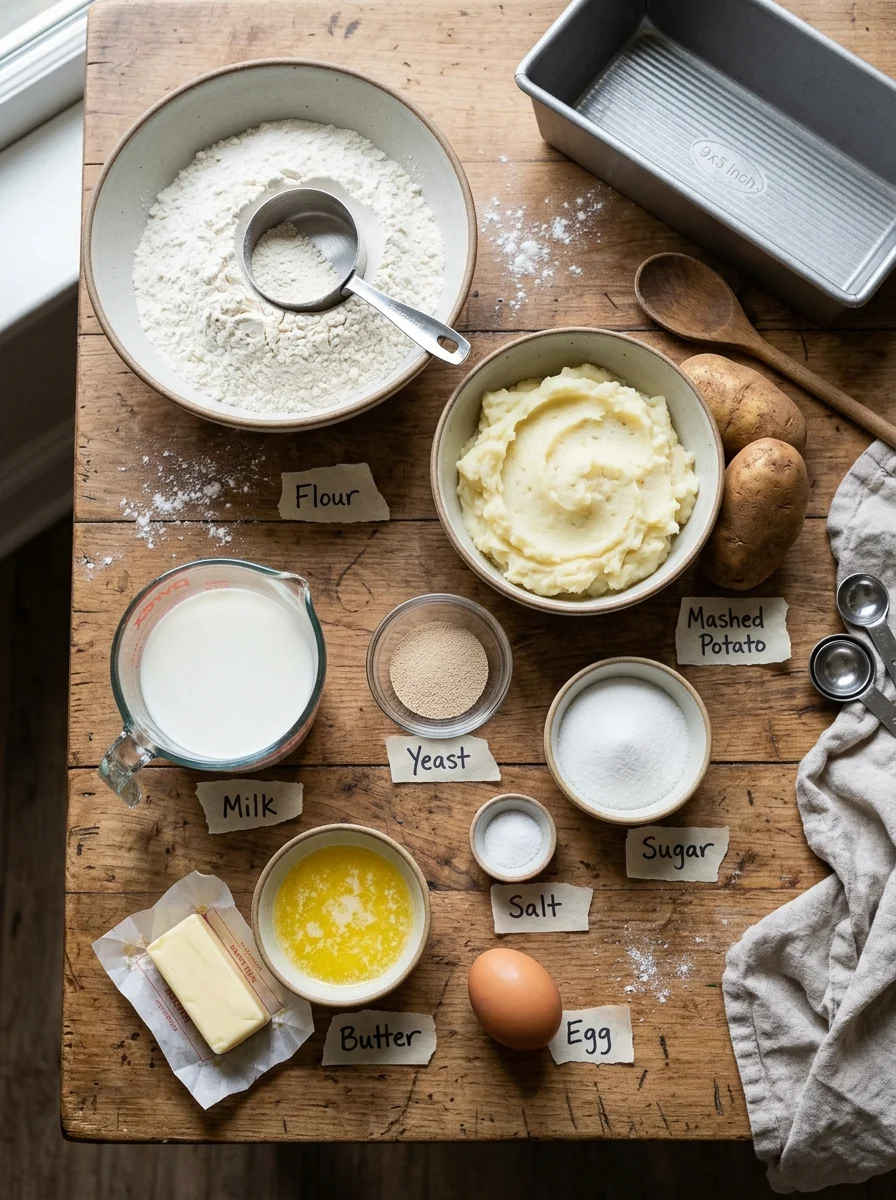
For the bread
- 1 cup (210-220 g) plain mashed potato, cooled
- 3 cups (375 g) all-purpose flour or bread flour
- ¾ cup (180 ml) warm milk or water, about 100-110°F (38-43°C)
- 2¼ teaspoons (7 g) instant yeast
- 2 tablespoons (25 g) sugar or honey
- 1 teaspoon salt
- 2 tablespoons (28 g) unsalted butter, melted and slightly cooled
- 1 large egg, room temperature (optional, for a richer loaf)
For the topping (optional)
- 1 teaspoon melted butter
- A little milk for brushing
Equipment you will need
- Large mixing bowl
- Wooden spoon or sturdy spatula
- Potato masher or fork
- 9 x 5-inch (23 x 13 cm) loaf pan
- Plastic wrap or a clean kitchen towel
- Pastry brush
- Wire cooling rack
- Instant-read thermometer, optional
How to make no-knead potato bread, step by step
Follow these seven steps for a soft, golden loaf. Read through them once first, since the dough needs two rises.
Step 1: Prepare the mashed potato
- Peel and chop one medium potato.
- Boil until fork-tender, then drain thoroughly and mash until smooth.
- Measure out 1 cup of mashed potato and allow it to cool until just warm or at room temperature.
- Use plain mashed potato without added milk, butter or seasoning for the most consistent results.
Step 2: Mix the dough
- In a large mixing bowl, combine the warm milk or water, sugar and instant yeast.
- Add the mashed potato, melted butter and egg if using. Stir until mostly combined.
- Add the flour and salt. Mix with a wooden spoon or sturdy spatula until no dry flour remains and a soft, slightly sticky dough forms.
- The dough should be soft and tacky rather than firm. If it seems dry, add extra liquid 1 tablespoon at a time. If it is extremely wet, add a little flour.
Step 3: Let the dough rise
- Cover the bowl with plastic wrap or a clean kitchen towel.
- Leave it in a warm, draft-free place for 60-90 minutes, or until roughly doubled in size.
Step 4: Shape the loaf
- Lightly grease a 9 x 5-inch (23 x 13 cm) loaf pan.
- Lightly flour your hands or use a spatula to gently fold the dough over itself a few times.
- Shape it into a loose log and place it seam-side down in the pan.
- Avoid adding too much extra flour, as the moisture from the potato helps make the bread fluffy.
Step 5: Let it rise again
- Cover the pan loosely and let the dough rise for another 30-60 minutes, until noticeably puffy and approaching the top of the pan.
- Meanwhile, preheat the oven to 350°F (175°C).
Step 6: Bake until golden
- Brush the top lightly with milk if desired.
- Bake for 35-40 minutes, until the loaf is golden brown and cooked through.
- If the top browns too quickly, loosely cover it with foil during the final 10 minutes.
- For a reliable doneness check, the center should reach approximately 190-200°F (88-93°C).
Step 7: Brush with butter and cool
- Remove the loaf from the oven and brush the top with melted butter for a soft, flavorful crust.
- Let it rest in the pan for 10 minutes, then transfer it to a wire rack.
- Allow it to cool for at least 45 minutes before slicing.
How to tell when potato bread is done
- Color: The top should be deep golden brown.
- Temperature: The center should read about 190-200°F (88-93°C) on an instant-read thermometer.
- Sound: Tap the bottom of the loaf after removing it from the pan. It should sound hollow.
- Sides: The loaf should feel firm and pull slightly away from the pan.
Tips for the best potato bread
These habits help you get a tall, soft loaf every time.
- Measure the potato after mashing. Too much potato can make the dough heavy or overly wet.
- Drain the potato well. Excess cooking water can change the dough’s consistency.
- Keep the dough soft. A slightly sticky dough produces a more tender crumb.
- Let it rise fully. Cooler kitchens may require extra rising time.
- Do not slice while hot. Cooling allows the inside to set and prevents a gummy texture.
- Use plain mashed potatoes. Leftover mashed potatoes containing milk or butter can work, but you may need to reduce the liquid or butter in the recipe.
- Cool the potato first. Hot potato can harm the yeast, so make sure it is just warm or at room temperature.
- Use a thermometer. It is the most reliable way to know the center is cooked.
Ingredient notes and substitutions
- Potatoes. Starchy potatoes such as russet or Yukon Gold work well. Boil them until completely tender, then mash until smooth. Lumps can create an uneven crumb.
- Instant mashed potato flakes. Prepare them with water only, according to the package, then cool and measure 1 cup.
- Flour. All-purpose flour gives a soft, tender loaf. Bread flour gives a slightly taller, chewier one. Both work well.
- Milk or water. Milk gives a richer, softer crumb. Water gives a lighter, slightly crustier loaf.
- Yeast. Instant yeast can be mixed in directly. Active dry yeast should foam in the warm liquid first, so allow 5-10 minutes.
- Sugar or honey. A small amount feeds the yeast and gives gentle sweetness.
- Butter. Unsalted butter lets you control the salt. Olive oil can replace it.
- Egg. The egg is optional. It makes the loaf richer and the crumb a bit more golden.
Potato bread troubleshooting
- Bread is dense: Too much flour was added, or the dough did not rise enough. Keep the dough soft and let it become puffy.
- Bread is gummy inside: It was cut too soon or underbaked. Cool for at least 45 minutes and check the center temperature.
- Dough did not rise: The yeast may be old, or the liquid or potato was too hot or too cold. Check the expiry date and use warm liquid.
- Dough is too wet: The potato was not drained well, or too much was used. Add flour 1 tablespoon at a time, and measure the mashed potato next time.
- Dough is too dry: Add warm liquid 1 tablespoon at a time until the dough is soft and tacky.
- Top browns too quickly: Cover loosely with foil for the last 10 minutes of baking.
- Bread collapsed: The second rise went too long. Bake when the dough is puffy and near the top of the pan.
- Crust is too hard: Brush with melted butter right after baking and cool under a clean towel.
Easy variations
Once you know the base loaf, it is simple to change it up.
- Whole wheat potato bread. Replace up to 1 cup of the white flour with whole wheat flour. Add 1-2 tablespoons extra liquid if needed.
- Garlic herb potato bread. Add ½ teaspoon garlic powder and 1 teaspoon dried rosemary or Italian herbs.
- Cheesy potato bread. Fold in ½ cup (55 g) shredded cheddar or mozzarella before shaping.
- Honey potato bread. Use honey instead of sugar for a gentle sweetness.
- Dairy-free potato bread. Use water or unsweetened plant-based milk and replace the butter with olive oil or dairy-free butter.
- Egg-free potato bread. Omit the optional egg. Add a little extra liquid if the dough feels too firm.
- Seeded top. Brush with milk and sprinkle sesame, sunflower or pumpkin seeds before baking.
Serving ideas
- Make sandwiches with cheese, chicken, tuna, eggs or roasted vegetables.
- Toast slices and spread with butter, jam or honey.
- Serve with tomato soup, vegetable soup or hearty stews.
- Use thick slices for grilled cheese.
- Enjoy warm with garlic butter or herb-infused olive oil.
- Turn day-old slices into French toast or bread pudding.
- Cube leftovers for croutons or stuffing.
Storage
- Room temperature: Store in an airtight bread bag or container for up to 3 days.
- Refrigerator: Best avoided for everyday storage because it can make bread stale faster.
- Freezer: Slice the completely cooled loaf and freeze in a sealed freezer bag for up to 3 months.
- Reheating: Toast slices straight from frozen or warm in a 300°F (150°C) oven for 5-8 minutes.
Make-ahead tips
- Cook the potato ahead. Boil, mash and refrigerate the potato a day early. Bring it to room temperature before using.
- Refrigerate the dough overnight. After mixing, cover the bowl and refrigerate for 8-12 hours. Let it warm up for 30-45 minutes before shaping.
- Slice and freeze. Cut the cooled loaf so you can take out only what you need.
- Bake the day before. Warm the loaf in the oven before serving at dinner.
No-knead potato bread FAQ
Why add potato to bread? Mashed potato adds moisture and starch, which makes the crumb soft and helps the loaf stay fresh longer.
Can I make potato bread without kneading? Yes. This dough is stirred with a spoon and left to rise. The long rise lets gluten develop on its own, so no kneading is needed.
Can I use leftover mashed potatoes? Yes, if they are plain. If they contain milk, butter or seasoning, reduce the liquid or butter a little and adjust the salt.
Can I use instant mashed potato flakes? Yes. Prepare them with water only, according to the package, let them cool and measure 1 cup.
Can I use sweet potatoes? Yes, though the flavor and color will be different. Mash and cool them, and keep the dough soft.
Why is my dough sticky? That is normal for a no-knead dough. Use a spatula or lightly floured hands, and avoid adding more flour than necessary.
Can I use milk or water? Both work. Milk gives a richer, softer loaf, while water gives a lighter one.
Can I use active dry yeast? Yes. Use the same amount, and let it foam in the warm liquid with the sugar for 5-10 minutes before continuing.
How do I know when the bread is done? The top should be deep golden, and the center should read about 190-200°F (88-93°C). A hollow sound from the bottom of the loaf is also a good sign.
Can I freeze potato bread? Yes. Slice the fully cooled loaf and freeze it in a sealed bag for up to 3 months.
Can I double the recipe? Yes. Make two loaves using two pans, and bake them on the center rack. Check each loaf for doneness.
Final thoughts
This easy potato sandwich bread has a soft, tender crumb, a delicate golden crust and a mild flavor that works with both sweet and savory toppings. The mashed potato keeps every slice moist, making it a lovely homemade loaf for everyday sandwiches and toast, without the work of kneading.
Stir the dough, let it rise while you get on with your day and enjoy fresh bread with dinner. Once you try it, it may become your go-to sandwich loaf.
Print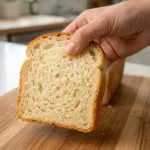
Easy No-Knead Potato Sandwich Bread
Ingredients
For the bread
- 1 cup (210–220 g) plain mashed potato, cooled
- 3 cups (375 g) all-purpose flour or bread flour
- ¾ cup (180 ml) warm milk or water, about 100-110°F (38-43°C)
- 2¼ teaspoons (7 g) instant yeast
- 2 tablespoons (25 g) sugar or honey
- 1 teaspoon salt
- 2 tablespoons (28 g) unsalted butter, melted and slightly cooled
- 1 large egg, room temperature (optional, for a richer loaf)
For the topping (optional)
- 1 teaspoon melted butter
- A little milk for brushing
Equipment you will need
- Large mixing bowl
- Wooden spoon or sturdy spatula
- Potato masher or fork
- 9 x 5-inch (23 x 13 cm) loaf pan
- Plastic wrap or a clean kitchen towel
- Pastry brush
- Wire cooling rack
- Instant-read thermometer, optional
Instructions
Follow these seven steps for a soft, golden loaf. Read through them once first, since the dough needs two rises.
Step 1: Prepare the mashed potato
- Peel and chop one medium potato.
- Boil until fork-tender, then drain thoroughly and mash until smooth.
- Measure out 1 cup of mashed potato and allow it to cool until just warm or at room temperature.
- Use plain mashed potato without added milk, butter or seasoning for the most consistent results.
Step 2: Mix the dough
- In a large mixing bowl, combine the warm milk or water, sugar and instant yeast.
- Add the mashed potato, melted butter and egg if using. Stir until mostly combined.
- Add the flour and salt. Mix with a wooden spoon or sturdy spatula until no dry flour remains and a soft, slightly sticky dough forms.
- The dough should be soft and tacky rather than firm. If it seems dry, add extra liquid 1 tablespoon at a time. If it is extremely wet, add a little flour.
Step 3: Let the dough rise
- Cover the bowl with plastic wrap or a clean kitchen towel.
- Leave it in a warm, draft-free place for 60-90 minutes, or until roughly doubled in size.
Step 4: Shape the loaf
- Lightly grease a 9 x 5-inch (23 x 13 cm) loaf pan.
- Lightly flour your hands or use a spatula to gently fold the dough over itself a few times.
- Shape it into a loose log and place it seam-side down in the pan.
- Avoid adding too much extra flour, as the moisture from the potato helps make the bread fluffy.
Step 5: Let it rise again
- Cover the pan loosely and let the dough rise for another 30-60 minutes, until noticeably puffy and approaching the top of the pan.
- Meanwhile, preheat the oven to 350°F (175°C).
Step 6: Bake until golden
- Brush the top lightly with milk if desired.
- Bake for 35-40 minutes, until the loaf is golden brown and cooked through.
- If the top browns too quickly, loosely cover it with foil during the final 10 minutes.
- For a reliable doneness check, the center should reach approximately 190-200°F (88-93°C).
Step 7: Brush with butter and cool
- Remove the loaf from the oven and brush the top with melted butter for a soft, flavorful crust.
- Let it rest in the pan for 10 minutes, then transfer it to a wire rack.
- Allow it to cool for at least 45 minutes before slicing.