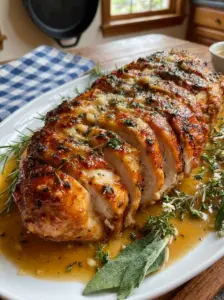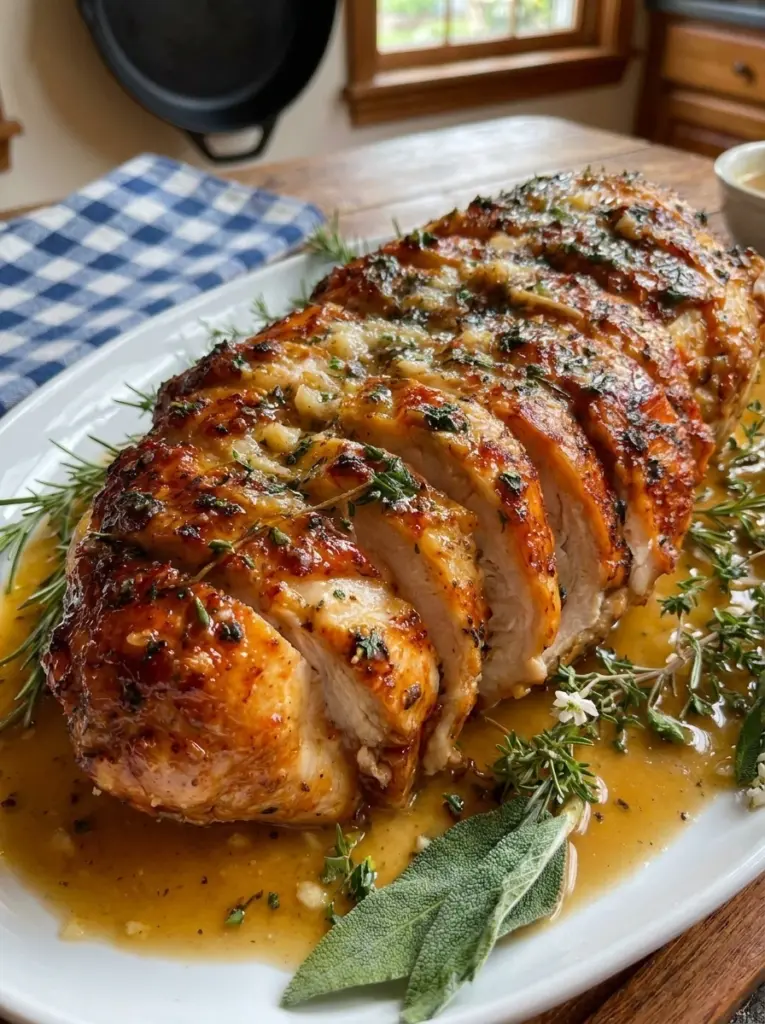
Garlic-Herb Roasted Turkey Breast with Pan Gravy: The Ultimate Guide for a Juicy, Flavorful Centerpiece
Meta Description: Learn how to make garlic-herb roasted turkey breast with pan gravy — a juicy, flavorful main dish perfect for holidays or Sunday dinner. Includes tips, timing, and a foolproof gravy recipe.
If you’re searching for a way to serve incredible roasted turkey without the hassle of cooking an entire bird, garlic-herb roasted turkey breast with pan gravy is the answer. This recipe delivers everything you love about a holiday turkey dinner — juicy meat, crispy golden skin, and a rich, savory gravy — in a fraction of the time and with far less stress. Whether you’re hosting a small Thanksgiving gathering, cooking for a holiday-averse crowd, or simply craving a comforting Sunday roast, a boneless turkey breast is one of the most underrated cuts you can bring to the table.
In this comprehensive guide, we’ll walk through everything you need to know: ingredient selection, step-by-step preparation, roasting techniques, internal temperature guidelines, how to make a silky pan gravy from scratch, and answers to the most common questions home cooks have about turkey breast. By the end, you’ll have all the tools to make this dish a new staple in your recipe rotation.
Why Choose Turkey Breast Over a Whole Turkey?
Cooking a whole turkey is a labor of love, but it isn’t always practical. A whole turkey requires hours of roasting, a large oven, careful basting, and the ever-present anxiety of dry white meat or undercooked dark meat. A boneless turkey breast roast solves nearly all of these problems.
Here’s why so many home cooks are switching to turkey breast, especially for smaller gatherings:
- Faster cooking time. A 3- to 4-pound turkey breast roasts in roughly 90 minutes to 2 hours, compared to 3-4+ hours for a whole bird.
- More consistent results. Without a carcass, wings, and legs cooking at different rates, it’s much easier to hit the perfect internal temperature throughout.
- Less waste. If you’re cooking for a smaller group, a whole turkey often means days of leftovers. A turkey breast gives you a manageable amount of meat.
- Easier carving. Boneless breast meat carves into clean, uniform slices — perfect for a beautiful presentation.
- Budget-friendly and accessible. Turkey breast roasts are available year-round, not just around the holidays, so you can enjoy this dish any time you’re craving comfort food.
This recipe leans into all of these advantages while still delivering that iconic combination of herb-infused, buttery turkey and old-fashioned gravy that makes any meal feel special.
Ingredients You’ll Need
For the Garlic-Herb Turkey Breast
- 1 boneless turkey breast roast (about 3 to 4 pounds) — netted or tied, thawed if frozen
- 5 tablespoons unsalted butter, softened — this forms the base of your flavorful herb compound butter
- 4-5 cloves garlic, minced — fresh garlic is essential for that deep, aromatic flavor
- 1 tablespoon fresh rosemary, finely chopped (or 1 teaspoon dried)
- 1 tablespoon fresh thyme leaves (or 1 teaspoon dried)
- 1 tablespoon fresh sage, chopped (or 1 teaspoon dried)
- 1 teaspoon fresh parsley, chopped (for freshness and color)
- 1 ½ teaspoons kosher salt (adjust to taste)
- ½ teaspoon freshly ground black pepper
- 1 teaspoon lemon zest (optional, but adds brightness)
- 1 tablespoon olive oil (to help crisp the skin)
- 1 cup low-sodium chicken or turkey broth (for the roasting pan, to prevent drippings from burning)
- 1 small onion, quartered (optional, for aromatics)
- 2 carrots and 2 celery stalks, roughly chopped (optional, adds flavor to pan drippings and doubles as a natural roasting rack)
For the Pan Gravy
- Pan drippings (from the roasted turkey breast)
- 3 tablespoons unsalted butter (if needed, to supplement drippings)
- 3 tablespoons all-purpose flour
- 2 to 2 ½ cups turkey or chicken broth (plus more as needed for consistency)
- ¼ cup dry white wine (optional, for depth of flavor)
- Salt and freshly ground black pepper, to taste
- 1 teaspoon fresh thyme or a pinch of dried herbs (optional, to tie the flavors together)
Step-by-Step Instructions
Step 1: Prepare the Garlic-Herb Butter
In a small mixing bowl, combine the softened butter, minced garlic, rosemary, thyme, sage, parsley, salt, pepper, and lemon zest (if using). Mash everything together with a fork or spatula until you have a smooth, evenly distributed herb butter. This compound butter is the heart of the recipe — it’s what infuses the turkey breast with flavor while keeping the meat moist during roasting.
Pro Tip: Make the herb butter a day ahead and store it in the refrigerator. This allows the flavors to meld together even more, resulting in a more pronounced garlic-herb taste.
Step 2: Prep the Turkey Breast
Remove the turkey breast from its packaging and pat it completely dry with paper towels. This step matters more than you might think — excess moisture on the surface prevents the skin from crisping and browning properly in the oven.
If your turkey breast is tied with netting, leave it intact; it helps the roast maintain its shape during cooking. Place the turkey breast on a cutting board and gently loosen the skin from the meat using your fingers, being careful not to tear it. This creates a pocket where you can push a portion of the herb butter directly against the meat.
Step 3: Season Generously
Using your fingers, spread about two-thirds of the garlic-herb butter underneath the loosened skin, massaging it evenly over the meat. Then rub the remaining butter over the outside of the skin. This two-layer approach ensures flavor both inside and out, while the butter on the skin’s surface helps it turn a deep golden brown as it roasts.
Drizzle the turkey breast with olive oil and season the exterior with any remaining salt and pepper.
Step 4: Set Up the Roasting Pan
Preheat your oven to 325°F (165°C). While it heats, prepare your roasting pan. If using, scatter the quartered onion, carrots, and celery across the bottom of the pan — these vegetables act as a natural roasting rack, elevating the turkey breast slightly so it doesn’t sit directly in the drippings, while also infusing the pan juices with extra flavor for the gravy.
Pour the chicken or turkey broth into the bottom of the pan. This keeps the drippings from scorching and gives you a flavorful base to start your gravy later.
Place the turkey breast, skin-side up, directly on top of the vegetables (or on a roasting rack if you’re not using vegetables).
Step 5: Roast to Perfection
Insert an oven-safe meat thermometer into the thickest part of the turkey breast, if you have one, or plan to check periodically with an instant-read thermometer.
Roast at 325°F for approximately 20-25 minutes per pound, or until the internal temperature reaches 165°F (74°C) at the thickest point. For a 3- to 4-pound turkey breast, this typically takes 1 hour 15 minutes to 1 hour 45 minutes.
Halfway through roasting, you can baste the turkey with the pan juices for extra moisture and color, though this isn’t strictly necessary given the herb butter already provides ample moisture.
If the skin begins to brown too quickly before the interior is fully cooked, loosely tent the turkey breast with aluminum foil for the remainder of the cooking time.
Step 6: Rest Before Carving
Once the turkey breast reaches 165°F, remove it from the oven and transfer it to a cutting board. Tent it loosely with foil and let it rest for 15 to 20 minutes before slicing.
This resting period is non-negotiable if you want juicy meat. Cutting into the turkey too early allows the internal juices to escape onto your cutting board rather than staying within the meat fibers, resulting in drier slices.
How to Make the Perfect Pan Gravy
While the turkey rests, it’s the perfect time to transform those flavorful pan drippings into a rich, silky gravy.
Step 1: Strain the Drippings
Pour the drippings from the roasting pan through a fine-mesh strainer into a measuring cup or bowl, separating out the roasted vegetables (which can be discarded or reserved for another use, like a stock). Let the liquid sit for a minute or two — the fat will rise to the top, making it easier to skim off if you prefer a leaner gravy. You should aim for roughly 2 cups of liquid; supplement with additional broth if needed.
Step 2: Make a Roux
In a saucepan over medium heat, melt the 3 tablespoons of butter (or use reserved turkey fat from the drippings for extra flavor). Once melted, whisk in the flour and cook for 1-2 minutes, stirring constantly. This step, called making a roux, cooks out the raw flour taste and creates the thickening base for your gravy.
Step 3: Whisk in the Liquid
Slowly pour in the strained pan drippings and broth, whisking constantly to prevent lumps from forming. If using white wine, add it at this stage as well. Continue whisking over medium heat until the gravy comes to a gentle simmer.
Step 4: Simmer and Season
Let the gravy simmer for 5-8 minutes, whisking occasionally, until it thickens to your desired consistency. If it becomes too thick, thin it out with a splash more broth. If it’s too thin, let it reduce a bit longer, or mix a small amount of flour with cold water to create a slurry and whisk it in.
Taste and adjust the seasoning with salt, pepper, and a pinch of fresh thyme if desired.
Step 5: Serve
Strain the gravy once more for an ultra-smooth texture, if desired, then transfer it to a gravy boat and serve alongside your sliced garlic-herb turkey breast.
Tips for the Best Garlic-Herb Roasted Turkey Breast
- Don’t skip the resting period. As mentioned, resting locks in the juices and results in noticeably more tender meat.
- Use a meat thermometer. Guesswork is the enemy of a good turkey breast. An instant-read or leave-in thermometer takes the anxiety out of roasting and prevents overcooking.
- Loosen, don’t tear, the skin. Take your time separating the skin from the meat to create an even pocket for the herb butter without ripping the skin.
- Baste sparingly. Opening the oven repeatedly to baste can actually extend cooking time by letting heat escape. A couple of bastes are plenty.
- Save the bones or trimmings. If your turkey breast has any bones or trim, freeze them to make homemade stock later.
- Customize the herbs. Feel free to swap in or add herbs like oregano or marjoram depending on what you have on hand or personal preference.
- Make it ahead. The herb butter can be made up to 3 days in advance and stored in the refrigerator, or frozen for up to 3 months.
What to Serve with Garlic-Herb Roasted Turkey Breast
This dish pairs beautifully with a variety of classic sides:
- Creamy mashed potatoes (perfect for soaking up the pan gravy)
- Roasted or steamed green beans with garlic
- Buttery dinner rolls
- Cranberry sauce for a touch of sweetness and acidity
- Stuffing or dressing
- A simple mixed greens salad with a light vinaigrette for balance
Storing and Reheating Leftovers
Store any leftover turkey breast in an airtight container in the refrigerator for up to 4 days. The gravy can be stored separately in its own airtight container for up to 3-4 days as well.
To reheat, place sliced turkey in a baking dish, spoon a bit of gravy or broth over the top to keep it moist, cover with foil, and warm in a 300°F oven for about 15-20 minutes, or until heated through. Alternatively, gently reheat individual portions in the microwave in 30-second intervals.
Leftover turkey breast also makes excellent sandwiches, soups, or additions to a turkey pot pie.
Frequently Asked Questions
How long does it take to cook a 3-4 lb turkey breast? At 325°F, a 3- to 4-pound boneless turkey breast typically takes 1 hour 15 minutes to 1 hour 45 minutes to reach an internal temperature of 165°F.
Can I cook turkey breast from frozen? It’s best to fully thaw the turkey breast in the refrigerator before roasting for even cooking. Cooking from frozen will significantly increase cooking time and can result in uneven doneness.
Do I need to brine the turkey breast? Brining is optional but not required for this recipe, since the herb butter under the skin already helps keep the meat moist. If you’d like to brine, a simple saltwater brine for 4-8 hours can add extra juiciness.
Can I make this recipe in a slow cooker? Yes — you can sear the turkey breast first for color, then transfer it to a slow cooker with broth and cook on low for 4-6 hours, or until it reaches 165°F. Note that the skin won’t be as crisp using this method.
What if my gravy has lumps? If lumps form, simply pour the gravy through a fine-mesh strainer, or use an immersion blender to smooth it out.
Final Thoughts
Garlic-herb roasted turkey breast with pan gravy proves that you don’t need an entire holiday bird to enjoy a memorable, flavor-packed turkey dinner. With a simple compound butter, a properly seasoned roast, and a homemade gravy built from the pan drippings, this recipe delivers restaurant-quality results with minimal fuss. Whether it’s a smaller holiday gathering, a Sunday family dinner, or a meal-prep project for the week ahead, this dish is guaranteed to become a repeat favorite in your kitchen.
Give it a try, and don’t forget to save the leftovers — because a good turkey breast is just as delicious the second time around.