High-Protein Cottage Cheese Sesame Bagel Bread: Easy, No-Yeast Loaf with Bagel Flavor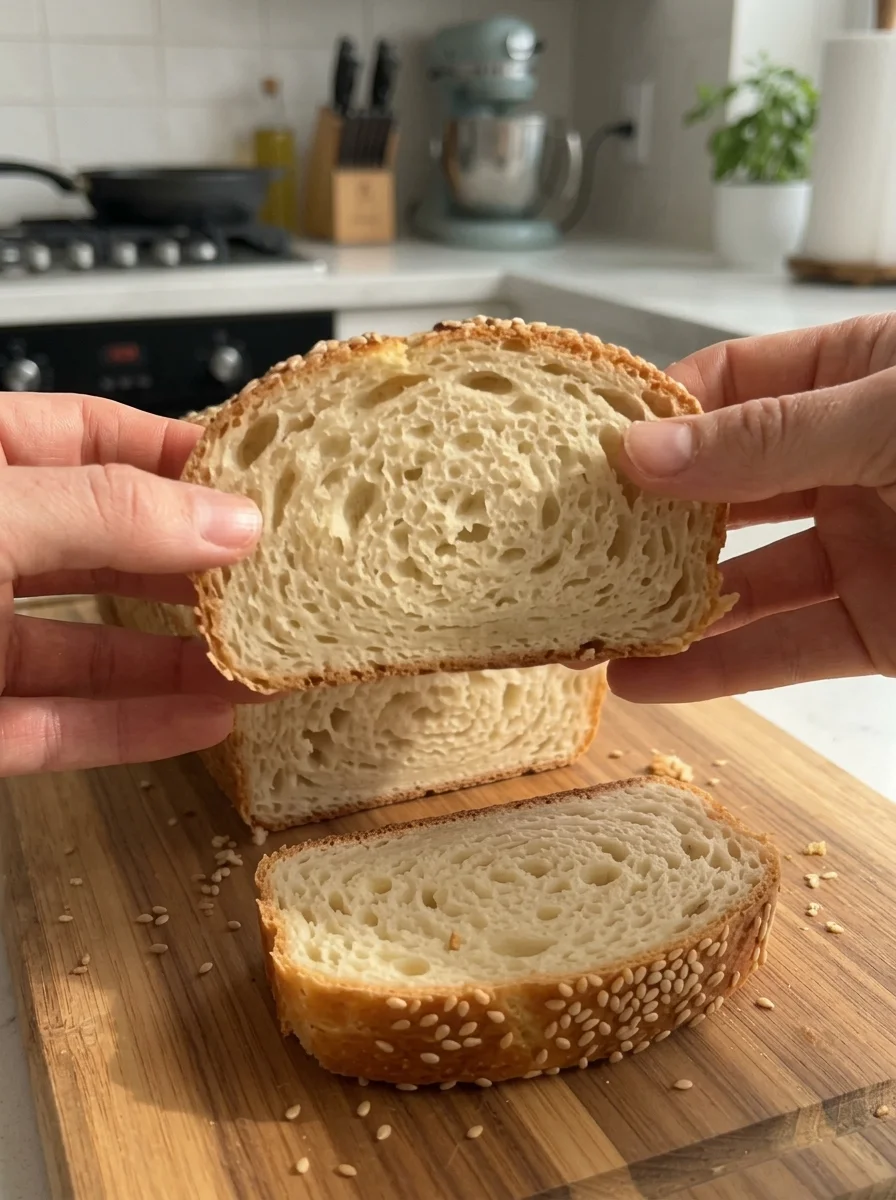
SEO title: High-Protein Cottage Cheese Sesame Bagel Bread Recipe (No Yeast, Easy)
Meta description: Bake soft, chewy high-protein cottage cheese sesame bagel bread with just cottage cheese, eggs, and self-rising flour. No yeast, no rising time. Easy recipe with tips, variations, nutrition, and FAQ.
Focus keyword: cottage cheese bagel bread
Secondary keywords: high-protein bread, cottage cheese bread, sesame bagel loaf, no-yeast bread, self-rising flour bread, protein bread recipe, bagel-inspired loaf, easy breakfast bread, meal prep bread
The flavor of a toasted sesame bagel is hard to beat, but making real bagels takes time, patience, and a pot of boiling water. If you want that familiar bagel-shop taste in a much simpler form, this cottage cheese bagel bread is the answer. It is a soft, chewy, protein-rich loaf with a golden crust and a generous topping of sesame seeds, and it comes together in a single bowl.
The recipe uses only three main ingredients: cottage cheese, eggs, and self-rising flour. There is no yeast, no kneading, and no rising time. You blend the cottage cheese, whisk in the eggs, stir in the flour, pour the batter into a loaf pan, add a sprinkle of sesame seeds, and bake. In about an hour and a quarter you have a fresh loaf that is perfect for breakfast toast, savory sandwiches, or a protein-rich snack.
In this guide you will find the full recipe, step-by-step instructions, an explanation of how each ingredient works, tips for a tender crumb and a golden crust, troubleshooting advice, creative variations, serving ideas, storage and freezing instructions, approximate nutrition, and answers to the questions home bakers ask most often about cottage cheese bread.
Why You’ll Love This Cottage Cheese Bagel Bread
There are many protein breads out there, so what makes this one worth baking? Here are the main reasons.
- High in protein. Cottage cheese and eggs give each slice a satisfying amount of protein, which helps keep you full.
- Bagel-inspired flavor. Sesame seeds, garlic powder, onion powder, and everything bagel seasoning bring classic bagel flavor to a simple loaf.
- No yeast and no rising. Self-rising flour already contains baking powder, so the batter goes straight from the bowl to the oven.
- Only a few ingredients. Cottage cheese, eggs, and flour are all you need for the basic loaf.
- Soft inside, golden outside. The loaf has a tender interior and a toasty, sesame-crusted top.
- Great for meal prep. It keeps well in the refrigerator and freezes beautifully in slices.
- Easy to customize. Add cheese, herbs, spices, or seeds to make it your own.
Recipe Overview
- Preparation time: 10 to 15 minutes
- Baking time: 35 to 45 minutes
- Cooling time: 15 to 20 minutes
- Total time: Approximately 1 hour 15 minutes
- Yield: 1 small loaf, approximately 8 slices
- Pan size: 20 × 10 cm (8 × 4-inch) loaf pan
- Difficulty: Easy
Ingredients for Cottage Cheese Sesame Bagel Bread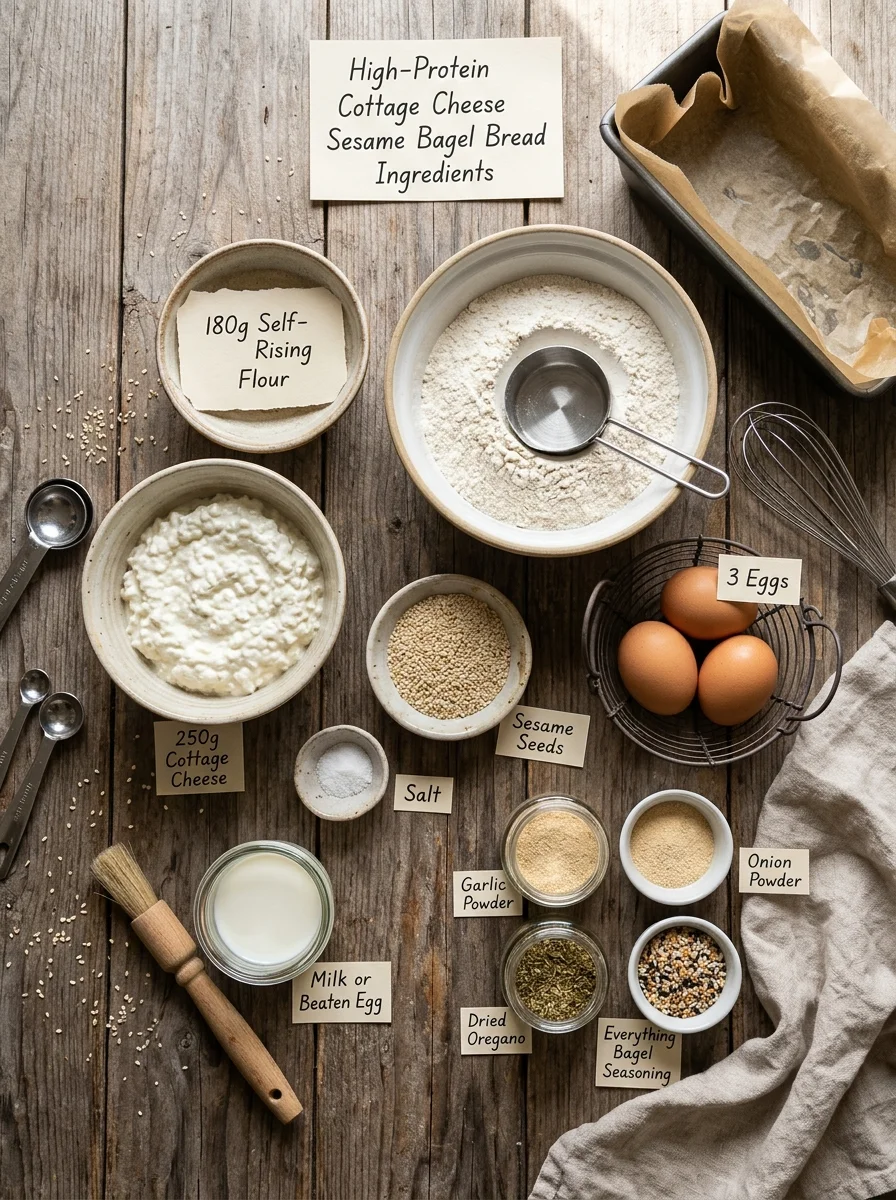
- 250 g (1 cup) cottage cheese
- 3 large eggs
- 180 g (1½ cups) self-rising flour
- 1 tablespoon sesame seeds for the topping
- ½ teaspoon salt, optional, depending on the flour
Optional bagel-style flavorings:
- ½ teaspoon garlic powder
- ½ teaspoon onion powder
- ½ teaspoon dried oregano
- 1 teaspoon everything bagel seasoning
For brushing:
- 1 tablespoon milk or beaten egg
A Closer Look at the Key Ingredients
Cottage cheese. Cottage cheese is the foundation of the loaf. It adds protein, moisture, and a mild tang, and it replaces much of the fat and liquid you would normally use. Thicker, creamier cottage cheese works best. If yours is watery, drain it before blending so the batter does not become too wet.
Eggs. Eggs bind the batter, add richness, and give the loaf structure. Because this bread has no yeast and relatively little flour, the eggs do a lot of the work of holding everything together and helping the loaf set.
Self-rising flour. Self-rising flour already contains baking powder and salt, which is what lets this batter rise without yeast. Using fresh flour matters, since baking powder loses strength over time, which can lead to a flatter, denser loaf.
Sesame seeds. Sesame seeds are the signature bagel topping. They add a nutty flavor, a pleasant crunch, and a classic bagel look. Be generous, and press them gently into the surface so they stay on.
Salt. Because self-rising flour already contains salt, the added salt is optional. Taste your flour or adjust according to your preference.
Garlic powder, onion powder, and oregano (optional). These give the loaf a savory, bagel-shop flavor without adding any extra work.
Everything bagel seasoning (optional). A teaspoon in the batter, or a sprinkle on top, adds sesame, garlic, onion, poppy seeds, and salt in one easy step.
Milk or beaten egg for brushing. A light brush before baking helps the sesame seeds stick and gives the crust a golden finish.
How to Make Cottage Cheese Sesame Bagel Bread: Step by Step
Step 1: Prepare the Oven and Loaf Pan
- Preheat the oven to 180°C (350°F).
- Grease a small loaf pan measuring approximately 20 × 10 cm (8 × 4 inches).
- Line it with parchment paper, leaving a little overhang to make removing the bread easier.
The parchment sling is especially useful for a moist, protein-rich loaf, which can stick to the pan.
Step 2: Prepare the Cottage Cheese
- Place the cottage cheese in a blender or food processor.
- Blend until smooth and creamy.
- If the cottage cheese contains excess liquid, drain it before blending.
Blending creates a smoother bread texture and helps distribute the cottage cheese evenly. Without blending, you will see small curds in the crumb, which is fine but gives a more rustic texture.
Step 3: Mix the Wet Ingredients
- Transfer the blended cottage cheese to a large mixing bowl.
- Add the eggs.
- Whisk until smooth and fully combined.
- Add the optional garlic powder, onion powder, oregano, and salt.
Step 4: Add the Flour
- Gradually add the self-rising flour.
- Mix with a spatula until a thick, sticky batter forms.
- Avoid overmixing.
The batter should be thicker than a traditional cake batter but softer and stickier than regular bread dough.
If it seems excessively wet, add a little flour, one tablespoon at a time.
Step 5: Fill the Loaf Pan
- Transfer the batter into the prepared loaf pan.
- Spread it evenly using a spatula.
- Smooth the surface gently.
- Brush the top lightly with milk or beaten egg.
- Sprinkle generously with sesame seeds.
Gently press the sesame seeds onto the surface so they adhere during baking.
Step 6: Bake Until Golden
- Place the loaf in the preheated oven.
- Bake for approximately 35 to 45 minutes.
- The top should become golden brown, and the center should be fully cooked.
- Insert a toothpick into the middle. It should come out clean or with a few dry crumbs.
If the top browns too quickly, loosely cover it with aluminum foil during the final 10 to 15 minutes.
Because this loaf contains eggs and dairy, make sure the center is fully set before removing it from the oven.
Step 7: Cool and Slice
- Remove the loaf from the oven.
- Let it rest in the pan for 10 minutes.
- Lift it out using the parchment paper.
- Transfer it to a wire rack.
- Allow it to cool for another 15 to 20 minutes before slicing.
For the best texture, let the bread cool completely before cutting.
How Does This Bread Rise Without Yeast?
Traditional bread relies on yeast, which ferments sugars and produces gas over a couple of hours. This loaf skips that process entirely. Instead, it uses self-rising flour, which contains baking powder. When the baking powder meets the moisture in the cottage cheese and eggs, and then the heat of the oven, it releases carbon dioxide and lifts the batter. The eggs set as the loaf bakes, trapping the bubbles and giving the bread its structure.
Because there is no gluten development and no fermentation, the texture is closer to a dense, tender quick bread than a yeasted loaf. That is why the recipe calls for gentle mixing. Overmixing can toughen the batter and push out the leavening bubbles, leading to a denser loaf. Fresh self-rising flour also matters, since old flour has weaker leavening power.
Tips for the Best Cottage Cheese Bagel Bread
A few small habits make the difference between a good loaf and a great one.
- Use thick cottage cheese. Excess liquid can make the loaf too moist.
- Blend until smooth. This helps create a more uniform crumb.
- Use fresh self-rising flour. Its raising agents help the bread rise.
- Do not overmix. Excessive mixing can make the bread dense.
- Use sesame seeds generously. They give the loaf its classic bagel-inspired flavor.
- Check the center. A golden crust does not necessarily mean the middle is cooked.
- Let it cool properly. Cooling helps the crumb firm up and makes slicing easier.
- Toast before serving. Toasting adds a delicious crisp exterior.
Troubleshooting Common Problems
The batter is too wet. The cottage cheese may have been watery. Drain it before blending next time, and add a little flour, one tablespoon at a time, if needed.
The loaf is dense. The batter may have been overmixed, or the self-rising flour may have been old. Mix gently, and use fresh flour.
The center is gummy or underbaked. Bake until a toothpick comes out clean or with a few dry crumbs, and allow the loaf to cool before slicing. If the top browns too fast, cover it loosely with foil and keep baking.
The top browned too quickly. Loosely cover the loaf with aluminum foil during the final 10 to 15 minutes of baking.
The loaf stuck to the pan. Grease the pan and line it with parchment paper, leaving a little overhang so you can lift out the loaf.
The sesame seeds fell off. Brush the top with milk or beaten egg first, and press the seeds gently into the surface.
The loaf tastes too salty or too bland. Self-rising flour already contains salt, so the added salt is optional. Taste your flour and adjust. For more flavor, add garlic powder, onion powder, and everything bagel seasoning.
The loaf is crumbly. It may have been sliced too early. Let it cool completely, use a serrated knife, and toast the slices for extra firmness.
Delicious Variations
Garlic Herb Bagel Bread
Add garlic powder, dried parsley, oregano, and a little black pepper.
Cheddar Sesame Bread
Fold 50 g (½ cup) of grated cheddar into the batter before baking.
Everything Bagel Bread
Replace the sesame topping with everything bagel seasoning.
Seeded Protein Bread
Add sunflower seeds, pumpkin seeds, and flaxseeds for extra texture.
Spicy Cheddar Bread
Add grated cheddar, smoked paprika, and a pinch of chili flakes.
Mediterranean Cottage Cheese Bread
Add chopped olives, dried oregano, and a little grated Parmesan.
Serving Ideas
This loaf is versatile enough for breakfast, lunch, or a snack. Try it in these ways:
- Toast slices and spread with cream cheese.
- Make breakfast sandwiches with scrambled eggs.
- Top with avocado, lemon juice, and black pepper.
- Add smoked salmon and cucumber for a bagel-inspired meal.
- Make sandwiches with chicken, turkey, or fresh vegetables.
- Serve with hummus or cottage cheese.
- Enjoy warm with butter and a sprinkle of sesame seeds.
Because the loaf has a tender, slightly dense crumb, toasting slices gives the best texture and makes it sturdy enough for sandwiches.
Storage Instructions
- Refrigerator. Store completely cooled bread in an airtight container for up to 4 days.
- Freezer. Slice the loaf and freeze individual portions for up to 2 months.
- Reheating. Toast slices directly from frozen or warm briefly in a skillet.
- Meal prep. Prepare the loaf ahead of time and toast slices whenever needed.
Because the bread contains eggs and dairy, refrigerate it within 2 hours of baking.
Approximate Nutrition
Estimated per slice, assuming 8 slices and using low-fat cottage cheese:
- Calories: 145 to 175
- Protein: 9 to 12 g
- Carbohydrates: 15 to 19 g
- Fat: 4 to 6 g
- Fiber: 1 g
These values are estimates and vary depending on the flour, cottage cheese, eggs, and optional additions.
Frequently Asked Questions
Do I need yeast for this bread?
No. The self-rising flour contains baking powder, so the loaf rises without yeast and needs no resting time.
Can I use all-purpose flour instead of self-rising flour?
Self-rising flour is recommended because it already contains baking powder and salt. If you only have all-purpose flour, you would need to add a leavening agent, and results may vary.
Do I have to blend the cottage cheese?
Blending creates a smoother, more uniform crumb, but it is optional. Without blending, you will see small curds, which gives a more rustic texture.
Can I use low-fat or full-fat cottage cheese?
Both work. Choose a thick cottage cheese and drain it if it contains excess liquid.
Why is the batter sticky?
The batter is meant to be thicker than a cake batter but softer and stickier than bread dough. If it seems excessively wet, add a little flour, one tablespoon at a time.
How do I know when it is done?
The top should be golden brown, and a toothpick inserted into the middle should come out clean or with a few dry crumbs. Because the loaf contains eggs and dairy, make sure the center is fully set.
Can I make it without sesame seeds?
Yes. You can replace them with everything bagel seasoning or seeds such as sunflower or pumpkin, or leave the top plain.
Can I freeze this bread?
Yes. Slice the loaf and freeze the individual portions for up to 2 months. Toast the slices directly from frozen.
How long does it keep?
Store the completely cooled bread in an airtight container in the refrigerator for up to 4 days.
Can I add cheese?
Yes. Fold about 50 g (½ cup) of grated cheddar into the batter before baking, or try Parmesan for a Mediterranean flavor.
Final Thoughts
This cottage cheese bagel bread is golden, tender, and full of toasted sesame flavor. Every slice delivers a satisfying combination of bagel-inspired taste, protein-rich ingredients, and homemade goodness, all without yeast, kneading, or waiting.
Easy, savory, versatile, and perfect for protein-packed breakfasts and everyday sandwiches. Bake a loaf this weekend, slice it, and toast a piece with cream cheese for a quick taste of your favorite bagel.
Print
High-Protein Cottage Cheese Sesame Bagel Bread
Ingredients
- 250 g (1 cup) cottage cheese
- 3 large eggs
- 180 g (1½ cups) self-rising flour
- 1 tablespoon sesame seeds for the topping
- ½ teaspoon salt, optional, depending on the flour
Optional bagel-style flavorings:
- ½ teaspoon garlic powder
- ½ teaspoon onion powder
- ½ teaspoon dried oregano
- 1 teaspoon everything bagel seasoning
For brushing:
- 1 tablespoon milk or beaten egg
A Closer Look at the Key Ingredients
Cottage cheese. Cottage cheese is the foundation of the loaf. It adds protein, moisture, and a mild tang, and it replaces much of the fat and liquid you would normally use. Thicker, creamier cottage cheese works best. If yours is watery, drain it before blending so the batter does not become too wet.
Eggs. Eggs bind the batter, add richness, and give the loaf structure. Because this bread has no yeast and relatively little flour, the eggs do a lot of the work of holding everything together and helping the loaf set.
Self-rising flour. Self-rising flour already contains baking powder and salt, which is what lets this batter rise without yeast. Using fresh flour matters, since baking powder loses strength over time, which can lead to a flatter, denser loaf.
Sesame seeds. Sesame seeds are the signature bagel topping. They add a nutty flavor, a pleasant crunch, and a classic bagel look. Be generous, and press them gently into the surface so they stay on.
Salt. Because self-rising flour already contains salt, the added salt is optional. Taste your flour or adjust according to your preference.
Garlic powder, onion powder, and oregano (optional). These give the loaf a savory, bagel-shop flavor without adding any extra work.
Everything bagel seasoning (optional). A teaspoon in the batter, or a sprinkle on top, adds sesame, garlic, onion, poppy seeds, and salt in one easy step.
Milk or beaten egg for brushing. A light brush before baking helps the sesame seeds stick and gives the crust a golden finish.
Instructions
Step 1: Prepare the Oven and Loaf Pan
- Preheat the oven to 180°C (350°F).
- Grease a small loaf pan measuring approximately 20 × 10 cm (8 × 4 inches).
- Line it with parchment paper, leaving a little overhang to make removing the bread easier.
The parchment sling is especially useful for a moist, protein-rich loaf, which can stick to the pan.
Step 2: Prepare the Cottage Cheese
- Place the cottage cheese in a blender or food processor.
- Blend until smooth and creamy.
- If the cottage cheese contains excess liquid, drain it before blending.
Blending creates a smoother bread texture and helps distribute the cottage cheese evenly. Without blending, you will see small curds in the crumb, which is fine but gives a more rustic texture.
Step 3: Mix the Wet Ingredients
- Transfer the blended cottage cheese to a large mixing bowl.
- Add the eggs.
- Whisk until smooth and fully combined.
- Add the optional garlic powder, onion powder, oregano, and salt.
Step 4: Add the Flour
- Gradually add the self-rising flour.
- Mix with a spatula until a thick, sticky batter forms.
- Avoid overmixing.
The batter should be thicker than a traditional cake batter but softer and stickier than regular bread dough.
If it seems excessively wet, add a little flour, one tablespoon at a time.
Step 5: Fill the Loaf Pan
- Transfer the batter into the prepared loaf pan.
- Spread it evenly using a spatula.
- Smooth the surface gently.
- Brush the top lightly with milk or beaten egg.
- Sprinkle generously with sesame seeds.
Gently press the sesame seeds onto the surface so they adhere during baking.
Step 6: Bake Until Golden
- Place the loaf in the preheated oven.
- Bake for approximately 35 to 45 minutes.
- The top should become golden brown, and the center should be fully cooked.
- Insert a toothpick into the middle. It should come out clean or with a few dry crumbs.
If the top browns too quickly, loosely cover it with aluminum foil during the final 10 to 15 minutes.
Because this loaf contains eggs and dairy, make sure the center is fully set before removing it from the oven.
Step 7: Cool and Slice
- Remove the loaf from the oven.
- Let it rest in the pan for 10 minutes.
- Lift it out using the parchment paper.
- Transfer it to a wire rack.
- Allow it to cool for another 15 to 20 minutes before slicing.
For the best texture, let the bread cool completely before cutting.