High-Protein Lemon Poppy Seed Bread: A Moist, Zesty, Almond Flour Loaf Made with Greek Yogurt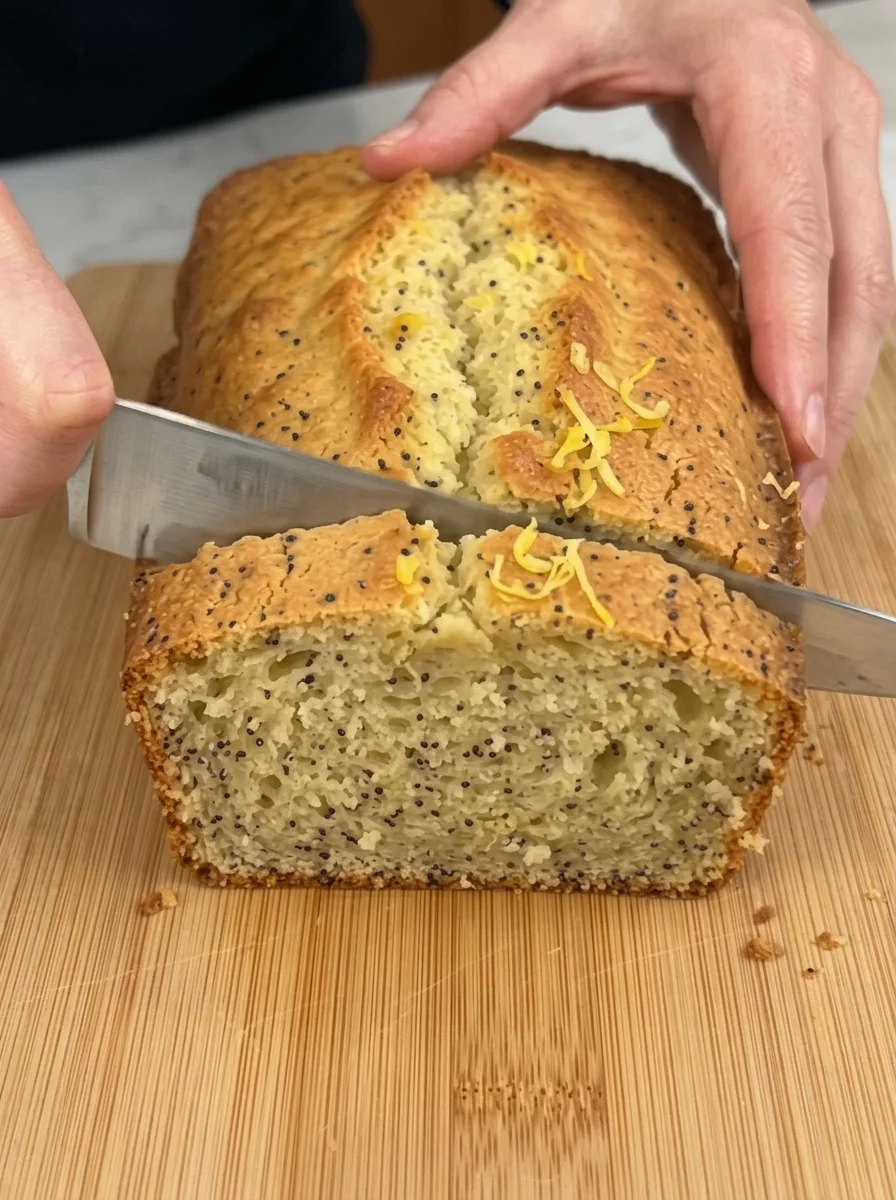
SEO title: High-Protein Lemon Poppy Seed Bread Recipe (Almond Flour & Greek Yogurt)
Meta description: Bake moist, zesty high-protein lemon poppy seed bread with Greek yogurt, eggs, almond flour, and protein powder. Easy recipe with tips, variations, nutrition, storage, and FAQ.
Focus keyword: high-protein lemon poppy seed bread
Secondary keywords: protein lemon bread, almond flour lemon bread, Greek yogurt lemon loaf, healthy lemon poppy seed bread, protein powder bread recipe, high-protein breakfast bread, meal prep breakfast, lemon poppy seed muffins
Lemon poppy seed bread has long been a favorite for bright, cheerful baking. It is fresh, citrusy, tender, and just sweet enough to feel like a treat. The challenge is that traditional versions are usually built on refined flour, butter, and a generous amount of sugar, which makes them delicious but not always the most filling choice for breakfast or a midday snack.
This high-protein lemon poppy seed bread keeps everything people love about the classic loaf and gives it a more satisfying twist. Creamy Greek yogurt, eggs, almond flour, and a scoop of protein powder create a moist, tender crumb with fresh lemon flavor and a delicate crunch from poppy seeds. It is easy to mix in one bowl and one extra bowl, bakes in about 40 to 50 minutes, and slices beautifully for meal prep.
In this guide you will find the complete recipe, a clear step-by-step method, an explanation of how each ingredient works, baking tips, variations, estimated nutrition, serving ideas, storage and freezing instructions, troubleshooting help, and answers to the questions bakers ask most often about protein bread.
Why You’ll Love This High-Protein Lemon Bread
There are plenty of lemon loaves out there, so what makes this one worth baking? Here are the main reasons it earns a spot in your recipe collection.
- Bright, fresh lemon flavor. Zest from two lemons plus fresh lemon juice gives the loaf a vivid citrus taste that feels clean and refreshing.
- Protein-packed. Greek yogurt, eggs, almond flour, and protein powder work together to give each slice a meaningful protein boost.
- Moist and tender. Yogurt and almond flour keep the crumb soft, which is often the hardest part of baking with protein powder.
- Easy to make. There is no kneading, no mixer, and no complicated technique. Whisk, stir, pour, and bake.
- Meal prep friendly. One loaf yields about 10 slices that store well in the refrigerator and freezer.
- Flexible. Swap sweeteners, add blueberries, make muffins, or skip the glaze depending on your preferences.
Recipe Overview
- Prep time: 15 minutes
- Bake time: 40 to 50 minutes
- Cooling time: 20 to 30 minutes
- Total time: Approximately 1 hour 20 minutes
- Yield: 1 loaf, about 10 slices
- Pan size: 8 × 4-inch (20 × 10 cm) loaf pan
- Difficulty: Easy
Ingredients for High-Protein Lemon Poppy Seed Bread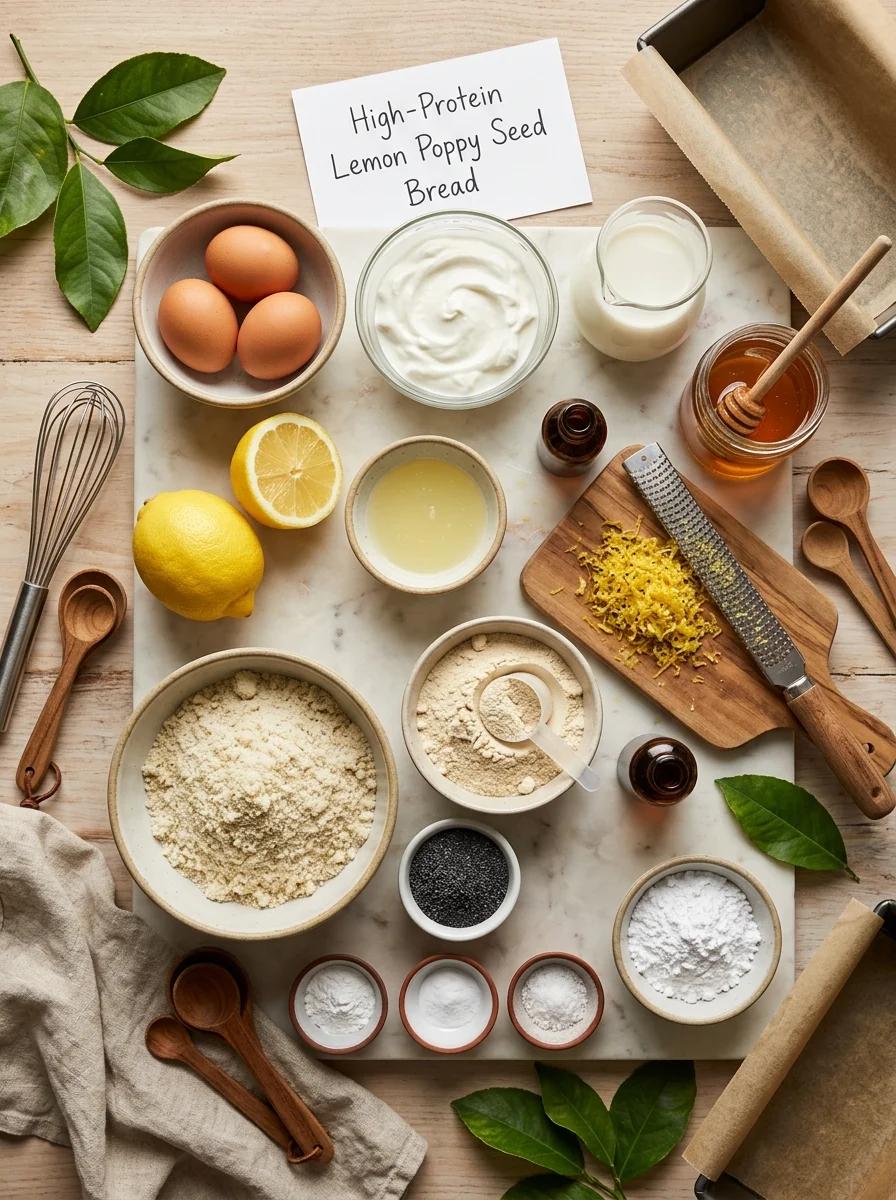
Wet ingredients
- 3 large eggs
- 1 cup (225 g) plain Greek yogurt
- ¼ cup (60 ml) milk of choice
- ⅓ cup (80 ml) honey or maple syrup
- 2 tablespoons (30 ml) fresh lemon juice
- Zest of 2 lemons
- 1 teaspoon vanilla extract
Dry ingredients
- 1½ cups (150 g) almond flour
- ½ cup (50 g) vanilla or unflavored protein powder
- 2 tablespoons poppy seeds
- 1 teaspoon baking powder
- ½ teaspoon baking soda
- ¼ teaspoon salt
Optional lemon glaze
- ½ cup (60 g) powdered sugar
- 1 to 2 tablespoons fresh lemon juice
A Closer Look at the Key Ingredients
Knowing why each ingredient is in the bowl makes it easier to bake confidently and adjust the recipe to your needs.
Eggs. Three large eggs provide structure, moisture, and extra protein. Because this loaf has no wheat flour, the eggs do much of the work of holding the crumb together.
Plain Greek yogurt. Greek yogurt adds creaminess, a slight tang that complements the lemon, and a good amount of protein. It also keeps the loaf moist, which matters because protein powder tends to absorb liquid and can dry out baked goods. Plain yogurt gives the cleanest flavor, and full-fat or low-fat versions both work, though full-fat will taste richer.
Milk of choice. The milk loosens the batter just enough to make it thick but spreadable. Dairy milk or a plant-based milk both work well.
Honey or maple syrup. Either liquid sweetener gives the bread a gentle, natural sweetness. Honey adds a floral note, while maple syrup tastes slightly warmer and more rounded.
Fresh lemon juice and zest. The zest carries most of the fragrant lemon oil, which is where much of the flavor lives, while the juice adds brightness and acidity. Always use fresh lemons for the best result. Bottled juice rarely tastes as vibrant.
Vanilla extract. A small amount of vanilla rounds out the flavor and makes the lemon taste even more pleasant.
Almond flour. Finely ground almond flour is the base of the loaf. It produces a tender, moist, slightly rich crumb and keeps the recipe free of wheat flour.
Protein powder. A vanilla or unflavored powder blends best with the lemon. Whey, casein, and plant-based powders behave differently in baking, so see the tips below if your batter seems too thick or too loose.
Poppy seeds. These tiny seeds provide the signature speckled look and a delicate crunch.
Baking powder and baking soda. Together they lift the loaf. The yogurt and lemon juice add acidity that helps activate the baking soda.
How to Make High-Protein Lemon Poppy Seed Bread: Step by Step
Step 1: Prepare the Oven and Pan
- Preheat the oven to 350°F (175°C).
- Line an 8 × 4-inch (20 × 10 cm) loaf pan with parchment paper, or grease it lightly.
- Wash and dry the lemons before zesting them.
Parchment paper with a little overhang on the long sides makes it easy to lift the loaf out of the pan later. This is especially helpful with almond flour breads, which can be delicate when warm.
Step 2: Mix the Wet Ingredients
- In a large bowl, whisk the eggs until combined.
- Add the Greek yogurt, milk, honey, lemon juice, lemon zest, and vanilla extract.
- Whisk until smooth and creamy.
Take your time here. A smooth, evenly combined wet mixture means you will need less stirring once the dry ingredients go in, which helps keep the loaf tender.
Step 3: Combine the Dry Ingredients
In a separate bowl, mix together the almond flour, protein powder, poppy seeds, baking powder, baking soda, and salt.
Break up any lumps in the protein powder to help the loaf bake evenly. If you see clumps, press them against the side of the bowl with a spoon or sift the dry ingredients together.
Step 4: Make the Batter
- Add the dry ingredients to the wet mixture.
- Stir gently until just combined.
- Let the batter rest for 3 to 5 minutes so the almond flour and protein powder can absorb some moisture.
The batter should be thick but spreadable. If it seems unusually stiff, add 1 tablespoon of milk at a time until it loosens slightly. Resting the batter is a small step that makes a noticeable difference, because protein powder and almond flour need a few minutes to hydrate fully.
Step 5: Bake
- Pour the batter into the prepared loaf pan and smooth the top.
- Bake for 40 to 50 minutes, checking toward the end of the baking time.
- If the top browns too quickly, loosely cover it with foil.
- Check the center with a toothpick. It should come out without wet batter, though a few moist crumbs are fine.
- For a more reliable doneness check, the center should reach about 200 to 205°F (93 to 96°C).
Protein powder can make baked goods brown faster, so start checking early, especially if your oven runs hot or your powder contains a lot of milk proteins.
Step 6: Cool the Loaf
Let the bread cool in the pan for 10 to 15 minutes, then transfer it to a wire rack.
Allow it to cool completely before slicing. Protein-rich baked goods can seem fragile while hot but firm up as they cool. Cutting too soon can cause crumbling and a gummy-looking center.
Step 7: Add the Optional Lemon Glaze
Whisk the powdered sugar with enough lemon juice to create a thick but pourable glaze. Drizzle it over the completely cooled loaf and allow it to set before slicing.
The glaze adds a classic bakery finish and an extra pop of lemon. If you are watching sugar, you can skip it, and the loaf will still taste bright and satisfying.
Tips for the Best High-Protein Lemon Bread
Baking with protein powder and almond flour is a little different from baking with all-purpose flour. These tips help you get a moist, tender result every time.
- Use finely ground almond flour. Fine almond flour creates a smoother, more tender crumb. Coarse almond meal can make the loaf heavier and more crumbly.
- Choose your protein powder carefully. Whey, casein, and plant-based powders absorb liquid differently, so you may need a small adjustment to the milk. If the batter looks too thick, add a tablespoon of milk. If it looks loose, let it rest a few extra minutes.
- Do not overmix. Stir only until the ingredients are combined. Overmixing can make the loaf dense.
- Measure lemon zest carefully. The zest adds fragrant citrus flavor without making the batter too wet. Zest only the yellow part of the peel, since the white pith is bitter.
- Let it cool fully. This helps the loaf hold together when sliced.
- Check early. Protein powder can cause the loaf to brown faster, depending on the brand. Start testing at the 40-minute mark.
- Use room-temperature eggs and yogurt if possible. Cold ingredients can make the batter less uniform, so take them out of the refrigerator about 20 minutes before baking.
- Weigh your ingredients. A kitchen scale is the most reliable way to measure almond flour and protein powder, which can vary a lot when scooped with a cup.
Troubleshooting Common Problems
The loaf is dry. The most common cause is overbaking or a protein powder that absorbs a lot of liquid. Check for doneness earlier, and try adding an extra tablespoon of milk or yogurt next time.
The loaf is crumbly. Almond flour breads are naturally more delicate than wheat breads. Make sure the loaf cools completely before slicing, and use a sharp serrated knife with a gentle sawing motion.
The center sinks. This can happen if the loaf is underbaked or if the oven door was opened too early. Confirm that the center reaches about 200 to 205°F (93 to 96°C), and avoid opening the oven in the first half of baking.
The top browns too fast. Protein powder encourages browning. Loosely cover the loaf with foil once it reaches a deep golden color.
The texture is rubbery. Some protein powders, especially certain whey blends, can create a springy texture when overbaked. Try a different brand or a casein or plant-based blend, and shorten the bake time slightly.
The lemon flavor is weak. Use more zest, since that is where most of the aroma lives, and make sure your lemons are fresh. Adding a little extra juice also helps, as long as you reduce the milk slightly to keep the batter balanced.
Easy Variations
Once you have made the base recipe, try one of these simple changes to keep things interesting.
Blueberry Lemon Bread. Fold in ½ cup of fresh or frozen blueberries. Toss frozen berries with a teaspoon of almond flour first so they do not sink or streak the batter.
Extra-Lemony Bread. Add another teaspoon of lemon zest and a little extra lemon juice, reducing the milk slightly if needed.
Lower-Sugar Version. Replace the honey with a suitable baking sweetener, following the conversion instructions on its package. Skip the glaze or make it with a sugar-free powdered sweetener.
Coconut Lemon Bread. Replace ¼ cup of almond flour with unsweetened shredded coconut. The texture will be slightly different, a little chewier and more tropical.
Lemon Poppy Seed Muffins. Divide the batter among 10 to 12 lined muffin cups and bake at 350°F (175°C) for approximately 18 to 24 minutes, until set. Muffins are excellent for grab-and-go breakfasts.
Estimated Nutrition
Approximate values per slice, assuming 10 slices and using Greek yogurt, almond flour, and protein powder without the optional glaze:
- Calories: 210 to 250
- Protein: 12 to 16 g
- Carbohydrates: 12 to 18 g
- Fat: 12 to 16 g
Actual nutrition depends on the protein powder, yogurt, sweetener, and portion size. For accurate figures, calculate using the nutrition labels of your specific ingredients.
Serving Ideas
This lemon loaf is versatile enough for breakfast, snack time, or a light dessert. Enjoy a slice with:
- Extra Greek yogurt and fresh berries
- A spoonful of cottage cheese
- A cup of tea or coffee
- Fresh strawberries and a little lemon zest
- Almond butter for extra richness
For a simple meal-prep breakfast, slice the loaf on the weekend, store the slices in the refrigerator, and pair one with yogurt and fruit during the week. It also makes a thoughtful addition to a brunch table, since the bright color and glaze look lovely on a platter.
How to Store High-Protein Lemon Bread
Because this loaf contains eggs and dairy, storage matters.
- Refrigerator: Store in an airtight container for up to 5 days.
- Freezer: Slice the cooled loaf, separate the slices with parchment, and freeze for up to 3 months.
- Reheating: Thaw in the refrigerator or microwave an individual slice for 10 to 15 seconds.
Refrigerate the loaf once it has cooled rather than leaving it at room temperature for extended periods. If you plan to glaze the bread, you can freeze the slices unglazed and add a little fresh glaze after reheating for the best appearance.
Frequently Asked Questions
Can I use a different type of protein powder?
Yes, but results vary. Whey, casein, and plant-based powders absorb liquid differently, so you may need to adjust the milk by a tablespoon or so. Vanilla or unflavored powders work best with the lemon flavor.
Can I make this recipe without protein powder?
The protein powder adds protein and some structure, so removing it changes the texture. If you want to try, replace it with a small amount of additional almond flour and watch the batter consistency, adding milk as needed.
Can I use regular flour instead of almond flour?
This recipe is designed around almond flour, and swapping it for wheat flour would change the moisture balance and texture significantly. For best results, stay with finely ground almond flour.
Can I use honey and maple syrup interchangeably?
Yes. Both work well. Honey adds a floral sweetness, while maple syrup gives a warmer, slightly caramel-like note.
What can I use instead of Greek yogurt?
Thick plain skyr or a very thick plain yogurt can work. Thinner yogurts may make the batter looser, so reduce the milk slightly if needed.
How do I know when the bread is done?
A toothpick inserted in the center should come out without wet batter, though a few moist crumbs are fine. For a more reliable check, the center should reach about 200 to 205°F (93 to 96°C).
Why did my bread brown so quickly?
Protein powder can speed up browning, depending on the brand. Loosely cover the loaf with foil if the top darkens before the center is done.
Can I freeze lemon poppy seed bread?
Yes. Slice the cooled loaf, separate the slices with parchment, and freeze for up to 3 months. Thaw in the refrigerator or microwave a single slice for 10 to 15 seconds.
Can I make muffins instead?
Yes. Divide the batter among 10 to 12 lined muffin cups and bake at 350°F (175°C) for approximately 18 to 24 minutes, until set.
Do I have to use the glaze?
No. The glaze is optional. The loaf is flavorful on its own, and skipping the glaze keeps the sugar lower.
Final Thoughts
This high-protein lemon poppy seed bread is moist, citrusy, lightly sweet, and full of bright lemon flavor. Greek yogurt and protein powder boost the protein content, while almond flour keeps the texture tender and satisfying. It is simple enough for a weekday bake and pretty enough to share, and it fits easily into a meal-prep routine.
Best tip: Use fresh lemon zest and allow the loaf to cool completely before slicing for the best flavor and texture.
Bake a loaf this week, slice it, and keep a few pieces in the freezer. With fresh lemon flavor and a satisfying protein boost, it may become your go-to breakfast bread.
Print
High-Protein Lemon Poppy Seed Bread
Ingredients
Wet ingredients
- 3 large eggs
- 1 cup (225 g) plain Greek yogurt
- ¼ cup (60 ml) milk of choice
- ⅓ cup (80 ml) honey or maple syrup
- 2 tablespoons (30 ml) fresh lemon juice
- Zest of 2 lemons
- 1 teaspoon vanilla extract
Dry ingredients
- 1½ cups (150 g) almond flour
- ½ cup (50 g) vanilla or unflavored protein powder
- 2 tablespoons poppy seeds
- 1 teaspoon baking powder
- ½ teaspoon baking soda
- ¼ teaspoon salt
Optional lemon glaze
- ½ cup (60 g) powdered sugar
- 1 to 2 tablespoons fresh lemon juice
A Closer Look at the Key Ingredients
Knowing why each ingredient is in the bowl makes it easier to bake confidently and adjust the recipe to your needs.
Eggs. Three large eggs provide structure, moisture, and extra protein. Because this loaf has no wheat flour, the eggs do much of the work of holding the crumb together.
Plain Greek yogurt. Greek yogurt adds creaminess, a slight tang that complements the lemon, and a good amount of protein. It also keeps the loaf moist, which matters because protein powder tends to absorb liquid and can dry out baked goods. Plain yogurt gives the cleanest flavor, and full-fat or low-fat versions both work, though full-fat will taste richer.
Milk of choice. The milk loosens the batter just enough to make it thick but spreadable. Dairy milk or a plant-based milk both work well.
Honey or maple syrup. Either liquid sweetener gives the bread a gentle, natural sweetness. Honey adds a floral note, while maple syrup tastes slightly warmer and more rounded.
Fresh lemon juice and zest. The zest carries most of the fragrant lemon oil, which is where much of the flavor lives, while the juice adds brightness and acidity. Always use fresh lemons for the best result. Bottled juice rarely tastes as vibrant.
Vanilla extract. A small amount of vanilla rounds out the flavor and makes the lemon taste even more pleasant.
Almond flour. Finely ground almond flour is the base of the loaf. It produces a tender, moist, slightly rich crumb and keeps the recipe free of wheat flour.
Protein powder. A vanilla or unflavored powder blends best with the lemon. Whey, casein, and plant-based powders behave differently in baking, so see the tips below if your batter seems too thick or too loose.
Poppy seeds. These tiny seeds provide the signature speckled look and a delicate crunch.
Baking powder and baking soda. Together they lift the loaf. The yogurt and lemon juice add acidity that helps activate the baking soda.
Instructions
Step 1: Prepare the Oven and Pan
- Preheat the oven to 350°F (175°C).
- Line an 8 × 4-inch (20 × 10 cm) loaf pan with parchment paper, or grease it lightly.
- Wash and dry the lemons before zesting them.
Parchment paper with a little overhang on the long sides makes it easy to lift the loaf out of the pan later. This is especially helpful with almond flour breads, which can be delicate when warm.
Step 2: Mix the Wet Ingredients
- In a large bowl, whisk the eggs until combined.
- Add the Greek yogurt, milk, honey, lemon juice, lemon zest, and vanilla extract.
- Whisk until smooth and creamy.
Take your time here. A smooth, evenly combined wet mixture means you will need less stirring once the dry ingredients go in, which helps keep the loaf tender.
Step 3: Combine the Dry Ingredients
In a separate bowl, mix together the almond flour, protein powder, poppy seeds, baking powder, baking soda, and salt.
Break up any lumps in the protein powder to help the loaf bake evenly. If you see clumps, press them against the side of the bowl with a spoon or sift the dry ingredients together.
Step 4: Make the Batter
- Add the dry ingredients to the wet mixture.
- Stir gently until just combined.
- Let the batter rest for 3 to 5 minutes so the almond flour and protein powder can absorb some moisture.
The batter should be thick but spreadable. If it seems unusually stiff, add 1 tablespoon of milk at a time until it loosens slightly. Resting the batter is a small step that makes a noticeable difference, because protein powder and almond flour need a few minutes to hydrate fully.
Step 5: Bake
- Pour the batter into the prepared loaf pan and smooth the top.
- Bake for 40 to 50 minutes, checking toward the end of the baking time.
- If the top browns too quickly, loosely cover it with foil.
- Check the center with a toothpick. It should come out without wet batter, though a few moist crumbs are fine.
- For a more reliable doneness check, the center should reach about 200 to 205°F (93 to 96°C).
Protein powder can make baked goods brown faster, so start checking early, especially if your oven runs hot or your powder contains a lot of milk proteins.
Step 6: Cool the Loaf
Let the bread cool in the pan for 10 to 15 minutes, then transfer it to a wire rack.
Allow it to cool completely before slicing. Protein-rich baked goods can seem fragile while hot but firm up as they cool. Cutting too soon can cause crumbling and a gummy-looking center.
Step 7: Add the Optional Lemon Glaze
Whisk the powdered sugar with enough lemon juice to create a thick but pourable glaze. Drizzle it over the completely cooled loaf and allow it to set before slicing.
The glaze adds a classic bakery finish and an extra pop of lemon. If you are watching sugar, you can skip it, and the loaf will still taste bright and satisfying.