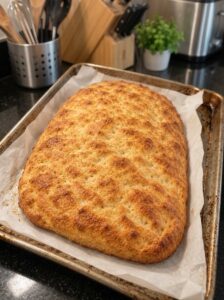
Homemade Focaccia Bread: Soft, Fluffy & Golden with Crispy Edges (Easy Olive Oil Recipe)
SEO title: Homemade Focaccia Bread Recipe (Soft, Fluffy & Crispy-Edged)
Meta description: Make soft, airy homemade focaccia with a golden crust, crispy edges, rosemary, and flaky sea salt. Easy no-knead-style recipe with tips, variations, dipping sauce, storage, and FAQ.
Focus keyword: homemade focaccia bread
Secondary keywords: easy focaccia recipe, rosemary focaccia, olive oil focaccia, focaccia dimples, no-knead focaccia, focaccia toppings, Italian focaccia bread, focaccia with crispy edges, focaccia dipping oil
There is nothing quite like freshly baked homemade focaccia. This classic Italian bread has a golden, lightly crisp exterior, a soft and airy interior, and the unmistakable flavor of good olive oil in every bite. The surface is dotted with signature little dimples that collect pools of olive oil, fragrant rosemary, and flaky sea salt, making each square both rustic and beautiful.
Better still, homemade focaccia bread is one of the easiest yeast breads you can make. The dough is wet and sticky, which means there is no intensive kneading. A few gentle stretch-and-folds, a couple of rises, and a hot oven are all it takes. You can serve it warm as a side dish, slice it for sandwiches, cut it into strips for dipping, or load it with toppings for a more substantial snack.
In this guide you will find the full recipe, step-by-step instructions, an explanation of how each ingredient and technique works, tips for achieving soft, airy bread with crispy edges, troubleshooting advice, creative variations, an easy olive oil dipping sauce, serving ideas, storage and freezing instructions, and answers to the questions home bakers ask most often about focaccia.
Why You’ll Love This Homemade Focaccia
Plenty of bread recipes are impressive, but few offer so much reward for sxo little effort. Here is why this one deserves a place in your regular rotation.
- Soft and airy inside. A wet, well-hydrated dough bakes into a tender crumb with an open, bubbly structure.
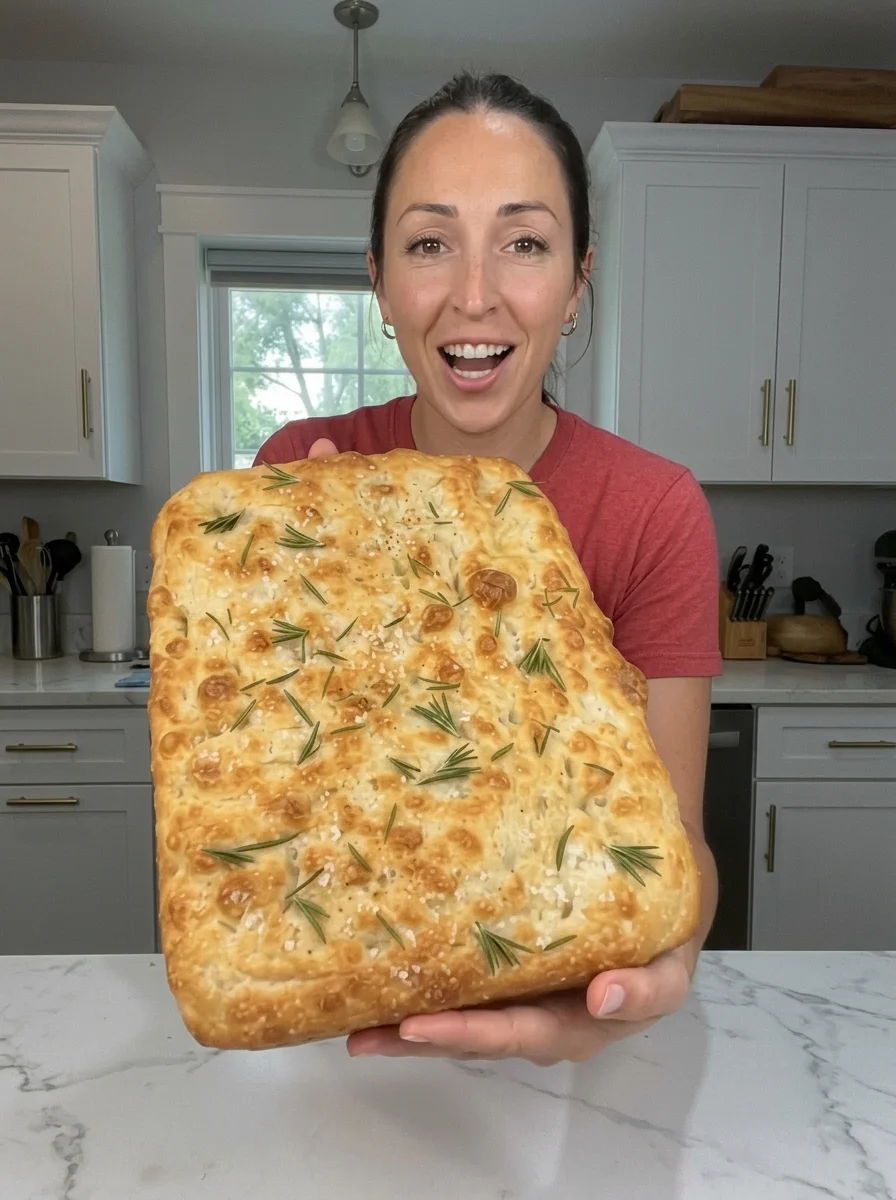
- Golden, crispy edges. Generous olive oil in the pan essentially fries the bottom and edges, creating an irresistible crisp.
- Simple ingredients. Flour, water, yeast, salt, sugar or honey, and olive oil are all you need for the dough.
- No heavy kneading. Gentle stretch-and-folds develop the gluten for you, with no mixer required.
- Endlessly customizable. Keep it classic with rosemary and sea salt, or add olives, tomatoes, garlic, onions, or cheese.
- Perfect for sharing. One pan makes 9 to 12 generous pieces, ideal for dinners, parties, and appetizer boards.
- Flexible schedule. An optional overnight rest in the refrigerator builds flavor and lets you bake when it suits you.
Recipe Overview
- Prep time: 20 minutes
- Rise time: 2 to 3 hours
- Bake time: 22 to 28 minutes
- Total time: Approximately 3 hours
- Yield: 1 large focaccia, about 9 to 12 servings
- Pan size: 9 × 13-inch (23 × 33 cm) baking pan
- Difficulty: Easy
Ingredients for Homemade Focaccia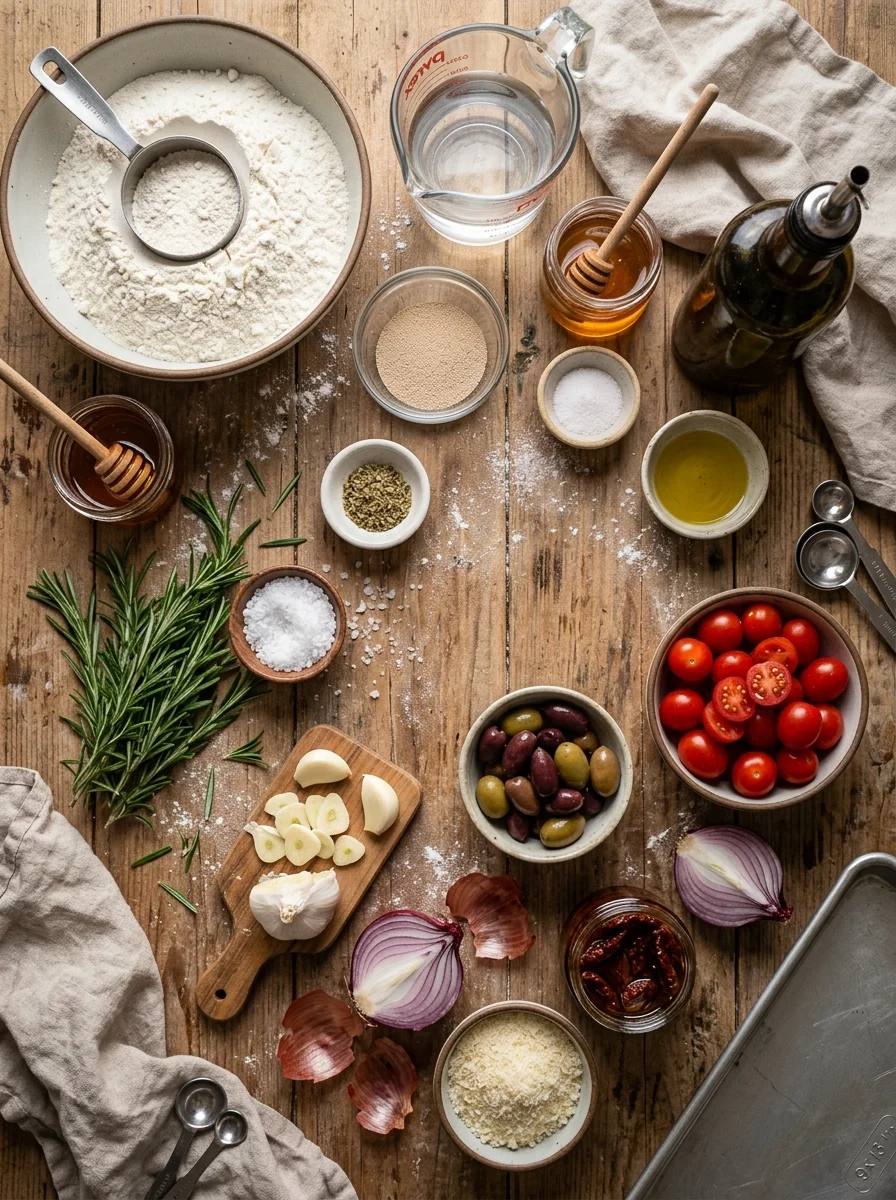
For the dough
- 4 cups (500 g) bread flour or all-purpose flour
- 1¾ cups (420 ml) lukewarm water
- 2¼ teaspoons (7 g) instant yeast
- 1 tablespoon sugar or honey
- 2 teaspoons salt
- 2 tablespoons extra-virgin olive oil
For the topping
- 3 to 4 tablespoons extra-virgin olive oil
- 2 tablespoons fresh rosemary leaves
- 1 teaspoon flaky sea salt
- ½ teaspoon dried oregano (optional)
- 2 garlic cloves, thinly sliced (optional)
Optional toppings
- Kalamata or green olives
- Cherry tomatoes, halved
- Thinly sliced red onion
- Sun-dried tomatoes
- Grated Parmesan cheese
A Closer Look at the Key Ingredients
Bread flour or all-purpose flour. Bread flour has more protein, which builds a stronger gluten network and a chewier, airier crumb. All-purpose flour gives a slightly softer, more tender result. Both work well here.
Lukewarm water. At 420 ml of water to 500 g of flour, this dough is about 84% hydration, which is very wet. That high moisture is the secret to focaccia’s open, airy crumb. The water should be warm, not hot, to avoid damaging the yeast.
Instant yeast. Instant yeast can be mixed directly into the dough. If you only have active dry yeast, dissolve it in the lukewarm water with the sugar and let it stand for 5 to 10 minutes until foamy.
Sugar or honey. A small amount feeds the yeast and encourages golden browning, without making the bread taste sweet.
Salt. Salt flavors the bread and strengthens the dough. Two teaspoons gives a well-seasoned loaf, and the flaky salt on top adds a final burst of flavor and crunch.
Extra-virgin olive oil. Olive oil is the defining flavor of focaccia. It enriches the dough, keeps the crumb tender, and creates the crispy, golden crust when used generously in the pan and on top. Choose a good-quality oil you enjoy tasting.
Fresh rosemary. Rosemary is the classic focaccia herb. Its piney, aromatic flavor pairs beautifully with olive oil and sea salt.
Flaky sea salt. Sprinkled on top before baking, flaky salt adds texture and a pleasing salty contrast to the rich oil.
Garlic, oregano, and other toppings. These are optional extras that let you customize the loaf. Keep wetter toppings modest so the center stays crisp rather than soggy.
How to Make Homemade Focaccia: Step by Step
Step 1: Prepare the Yeast Mixture
In a large mixing bowl, combine the lukewarm water, sugar or honey, and instant yeast.
Stir gently to combine.
If using active dry yeast, allow the mixture to stand for 5 to 10 minutes until foamy. Instant yeast can be mixed directly with the flour if preferred.
Make sure the water is warm, not hot, to avoid damaging the yeast.
Step 2: Mix the Dough
Add the flour, salt, and 2 tablespoons of olive oil to the yeast mixture.
Stir with a wooden spoon until all the ingredients are incorporated and a sticky, shaggy dough forms.
The dough should be wetter and stickier than traditional bread dough. Do not worry about its appearance. This moisture is what helps create focaccia’s soft, airy texture.
No intensive kneading is necessary.
Step 3: Develop the Dough
Cover the bowl and let the dough rest for 15 minutes.
With lightly oiled hands, perform a stretch-and-fold:
- Grab one edge of the dough.
- Stretch it upward gently.
- Fold it toward the center.
- Rotate the bowl and repeat on all four sides.
Repeat this process two or three times, resting the dough for 15 minutes between rounds.
The dough will gradually become smoother and more elastic. Stretch-and-folds build strength gently while preserving the air bubbles that make focaccia light.
Step 4: First Rise
Lightly grease the bowl with olive oil.
Place the dough inside, turning it once to coat the surface.
Cover with plastic wrap or a clean kitchen towel.
Let it rise in a warm place for approximately 60 to 90 minutes, or until doubled in size and noticeably bubbly.
For extra flavor, you can refrigerate the covered dough for 8 to 24 hours after its initial rise. Let it become slightly puffy at room temperature before proceeding.
Step 5: Prepare the Baking Pan
Generously coat a 9 × 13-inch (23 × 33 cm) baking pan with 2 tablespoons of olive oil.
Gently transfer the risen dough into the pan.
Turn it over once so both sides are lightly coated in oil.
Using oiled fingertips, gently stretch the dough toward the corners.
If it keeps shrinking back, let it rest for 10 to 15 minutes before stretching again.
Step 6: Second Rise
Cover the pan loosely with plastic wrap or a clean kitchen towel.
Let the dough rise for another 30 to 45 minutes, or until beautifully puffy.
Meanwhile, preheat the oven to 425°F (220°C).
Step 7: Create the Signature Focaccia Dimples
Drizzle another tablespoon or two of olive oil over the surface.
Lightly oil your fingertips and press them straight down into the dough, creating deep dimples across the entire surface.
Do not press all the way through the dough.
These little pockets will collect olive oil and toppings, creating focaccia’s characteristic texture and flavor.
Step 8: Add the Toppings
Scatter the fresh rosemary leaves evenly over the dough.
Add flaky sea salt and dried oregano if using.
For extra flavor, arrange sliced garlic, olives, or cherry tomatoes across the surface.
Gently press larger toppings into the dough so they stay in place during baking.
Step 9: Bake Until Golden
Place the pan in the preheated oven.
Bake for 22 to 28 minutes, or until the focaccia is beautifully golden brown, with crisp edges and a lightly browned surface.
For a deeper golden finish, bake for another 2 to 3 minutes if needed, watching carefully.
Step 10: Finish and Cool
Remove the focaccia from the oven.
While still warm, drizzle lightly with extra-virgin olive oil if desired.
Sprinkle with a little extra rosemary or flaky sea salt.
Let it rest in the pan for approximately 5 to 10 minutes, then transfer it to a wire rack or cutting board.
Allow it to cool slightly before cutting into squares or strips.
Why Focaccia Dough Is So Wet (and Why That’s a Good Thing)
If you have mostly baked sandwich loaves, a focaccia dough can feel alarmingly sticky. That stickiness is intentional. High hydration lets the flour absorb plenty of water, which turns to steam during baking and inflates the crumb into a light, open, bubbly texture. It also keeps the interior moist and tender even after the crust crisps.
Because a wet dough is hard to knead conventionally, focaccia relies on stretch-and-folds instead. Each fold strengthens the gluten network just enough to trap gas, while time and gentle handling do the rest. Lightly oiled hands, rather than extra flour, are the best way to manage the dough. Adding too much flour tightens the crumb and removes the very qualities that make focaccia special.
Tips for Perfect Homemade Focaccia
A few small details make the difference between decent and outstanding focaccia.
- Keep the dough wet. A sticky dough creates the characteristic soft, airy crumb. Avoid adding too much flour.
- Use good-quality olive oil. It gives focaccia its signature flavor and helps create a delicious golden crust.
- Do not rush the rising. The dough should become noticeably puffy and bubbly before baking.
- Try stretch-and-folds. This develops gluten without requiring traditional kneading.
- Oil the pan generously. Olive oil helps create beautifully crispy, flavorful edges.
- Make deep dimples. Press your fingertips firmly into the dough to create pockets for the topping.
- Do not overload the toppings. Too many wet ingredients can make the center soggy.
- Bake until properly golden. A pale focaccia may have a softer, less developed crust.
- Cool slightly before slicing. This helps the interior crumb settle.
Troubleshooting Common Focaccia Problems
The dough is too sticky to handle. That is normal for focaccia. Use lightly oiled hands and a bowl scraper or spatula rather than adding lots of flour.
The dough keeps shrinking back when I stretch it. The gluten is tight. Let the dough rest for 10 to 15 minutes, then stretch it again gently toward the corners.
The focaccia is dense. The dough may not have risen enough, or too much flour may have been added. Wait until the dough is puffy and bubbly, and keep it wet.
The center is soggy. Too many wet toppings, such as fresh tomatoes, can release moisture. Use them in moderation and press them gently into the dough.
The crust is pale. Make sure the oven is fully preheated to 425°F (220°C), use plenty of olive oil, and bake for another 2 to 3 minutes if needed, watching carefully.
The bottom is not crispy. Be generous with the olive oil in the pan, since it essentially fries the bottom and edges as the bread bakes.
The dimples disappeared. Press your fingertips firmly into the dough, nearly to the bottom, without going all the way through. Dimple the dough right after the second rise, just before topping and baking.
The flavor is mild. Use the optional refrigerated rest for 8 to 24 hours, and finish with good olive oil and flaky sea salt.
Delicious Focaccia Variations
Rosemary & Sea Salt Focaccia. Keep it simple with fresh rosemary, extra-virgin olive oil, and flaky sea salt.
Garlic Parmesan Focaccia. Add thinly sliced garlic and grated Parmesan before baking.
Cherry Tomato Focaccia. Press halved cherry tomatoes into the dough with rosemary and oregano.
Olive & Herb Focaccia. Add Kalamata olives, green olives, rosemary, and dried oregano.
Caramelized Onion Focaccia. Scatter cooled caramelized onions over the dough before baking.
Mediterranean Focaccia. Combine olives, sun-dried tomatoes, red onion, and fresh herbs.
Cheesy Focaccia. Add shredded mozzarella or Parmesan during the final 8 to 10 minutes of baking.
Spicy Focaccia. Sprinkle with chili flakes, garlic, and a little smoked paprika.
Easy Olive Oil Dipping Sauce
This simple dipping sauce makes warm focaccia even more delicious.
Ingredients:
- ¼ cup (60 ml) extra-virgin olive oil
- ½ teaspoon dried oregano
- ½ teaspoon dried basil
- ¼ teaspoon garlic powder
- A pinch of chili flakes
- Freshly ground black pepper
- 1 teaspoon grated Parmesan (optional)
Instructions:
- Pour the olive oil into a small serving bowl.
- Add the oregano, basil, garlic powder, chili flakes, and black pepper.
- Stir gently to combine.
- Sprinkle with Parmesan if desired.
- Serve alongside freshly baked focaccia.
Serving Ideas
Focaccia is versatile enough to be a side, a snack, or the base of a meal. Try it in these ways:
- Serve warm with olive oil and balsamic vinegar.
- Make delicious sandwiches with mozzarella, tomatoes, and fresh basil.
- Pair with creamy tomato soup or vegetable soup.
- Serve alongside pasta, lasagna, or roasted chicken.
- Cut into strips and serve with hummus or whipped feta.
- Add to a Mediterranean appetizer platter with olives, cheese, and fresh vegetables.
- Toast leftover pieces and enjoy with scrambled eggs or avocado.
Because the bread is sturdy yet tender, it also makes excellent sandwich bread. Split a square horizontally, fill it, and press it lightly or grill it for a warm panini-style meal.
Storage and Freezing
Room temperature. Once completely cool, store focaccia in an airtight container or sealed bread bag for up to 2 days.
Refrigerator. Refrigeration is generally unnecessary because it can make bread stale faster. If your focaccia has perishable cheese or other toppings, refrigerate it in an airtight container.
Freezer. Cut the completely cooled focaccia into squares or portions. Wrap tightly and place in a freezer-safe bag. Freeze for up to 2 to 3 months for the best quality.
Reheating. Warm in a preheated oven at 350°F (175°C) for approximately 5 to 8 minutes until the edges become crisp again.
For frozen focaccia, thaw briefly or reheat directly from frozen until warmed through.
Frequently Asked Questions
Do I have to knead focaccia dough?
No. Intensive kneading is not necessary. A few gentle stretch-and-folds develop the gluten while preserving the airy texture.
Why is my focaccia dough so sticky?
Focaccia dough is intentionally wet. Use lightly oiled hands and avoid adding too much flour, which can make the crumb dense.
Can I use all-purpose flour instead of bread flour?
Yes. Bread flour gives a slightly chewier, airier crumb, while all-purpose flour produces a softer, more tender focaccia. Both work well.
Can I use active dry yeast?
Yes. Stir it into the lukewarm water with the sugar or honey and let it stand for 5 to 10 minutes until foamy before mixing the dough.
Can I make the dough ahead of time?
Yes. After the initial rise, you can refrigerate the covered dough for 8 to 24 hours. Let it become slightly puffy at room temperature before proceeding.
What size pan should I use?
A 9 × 13-inch (23 × 33 cm) baking pan works well and yields about 9 to 12 servings.
How do I get crispy edges?
Coat the pan generously with olive oil and bake until the edges are deeply golden. The oil helps fry the bottom and edges for extra crispness.
How do I make the dimples?
Lightly oil your fingertips and press straight down into the risen dough, nearly to the bottom, without pressing all the way through.
Can I freeze focaccia?
Yes. Cut the cooled focaccia into portions, wrap tightly, and freeze in a freezer-safe bag for up to 2 to 3 months. Reheat in a 350°F (175°C) oven until warmed through and crisp.
What toppings work best?
Rosemary and sea salt are classic. Olives, cherry tomatoes, garlic, red onion, sun-dried tomatoes, and Parmesan also work well. Avoid overloading the dough with very wet toppings.
Final Thoughts
Homemade focaccia is golden and crispy on the outside, soft and fluffy on the inside, and full of delicious pockets of olive oil, rosemary, and sea salt. It is wonderfully versatile, easy to customize, and perfect for sharing with family and friends.
Golden, airy, herby, and irresistibly delicious. Bake a pan this weekend, serve it warm with a little olive oil for dipping, and see how quickly it disappears.
Print
Homemade Focaccia Bread – Soft, Fluffy & Golden with Crispy Edges
Ingredients
For the dough
- 4 cups (500 g) bread flour or all-purpose flour
- 1¾ cups (420 ml) lukewarm water
- 2¼ teaspoons (7 g) instant yeast
- 1 tablespoon sugar or honey
- 2 teaspoons salt
- 2 tablespoons extra-virgin olive oil
For the topping
- 3 to 4 tablespoons extra-virgin olive oil
- 2 tablespoons fresh rosemary leaves
- 1 teaspoon flaky sea salt
- ½ teaspoon dried oregano (optional)
- 2 garlic cloves, thinly sliced (optional)
Optional toppings
- Kalamata or green olives
- Cherry tomatoes, halved
- Thinly sliced red onion
- Sun-dried tomatoes
- Grated Parmesan cheese
A Closer Look at the Key Ingredients
Bread flour or all-purpose flour. Bread flour has more protein, which builds a stronger gluten network and a chewier, airier crumb. All-purpose flour gives a slightly softer, more tender result. Both work well here.
Lukewarm water. At 420 ml of water to 500 g of flour, this dough is about 84% hydration, which is very wet. That high moisture is the secret to focaccia’s open, airy crumb. The water should be warm, not hot, to avoid damaging the yeast.
Instant yeast. Instant yeast can be mixed directly into the dough. If you only have active dry yeast, dissolve it in the lukewarm water with the sugar and let it stand for 5 to 10 minutes until foamy.
Sugar or honey. A small amount feeds the yeast and encourages golden browning, without making the bread taste sweet.
Salt. Salt flavors the bread and strengthens the dough. Two teaspoons gives a well-seasoned loaf, and the flaky salt on top adds a final burst of flavor and crunch.
Extra-virgin olive oil. Olive oil is the defining flavor of focaccia. It enriches the dough, keeps the crumb tender, and creates the crispy, golden crust when used generously in the pan and on top. Choose a good-quality oil you enjoy tasting.
Fresh rosemary. Rosemary is the classic focaccia herb. Its piney, aromatic flavor pairs beautifully with olive oil and sea salt.
Flaky sea salt. Sprinkled on top before baking, flaky salt adds texture and a pleasing salty contrast to the rich oil.
Garlic, oregano, and other toppings. These are optional extras that let you customize the loaf. Keep wetter toppings modest so the center stays crisp rather than soggy.
Instructions
Step 1: Prepare the Yeast Mixture
In a large mixing bowl, combine the lukewarm water, sugar or honey, and instant yeast.
Stir gently to combine.
If using active dry yeast, allow the mixture to stand for 5 to 10 minutes until foamy. Instant yeast can be mixed directly with the flour if preferred.
Make sure the water is warm, not hot, to avoid damaging the yeast.
Step 2: Mix the Dough
Add the flour, salt, and 2 tablespoons of olive oil to the yeast mixture.
Stir with a wooden spoon until all the ingredients are incorporated and a sticky, shaggy dough forms.
The dough should be wetter and stickier than traditional bread dough. Do not worry about its appearance. This moisture is what helps create focaccia’s soft, airy texture.
No intensive kneading is necessary.
Step 3: Develop the Dough
Cover the bowl and let the dough rest for 15 minutes.
With lightly oiled hands, perform a stretch-and-fold:
- Grab one edge of the dough.
- Stretch it upward gently.
- Fold it toward the center.
- Rotate the bowl and repeat on all four sides.
Repeat this process two or three times, resting the dough for 15 minutes between rounds.
The dough will gradually become smoother and more elastic. Stretch-and-folds build strength gently while preserving the air bubbles that make focaccia light.
Step 4: First Rise
Lightly grease the bowl with olive oil.
Place the dough inside, turning it once to coat the surface.
Cover with plastic wrap or a clean kitchen towel.
Let it rise in a warm place for approximately 60 to 90 minutes, or until doubled in size and noticeably bubbly.
For extra flavor, you can refrigerate the covered dough for 8 to 24 hours after its initial rise. Let it become slightly puffy at room temperature before proceeding.
Step 5: Prepare the Baking Pan
Generously coat a 9 × 13-inch (23 × 33 cm) baking pan with 2 tablespoons of olive oil.
Gently transfer the risen dough into the pan.
Turn it over once so both sides are lightly coated in oil.
Using oiled fingertips, gently stretch the dough toward the corners.
If it keeps shrinking back, let it rest for 10 to 15 minutes before stretching again.
Step 6: Second Rise
Cover the pan loosely with plastic wrap or a clean kitchen towel.
Let the dough rise for another 30 to 45 minutes, or until beautifully puffy.
Meanwhile, preheat the oven to 425°F (220°C).
Step 7: Create the Signature Focaccia Dimples
Drizzle another tablespoon or two of olive oil over the surface.
Lightly oil your fingertips and press them straight down into the dough, creating deep dimples across the entire surface.
Do not press all the way through the dough.
These little pockets will collect olive oil and toppings, creating focaccia’s characteristic texture and flavor.
Step 8: Add the Toppings
Scatter the fresh rosemary leaves evenly over the dough.
Add flaky sea salt and dried oregano if using.
For extra flavor, arrange sliced garlic, olives, or cherry tomatoes across the surface.
Gently press larger toppings into the dough so they stay in place during baking.
Step 9: Bake Until Golden
Place the pan in the preheated oven.
Bake for 22 to 28 minutes, or until the focaccia is beautifully golden brown, with crisp edges and a lightly browned surface.
For a deeper golden finish, bake for another 2 to 3 minutes if needed, watching carefully.
Step 10: Finish and Cool
Remove the focaccia from the oven.
While still warm, drizzle lightly with extra-virgin olive oil if desired.
Sprinkle with a little extra rosemary or flaky sea salt.
Let it rest in the pan for approximately 5 to 10 minutes, then transfer it to a wire rack or cutting board.
Allow it to cool slightly before cutting into squares or strips.