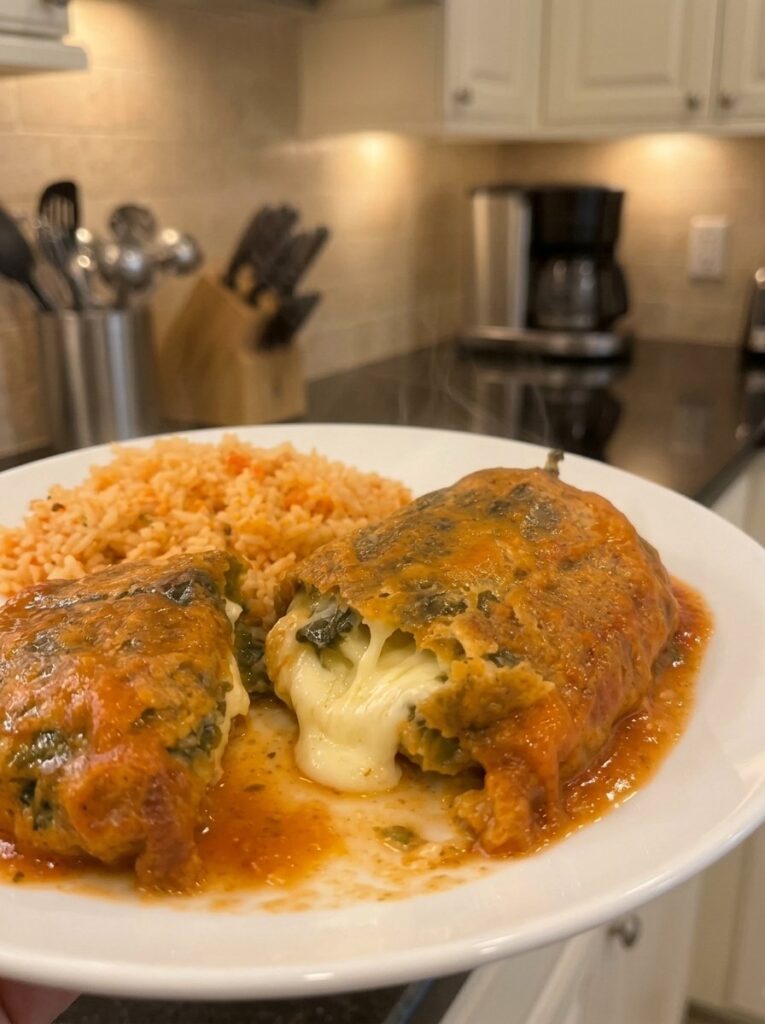
Few dishes capture the soul of Mexican home cooking quite like chiles rellenos de queso panela. Imagine a smoky roasted poblano pepper, tender and slightly sweet, hugging a thick piece of soft, mild, slightly salty panela cheese. Now wrap it in a cloud-like coating of beaten egg, fry it until it puffs up and turns golden, and let it rest in a warm, homemade tomato sauce. Cut into one and the cheese stretches and melts inside, just like the dish pictured above.
This recipe is the kind of meal that fills the kitchen with the aroma of charred peppers and simmering tomatoes, and it brings everyone to the table. It looks impressive, yet every step is simple once you understand the technique. In this complete guide, you will learn what chiles rellenos are, why panela cheese is such a good choice, how to roast and peel poblano peppers, how to make the fluffy egg batter, how to fry without the cheese escaping, and how to build a tomato sauce that ties everything together. You will also find troubleshooting advice, serving ideas, storage tips and answers to the questions cooks ask most often.
What Are Chiles Rellenos?
The name chile relleno simply means “stuffed chile” in Spanish. The dish is a pillar of traditional Mexican cuisine, with roots that many food historians trace to the central region of Puebla. Cooks there have long stuffed roasted chiles with everything from cheese to seasoned ground meat, dried fruit and nuts, depending on the occasion and the family.
The most common everyday version, and the one many people grew up eating, is the cheese-filled chile relleno. The pepper is roasted and peeled, stuffed with cheese, dusted in flour, dipped in a fluffy egg batter known in Spanish as capeado, fried, and then served in or under a tomato-based sauce. The result is a beautiful contrast of textures: a delicate, puffy exterior, a soft pepper and a rich, gooey center.
If you have only ever tried chiles rellenos at a restaurant where they arrive heavy and greasy, making them at home will be a revelation. A well-made chile relleno is light, airy and full of fresh flavor.
Why Queso Panela Is a Great Choice for Chiles Rellenos
Many recipes call for Oaxaca cheese, Chihuahua cheese, Monterey Jack or even mozzarella. All of them melt wonderfully. So why choose panela cheese?
Panela is a fresh Mexican cheese made from cow’s milk. It is soft, springy and mild, with a clean, milky and gently salty taste. It is often compared to a firmer, lighter cousin of fresh mozzarella or a mild farmer’s cheese. Here is why it works so well in this dish:
- It holds its shape. Panela is a firm fresh cheese, so thick pieces stay together while you handle, coat and fry the peppers.
- It softens beautifully. Inside the hot pepper, panela becomes creamy and tender. It does not turn oily or separate the way some aged cheeses can.
- Its flavor is balanced. The mild saltiness complements the smoky pepper and the acidity of the tomato sauce without overpowering either one.
- It is lighter. Compared with some very rich melting cheeses, panela gives you a fresh, clean bite, which makes the whole dish feel less heavy.
- It is easy to find. You can usually spot panela in the refrigerated section of Latin grocery stores and in many large supermarkets near the other Mexican cheeses.
If you cannot find panela, you can substitute Oaxaca cheese for more stretch, or a block of fresh mozzarella or Monterey Jack. For the most traditional “pull” of melted cheese, Oaxaca is a favorite, but panela gives a lovely, softer and more delicate result.
Chiles Rellenos de Queso Panela Recipe Overview
- Dish type: Main course
- Cuisine: Mexican
- Servings: 6 stuffed peppers
- Difficulty: Medium (easy once you know the technique)
- Best served with: Mexican rice, refried or whole beans, warm tortillas
The recipe has three main parts: preparing the peppers, making the egg coating and frying, and cooking the tomato sauce. You can make the sauce first so it is ready and waiting, which keeps the process calm and organized.
Ingredients for Chiles Rellenos de Queso Panela
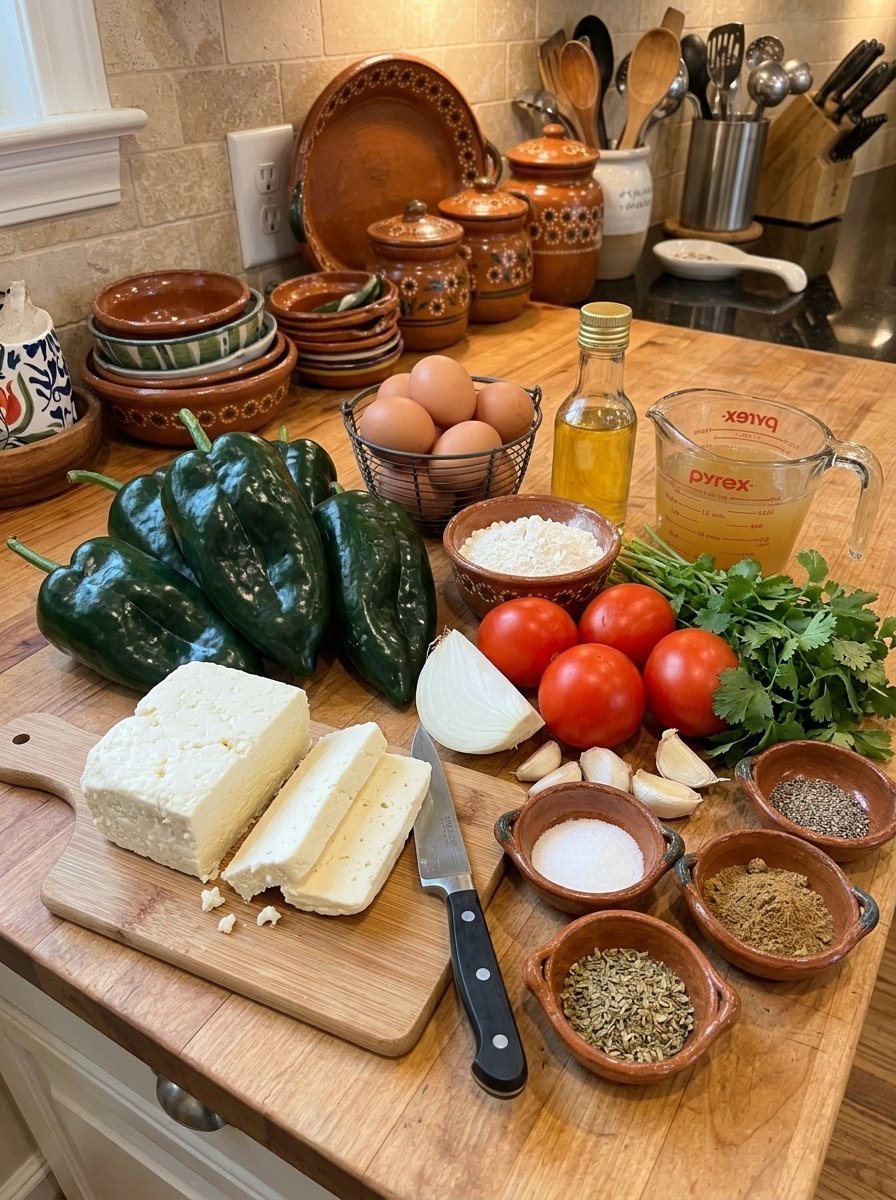
For the stuffed peppers
- 6 medium poblano peppers
- 12 oz panela cheese, cut into thick pieces
- ½ cup all-purpose flour, for coating
- 6 large eggs, separated
- ½ teaspoon salt, or to taste
- ¼ teaspoon black pepper
- 1 cup vegetable oil, or as needed for frying
For the tomato sauce
- 4 medium ripe tomatoes
- 2 cloves garlic
- ¼ small white onion
- ½ teaspoon ground cumin (optional)
- ½ cup chicken broth or water
- ½ teaspoon dried oregano
- Salt and black pepper, to taste
- Fresh cilantro, optional, for garnish
How to Choose the Best Poblano Peppers
The pepper is the star of the dish, so shop carefully. The poblano is a mild to medium chile with deep green color and a rich, earthy flavor that becomes smoky and slightly sweet when roasted.
Look for peppers that are:
- Large and wide enough to stuff. Small, narrow peppers are difficult to fill.
- Firm and glossy, with smooth, taut skin and no soft spots.
- Free of tears and deep wrinkles. A cracked pepper will leak cheese during frying.
- Relatively flat or straight-sided, which makes roasting and peeling more even.
As for heat, poblanos are generally mild, although every so often one has a surprising kick. If you are cooking for children or anyone sensitive to spice, removing the seeds and the white inner membranes carefully will reduce the heat even more.
Step-by-Step: How to Make Chiles Rellenos de Queso Panela
Step 1: Roast the poblano peppers
Rinse the poblano peppers and pat them completely dry. Place them on a hot flat skillet, a comal, or directly over a gas flame. Turn them every so often until the skins are blistered and charred on all sides.
Do not be afraid of the black spots. The charring is what loosens the skin and creates the signature smoky flavor. If you do not have a gas stove, a hot cast-iron skillet or a comal works nicely. An oven broiler is another option: place the peppers on a baking sheet close to the heat and turn them until blistered.
Step 2: Steam and peel the peppers
Transfer the hot peppers to a heat-safe bowl or bag and cover loosely. Let them steam for about 10 minutes. This trapped steam separates the skin from the flesh. Once the peppers are cool enough to handle, gently rub away the charred skins with your fingers.
Try to avoid rinsing the peppers under running water. Water washes away some of the smoky flavor and makes the peppers slippery and wet, which will cause trouble later when you coat them. If a few small bits of skin remain, that is perfectly fine.
Step 3: Remove the seeds
Make a small lengthwise slit in each pepper. Carefully remove the seeds and inner membranes, keeping the stems and the peppers as intact as possible. Pat the peppers dry with paper towels, inside and out.
Keeping the stem attached is traditional and gives you a handy “handle” when dipping and turning the pepper. A small slit is better than a large one: the smaller the opening, the less likely the cheese is to escape.
Step 4: Stuff with panela cheese
Cut the panela into thick pieces that fit comfortably inside the peppers. Place one piece in each poblano, taking care not to overfill. Gently press the openings together. If needed, secure the pepper with a toothpick, and remember to remove it before serving.
Thick pieces, rather than thin slices, are important. They melt slowly and stay inside the pepper while the exterior cooks.
Step 5: Prepare the flour coating
Place the flour on a shallow plate. Lightly dust each stuffed poblano with flour, shaking off any excess. This thin layer absorbs surface moisture and gives the egg batter something to cling to. Skipping this step is the number one reason the coating slides off in the pan.
Step 6: Beat the eggs
Place the egg whites in a clean, dry mixing bowl. Beat with a hand mixer until the whites are thick, fluffy and able to hold soft peaks. In a separate bowl, lightly beat the egg yolks. Gently fold the yolks into the whites until combined, taking care not to deflate the mixture. Season with the salt and black pepper.
Make sure the bowl and beaters are completely clean and free of grease or any trace of yolk, which can stop the whites from whipping properly. Folding gently, rather than stirring, preserves all those tiny air bubbles that give chiles rellenos their cloud-like texture.
Step 7: Coat the stuffed peppers
Carefully dip each floured poblano into the fluffy egg mixture, covering it completely. Use a spoon to help coat the sides and top while keeping the pepper intact. Work quickly, because the foam begins to settle the longer it sits.
Step 8: Fry until golden
Heat the vegetable oil in a large skillet over medium heat. Once hot, carefully place the coated peppers in the oil, working in batches if necessary. Fry for about 3 to 4 minutes per side, gently turning until the egg coating is puffed and golden brown. Transfer to a paper towel-lined plate to drain excess oil.
A wide spatula makes turning much easier. Do not crowd the pan, since overcrowding lowers the oil temperature and can lead to greasy, pale peppers. If the oil is too hot, the coating browns before the cheese softens; if it is too cool, the coating soaks up oil. Medium heat is the sweet spot.
Step 9: Prepare the tomato sauce
Place the tomatoes, garlic, onion, cumin if using, oregano and ½ cup chicken broth or water in a blender. Blend until smooth. Season with salt and black pepper to taste.
Step 10: Cook the sauce
Pour the blended tomato mixture into a saucepan or deep skillet. Bring it to a gentle simmer over medium heat, then cook for 8 to 12 minutes, stirring occasionally, until the sauce darkens slightly and the flavors come together. Add a little more broth or water if the sauce becomes too thick.
Step 11: Simmer the chiles rellenos
Carefully place the fried stuffed peppers into the warm tomato sauce. Spoon some sauce over each pepper and simmer gently for 3 to 5 minutes. Avoid vigorous stirring, which can break the delicate egg coating.
This short simmer allows the coating to soak up a little of the sauce, becoming tender and flavorful, while the cheese inside finishes melting into a creamy center.
Step 12: Serve warm
Transfer the chiles rellenos to serving plates and spoon extra tomato sauce over the top. Garnish with fresh cilantro if desired. Serve immediately with Mexican-style rice and warm beans for a comforting, traditional meal.
7 Expert Tips for the Best Chiles Rellenos de Queso Panela
- Choose firm poblano peppers. Look for peppers large enough to stuff, with smooth skins and no tears.
- Steam the roasted peppers. Covering the hot peppers for about 10 minutes makes the charred skin far easier to remove.
- Keep the peppers mostly intact. Make one small slit along a side and remove the seeds carefully without tearing the pepper.
- Dry the peppers before coating. Excess moisture prevents the flour and egg from sticking properly.
- Beat the egg whites thoroughly. A thick, fluffy foam creates the classic light coating around the chiles.
- Fry at the right temperature. Keep the oil at medium heat so the egg turns golden without browning too quickly.
- Handle the peppers gently. Use a wide spatula when turning them to help prevent the cheese from escaping.
Troubleshooting: Common Chiles Rellenos Problems and Fixes
The egg coating slides off the pepper
The pepper was probably too wet or was not dusted with flour. Dry the pepper thoroughly with paper towels and coat it in a thin, even layer of flour before dipping.
The cheese leaks out while frying
The pepper may have been overstuffed, torn, or not closed well. Use thick pieces of cheese that fit without straining the pepper, press the edges together and use a toothpick if needed. Handle the peppers with a wide spatula, and avoid poking them.
The coating is flat and dense
The egg whites were likely under-whipped, or the foam was over-mixed when the yolks were added. Beat the whites until thick and fluffy with soft peaks, and fold in the yolks gently.
The chiles rellenos are greasy
The oil was probably too cool. Heat the oil to medium and wait until it is properly hot before adding the peppers. Drain the fried peppers on paper towels and avoid crowding the pan.
The coating browns too fast but the cheese is still firm
The heat is too high. Lower it to medium and let the peppers fry for the full 3 to 4 minutes per side. The final simmer in the sauce will also help the cheese become soft and creamy.
The peppers are hard to peel
They may not have been charred enough, or they did not steam long enough. Roast until the skin is blistered on all sides, then cover and steam for the full 10 minutes.
Delicious Variations to Try
Once you master the classic version, there are plenty of ways to make it your own:
- Different cheeses. Try Oaxaca cheese for extra stretch, Chihuahua or Monterey Jack for a richer melt, or a blend of two cheeses.
- Cheese and corn. Add a spoonful of roasted corn kernels next to the cheese for sweetness.
- Cheese and epazote or herbs. A few leaves of epazote or fresh herbs tucked in with the cheese bring a traditional aroma.
- Spicier sauce. Add a roasted jalapeño or serrano to the blender for a bolder, hotter salsa.
- Chicken broth versus water. Broth adds depth to the sauce, while water gives a lighter, fresher tomato flavor.
- Baked rather than fried (lighter option). Some cooks prepare a lighter version by baking, though the classic puffy egg coating is best achieved with frying.
What to Serve with Chiles Rellenos
Chiles rellenos are filling and rich, so simple, flavorful sides work best:
- Mexican rice. Tomato-tinged rice is the classic partner, perfect for soaking up extra sauce, as in the photo above.
- Refried beans or pinto beans. Creamy beans add heartiness and balance.
- Warm corn or flour tortillas. Ideal for scooping up cheese and sauce.
- Fresh salad or sliced avocado. A crisp, bright side offsets the richness.
- Pickled red onions. A little tang cuts through the fried coating.
- A cold drink. Agua fresca, horchata or a lime-squeezed cold beer pair well with this meal.
Make-Ahead, Storage and Reheating Tips
Make ahead: You can roast, peel and seed the peppers up to a day in advance and store them in the refrigerator, wrapped well. The tomato sauce can also be made a day or two ahead; its flavor actually improves as it rests. Stuff, coat and fry the peppers just before serving for the best texture.
Storing leftovers: Place cooled chiles rellenos in an airtight container with a little sauce and refrigerate for up to 2 to 3 days.
Reheating: Warm them gently in a skillet with a splash of sauce over low heat, or in a moderate oven covered loosely with foil. The coating will be softer than when freshly made, but still delicious.
Freezing: The egg coating does not freeze and reheat as well as freshly fried peppers. For freezer planning, freeze the tomato sauce and the roasted, peeled peppers separately, then thaw, stuff and fry them fresh.
Is This Chiles Rellenos Recipe Healthy?
Chiles rellenos are comfort food, so they are best enjoyed as a satisfying treat. That said, there are good things in this dish: poblano peppers provide vitamins and fiber, tomatoes bring vitamin C and antioxidants, and panela cheese is a fresh cheese that gives a good dose of protein and calcium. To lighten the dish, drain the fried peppers well, use only as much oil as you need, and serve them with a fresh salad and beans rather than a heavy side.
Frequently Asked Questions About Chiles Rellenos de Queso Panela
What does “chiles rellenos de queso panela” mean?
It means “chiles stuffed with panela cheese.” The “queso panela” part tells you the filling is panela, a fresh, mild Mexican cheese.
Can I use another cheese instead of panela?
Yes. Oaxaca cheese, Chihuahua cheese, Monterey Jack and fresh mozzarella are all good substitutes. Choose a cheese that melts well and can be cut into thick pieces.
Are poblano peppers spicy?
Poblanos are generally mild, with a rich, earthy flavor. Heat can vary from pepper to pepper, but most people find them very approachable. Removing the seeds and membranes helps keep the heat low.
Why do you separate the eggs for chiles rellenos?
Beating the whites into a thick foam and then folding in the yolks creates a light, airy, puffy coating. Using whole eggs would give a flat, dense batter.
Do I have to roast the peppers?
Yes, roasting is essential. It develops the smoky flavor and loosens the tough outer skin so you can peel it away. Without roasting, the skin would be tough and unpleasant.
How do I keep the egg coating from falling apart?
Dry the peppers well, dust them with flour, use a thick and fluffy egg foam, fry at medium heat and turn them gently with a wide spatula. During the final simmer in the sauce, avoid stirring vigorously.
Can I make chiles rellenos without frying?
The classic texture comes from pan-frying the egg coating. You can experiment with a baked version if you want to reduce oil, but the result will be different from the traditional puffed and golden finish.
Can I use canned green chiles?
Canned chiles are smaller and more delicate, and they do not have the same flavor or size as fresh poblanos. For true chiles rellenos, fresh roasted poblano peppers are best.
What is the best sauce for chiles rellenos?
A simple, blended tomato sauce flavored with garlic, onion and oregano is the classic choice. Cumin is optional but adds a warm, earthy note.
How long do chiles rellenos last in the fridge?
Stored in an airtight container with a little sauce, they keep for 2 to 3 days. Reheat gently over low heat.
Final Thoughts: Bring Mexican Comfort Food to Your Table
Homemade chiles rellenos de queso panela are one of those recipes that feel special but are built on humble ingredients: peppers, cheese, eggs and tomatoes. The magic comes from technique. Roast the poblanos until they are smoky, steam and peel them gently, stuff them with thick pieces of creamy panela, wrap them in a fluffy egg coating and fry them to a perfect golden color. Then let them simmer briefly in a warm, fresh tomato sauce.
Serve them with Mexican rice and warm beans, and you have a comforting, authentic meal that is perfect for a family dinner, a weekend gathering or any day you want something that tastes like home. Give this recipe a try, and do not forget to share your results, leave a rating and tell us how your chiles rellenos turned out.
Print
Chiles Rellenos de Queso Panela
Ingredients
For the stuffed peppers
- 6 medium poblano peppers
- 12 oz panela cheese, cut into thick pieces
- ½ cup all-purpose flour, for coating
- 6 large eggs, separated
- ½ teaspoon salt, or to taste
- ¼ teaspoon black pepper
- 1 cup vegetable oil, or as needed for frying
For the tomato sauce
- 4 medium ripe tomatoes
- 2 cloves garlic
- ¼ small white onion
- ½ teaspoon ground cumin (optional)
- ½ cup chicken broth or water
- ½ teaspoon dried oregano
- Salt and black pepper, to taste
- Fresh cilantro, optional, for garnish
How to Choose the Best Poblano Peppers
The pepper is the star of the dish, so shop carefully. The poblano is a mild to medium chile with deep green color and a rich, earthy flavor that becomes smoky and slightly sweet when roasted.
Look for peppers that are:
- Large and wide enough to stuff. Small, narrow peppers are difficult to fill.
- Firm and glossy, with smooth, taut skin and no soft spots.
- Free of tears and deep wrinkles. A cracked pepper will leak cheese during frying.
- Relatively flat or straight-sided, which makes roasting and peeling more even.
As for heat, poblanos are generally mild, although every so often one has a surprising kick. If you are cooking for children or anyone sensitive to spice, removing the seeds and the white inner membranes carefully will reduce the heat even more.
Instructions
Rinse the poblano peppers and pat them completely dry. Place them on a hot flat skillet, a comal, or directly over a gas flame. Turn them every so often until the skins are blistered and charred on all sides.
Do not be afraid of the black spots. The charring is what loosens the skin and creates the signature smoky flavor. If you do not have a gas stove, a hot cast-iron skillet or a comal works nicely. An oven broiler is another option: place the peppers on a baking sheet close to the heat and turn them until blistered.
Transfer the hot peppers to a heat-safe bowl or bag and cover loosely. Let them steam for about 10 minutes. This trapped steam separates the skin from the flesh. Once the peppers are cool enough to handle, gently rub away the charred skins with your fingers.
Try to avoid rinsing the peppers under running water. Water washes away some of the smoky flavor and makes the peppers slippery and wet, which will cause trouble later when you coat them. If a few small bits of skin remain, that is perfectly fine.
Make a small lengthwise slit in each pepper. Carefully remove the seeds and inner membranes, keeping the stems and the peppers as intact as possible. Pat the peppers dry with paper towels, inside and out.
Keeping the stem attached is traditional and gives you a handy “handle” when dipping and turning the pepper. A small slit is better than a large one: the smaller the opening, the less likely the cheese is to escape.
Cut the panela into thick pieces that fit comfortably inside the peppers. Place one piece in each poblano, taking care not to overfill. Gently press the openings together. If needed, secure the pepper with a toothpick, and remember to remove it before serving.
Thick pieces, rather than thin slices, are important. They melt slowly and stay inside the pepper while the exterior cooks.
Place the flour on a shallow plate. Lightly dust each stuffed poblano with flour, shaking off any excess. This thin layer absorbs surface moisture and gives the egg batter something to cling to. Skipping this step is the number one reason the coating slides off in the pan.
Place the egg whites in a clean, dry mixing bowl. Beat with a hand mixer until the whites are thick, fluffy and able to hold soft peaks. In a separate bowl, lightly beat the egg yolks. Gently fold the yolks into the whites until combined, taking care not to deflate the mixture. Season with the salt and black pepper.
Make sure the bowl and beaters are completely clean and free of grease or any trace of yolk, which can stop the whites from whipping properly. Folding gently, rather than stirring, preserves all those tiny air bubbles that give chiles rellenos their cloud-like texture.
Carefully dip each floured poblano into the fluffy egg mixture, covering it completely. Use a spoon to help coat the sides and top while keeping the pepper intact. Work quickly, because the foam begins to settle the longer it sits.
Heat the vegetable oil in a large skillet over medium heat. Once hot, carefully place the coated peppers in the oil, working in batches if necessary. Fry for about 3 to 4 minutes per side, gently turning until the egg coating is puffed and golden brown. Transfer to a paper towel-lined plate to drain excess oil.
A wide spatula makes turning much easier. Do not crowd the pan, since overcrowding lowers the oil temperature and can lead to greasy, pale peppers. If the oil is too hot, the coating browns before the cheese softens; if it is too cool, the coating soaks up oil. Medium heat is the sweet spot.
Place the tomatoes, garlic, onion, cumin if using, oregano and ½ cup chicken broth or water in a blender. Blend until smooth. Season with salt and black pepper to taste.
Pour the blended tomato mixture into a saucepan or deep skillet. Bring it to a gentle simmer over medium heat, then cook for 8 to 12 minutes, stirring occasionally, until the sauce darkens slightly and the flavors come together. Add a little more broth or water if the sauce becomes too thick.
Carefully place the fried stuffed peppers into the warm tomato sauce. Spoon some sauce over each pepper and simmer gently for 3 to 5 minutes. Avoid vigorous stirring, which can break the delicate egg coating.
This short simmer allows the coating to soak up a little of the sauce, becoming tender and flavorful, while the cheese inside finishes melting into a creamy center.
Transfer the chiles rellenos to serving plates and spoon extra tomato sauce over the top. Garnish with fresh cilantro if desired. Serve immediately with Mexican-style rice and warm beans for a comforting, traditional meal.