Easy Homemade Olive Baguette: Crusty Outside, Soft & Fluffy Inside (Mediterranean Bread Recipe)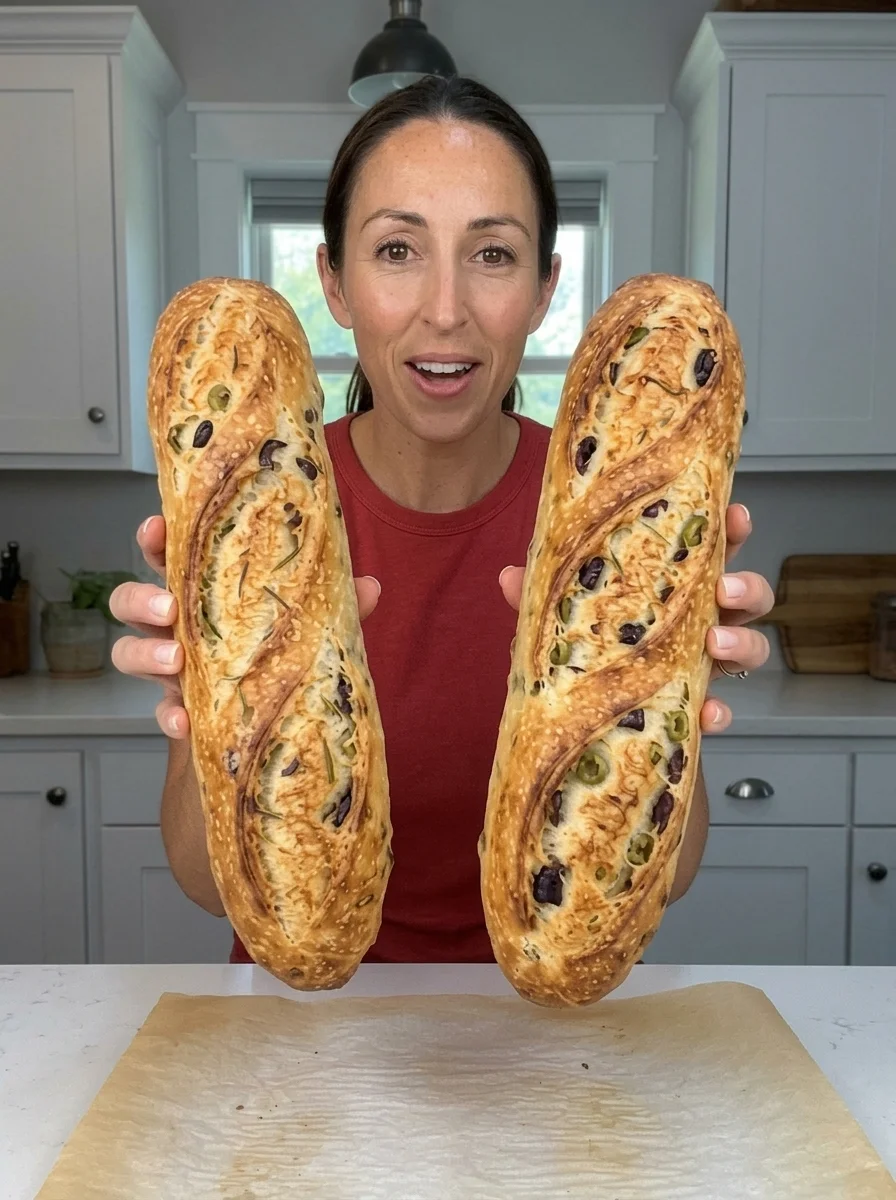
SEO title: Easy Homemade Olive Baguette Recipe (Crusty, Soft & Flavorful)
Meta description: Bake easy homemade olive baguettes with a crisp golden crust, soft airy crumb, and savory olives. Step-by-step recipe with steam tips, variations, storage, and FAQ.
Focus keyword: olive baguette
Secondary keywords: homemade olive bread, olive baguette recipe, easy baguette recipe, Mediterranean bread, crusty baguette at home, how to score a baguette, baguette with olives and herbs, steam in a home oven
Imagine tearing into a freshly baked baguette with a golden, crackling crust, a soft and airy interior, and little pockets of salty, savory olives in every slice. That is exactly what you get from this homemade olive baguette. It combines the classic texture of French bread with the rich Mediterranean flavor of olives and fragrant herbs, and it is far easier to make than most people expect.
The recipe uses simple ingredients and no special equipment. A slightly sticky dough, enough rising time, and a bit of steam in the oven are the keys to the crisp crust and tender crumb. The olives and herbs do the rest, turning a basic baguette into something that feels special enough for a dinner party yet easy enough for a weekend afternoon.
In this guide you will find the full recipe, step-by-step instructions, an explanation of how each ingredient and technique works, shaping and scoring tips, a safe way to create steam at home, troubleshooting advice, creative variations, serving ideas, storage and freezing instructions, and answers to the questions bakers ask most often about olive bread.
Why You’ll Love This Olive Baguette
Store-bought olive bread can be good, but homemade is fresher, crustier, and more generous with the olives. Here is why this recipe is worth baking.
- Crisp, golden crust. Steam in the early minutes of baking helps the loaves expand and then set into a thin, crackly crust.
- Soft, airy interior. A slightly sticky dough and gentle shaping preserve the air bubbles that give baguettes their tender crumb.
- Savory olive flavor. Olives and herbs add salty, briny, Mediterranean character to every bite.
- Simple ingredients. Flour, water, yeast, salt, sugar or honey, and olive oil make the dough, with olives and herbs for flavor.
- No special equipment. A baking tray, parchment, a sharp knife, and an empty metal pan for steam are all you need.
- Versatile. Serve it with olive oil, make sandwiches, pair it with soup, or add it to an appetizer platter.
- Easy to customize. Swap the olives, add cheese, or change the herbs to suit your taste.
Recipe Overview
- Prep time: 20 minutes
- Rise time: 1½ to 2 hours
- Bake time: 22 to 28 minutes
- Total time: Approximately 2½ to 3 hours
- Yield: 2 medium olive baguettes
- Difficulty: Easy to moderate
Ingredients for Homemade Olive Baguette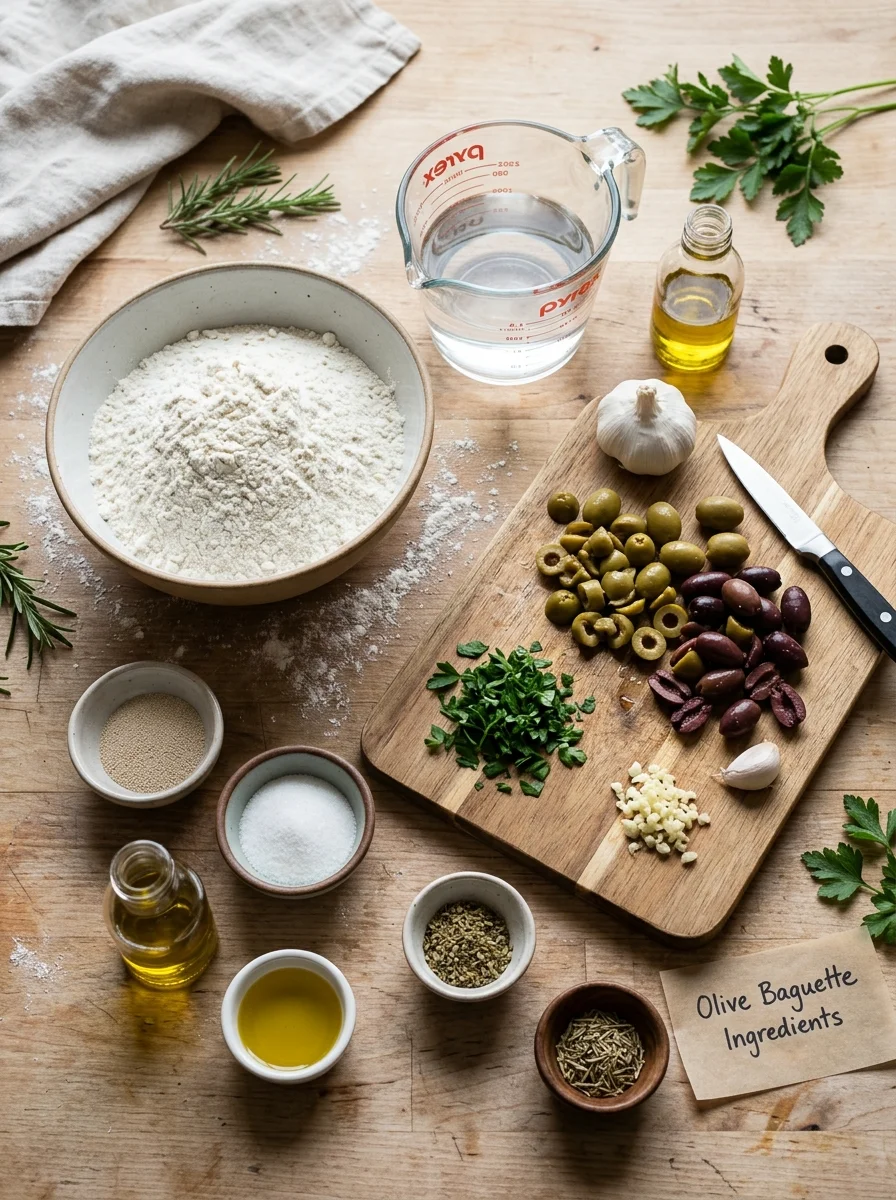
For the dough
- 4 cups (500 g) bread flour or all-purpose flour
- 1½ cups (360 ml) lukewarm water
- 2¼ teaspoons (7 g) instant yeast
- 1 teaspoon sugar or honey
- 1½ teaspoons salt
- 1 tablespoon olive oil
For the olive filling
- ¾ cup (100 to 120 g) pitted olives, roughly chopped
- 1 teaspoon dried oregano
- ½ teaspoon dried rosemary
- 1 small garlic clove, finely minced (optional)
- 1 tablespoon chopped fresh parsley (optional)
For finishing
- A little flour, for dusting
- Water for creating steam in the oven
- A little olive oil, optional
A Closer Look at the Key Ingredients
Bread flour or all-purpose flour. Bread flour has more protein, which builds a stronger gluten network and a chewier, more structured crumb, ideal for baguettes. All-purpose flour produces a slightly softer loaf. Both work well.
Lukewarm water. At 360 ml of water to 500 g of flour, the dough is about 72% hydration. That is wet enough to bake into a light, airy crumb but still manageable to shape. The water should be warm, not hot, to avoid damaging the yeast.
Instant yeast. Instant yeast can be mixed straight into the flour. If you only have active dry yeast, dissolve it in the lukewarm water with the sugar and let it stand for 5 to 10 minutes until foamy.
Sugar or honey. Just a teaspoon feeds the yeast and helps the crust brown. It will not make the bread taste sweet.
Salt. Salt flavors the bread and strengthens the dough. Because olives are already salty, this recipe uses a moderate amount in the dough itself.
Olive oil. A tablespoon of olive oil adds flavor and keeps the crumb tender, and it echoes the olives in the filling.
Olives. Green olives, black olives, Kalamata olives, or a mixture all work. Choose pitted olives you enjoy eating on their own, and chop them into small pieces so they distribute evenly.
Oregano, rosemary, garlic, and parsley. These herbs reinforce the Mediterranean flavor. Garlic and fresh parsley are optional but add extra fragrance.
How to Make Olive Baguettes: Step by Step
Step 1: Prepare the Olives
Choose your favorite green olives, black olives, or a combination of both.
Remove the pits if necessary and chop the olives into small pieces.
Place them on paper towels and pat dry to remove excess moisture.
In a small bowl, combine the olives with oregano, rosemary, garlic, and parsley if using.
Set aside.
Tip: If your olives are very salty, rinse them briefly and pat them completely dry before adding them to the dough.
Step 2: Prepare the Yeast Mixture
In a large mixing bowl, combine the lukewarm water, yeast, and sugar.
Stir gently.
If using active dry yeast, let the mixture stand for 5 to 10 minutes until foamy. If using instant yeast, you can mix it directly into the flour instead.
Make sure the water is warm, not hot.
Step 3: Mix the Dough
Add the flour, salt, and olive oil to the yeast mixture.
Stir with a wooden spoon until a rough, slightly sticky dough forms and no dry flour remains.
The dough should feel soft and elastic. Avoid adding too much extra flour, as a softer dough helps create a light, airy baguette.
Step 4: Knead the Dough
Transfer the dough to a lightly floured work surface.
Knead for approximately 8 to 10 minutes until smooth and elastic.
Alternatively, use a stand mixer with a dough hook for about 5 to 7 minutes on low to medium speed.
The dough should become stretchy and manageable while remaining slightly tacky.
Step 5: Add the Olives
Flatten the dough gently into a rectangle.
Scatter the chopped olive mixture evenly over the surface.
Fold the dough over the olives and gently knead or fold until the pieces are distributed throughout.
Avoid overworking the dough, as the olives may release moisture and make it sticky.
Adding the olives after kneading is deliberate. If they go in earlier, the mixer or kneading can tear and bruise them, and they can streak the dough and release extra moisture.
Step 6: First Rise
Lightly grease a large bowl with olive oil.
Place the dough inside, turning it once to coat the surface.
Cover with plastic wrap or a clean kitchen towel.
Let it rise in a warm place for 60 to 90 minutes, or until approximately doubled in size.
Step 7: Divide and Shape the Baguettes
Transfer the risen dough onto a lightly floured surface.
Divide it into two equal portions.
Working with one portion at a time:
- Gently flatten the dough into a rectangle.
- Fold the top edge toward the center and press gently.
- Fold the bottom edge upward and press again.
- Fold the dough in half lengthwise and pinch the seam closed.
- Roll gently with your hands to form a long baguette, approximately 12 to 14 inches (30 to 35 cm) long.
Taper the ends slightly for a traditional baguette shape.
Repeat with the second portion.
Place the baguettes seam-side down on a parchment-lined baking tray, leaving space between them.
Step 8: Second Rise
Cover the shaped baguettes loosely with a clean kitchen towel.
Let them rise for another 30 to 40 minutes, until puffy.
Meanwhile, preheat the oven to 450°F (230°C).
Step 9: Score the Baguettes
Using a sharp knife or bread lame, make 3 to 4 diagonal cuts along the top of each baguette.
Each cut should be approximately ¼ inch (6 mm) deep.
Scoring allows the bread to expand properly during baking and gives the baguettes their beautiful bakery-style appearance.
Step 10: Create Steam and Bake
Place an empty metal baking pan on the bottom rack while the oven preheats.
Transfer the baguettes to the oven.
Carefully pour about 1 cup of hot water into the empty metal pan to create steam. Keep your face and hands away from the steam.
Bake for 22 to 28 minutes, or until the baguettes are golden brown with crisp crusts.
The bread should sound hollow when tapped underneath.
Carefully remove the steam pan once it has cooled enough to handle.
Step 11: Cool and Serve
Transfer the baguettes to a wire rack.
Allow them to cool for at least 30 minutes before slicing.
This gives the interior time to set, keeping the crumb soft and preventing a gummy texture.
Enjoy your freshly baked olive baguettes.
Why Steam Matters for a Crusty Baguette
Steam is the single biggest difference between a bakery baguette and an ordinary homemade loaf. In the first minutes of baking, moisture in the oven keeps the surface of the dough soft and stretchy. That lets the loaf keep expanding, known as oven spring, before the crust sets. The humid environment also helps the surface starches gelatinize, which later turns into a thin, glossy, crackly crust.
This recipe uses a simple home method: an empty metal pan on the bottom rack, preheated with the oven, with about 1 cup of hot water poured in as the baguettes go in. Always keep your face and hands away from the rising steam, and use oven mitts. Do not pour water onto oven glass or an exposed heating element, because sudden temperature changes can cause damage. Once the pan has cooled enough to handle, remove it from the oven.
Tips for Perfect Olive Baguettes
A few small details make a big difference to the final loaf.
- Drain the olives well. Excess moisture can make the dough sticky and affect the crumb.
- Choose flavorful olives. Kalamata, green olives, or a mixture of both work beautifully.
- Do not add too much flour. A slightly sticky dough produces a lighter interior.
- Knead until elastic. Proper gluten development helps the baguettes hold their shape.
- Distribute the olives evenly. This ensures delicious olive flavor in every slice.
- Allow enough rising time. The dough should become noticeably puffy before baking.
- Shape gently. Avoid squeezing out all the air from the dough.
- Use steam. Steam during the beginning of baking helps create a crisp, golden crust.
- Let the bread cool. Cutting too early can compress the soft interior.
Troubleshooting Common Baguette Problems
The dough is too sticky after adding the olives. Olives can release moisture. Pat them completely dry before adding them, handle the dough gently, and use a light dusting of flour rather than a lot of extra flour.
The olives sink or clump. Fold them in gradually and distribute them evenly across the flattened dough before folding. Chop them into small, even pieces.
The crust is pale or soft. Make sure the oven is fully preheated, use steam at the start of baking, and bake until the baguettes are golden brown and sound hollow when tapped underneath.
The baguettes spread flat. The dough may have risen too long, or the shaping may have been too loose. Aim for puffy but not overproofed loaves, and keep the surface taut when shaping.
The scoring did not open. Use a very sharp knife or lame, cut about ¼ inch (6 mm) deep, and cut confidently at a shallow diagonal angle.
The interior is dense. The dough may not have risen enough, or too much flour may have been added. Let the dough double in the first rise and keep it slightly tacky.
The bread tastes too salty. Olives vary widely in saltiness. Rinse very salty olives briefly and pat them completely dry before adding them.
Delicious Variations
Kalamata Olive & Rosemary Baguette. Use Kalamata olives with fresh rosemary for a rich Mediterranean flavor.
Green Olive & Garlic Baguette. Add chopped green olives, minced garlic, and dried oregano.
Olive & Parmesan Baguette. Fold ¼ cup of grated Parmesan into the dough for a savory, cheesy flavor.
Sun-Dried Tomato Olive Baguette. Add ¼ cup of chopped sun-dried tomatoes alongside the olives.
Feta & Olive Baguette. Add ½ cup of crumbled feta for a delicious Mediterranean-inspired loaf. Pat the cheese dry before adding.
Spicy Olive Baguette. Add chili flakes, smoked paprika, and garlic powder.
Herb Garden Baguette. Use fresh parsley, thyme, rosemary, and oregano for extra fragrance.
Serving Ideas
Olive baguettes are flavorful enough to enjoy on their own and versatile enough to anchor a meal. Try them in these ways:
- Slice and serve with extra-virgin olive oil and balsamic vinegar.
- Make delicious sandwiches with mozzarella, tomatoes, and fresh basil.
- Pair with hummus, whipped feta, or tzatziki.
- Serve alongside tomato soup, lentil soup, or vegetable stew.
- Toast slices and top with cream cheese or avocado.
- Prepare bruschetta with fresh tomatoes, garlic, and basil.
- Add to a Mediterranean appetizer platter with cheeses, olives, and roasted vegetables.
Because the bread is already savory, simple toppings often work best. A drizzle of olive oil or a smear of soft cheese lets the olives and herbs stand out.
Storage and Freezing
Room temperature. Once completely cool, store the baguettes in a paper bread bag or bread box for up to 2 days. Avoid sealing them while warm, as trapped moisture softens the crust.
Refrigerator. Refrigeration is generally unnecessary because it can make bread stale faster.
Freezer. Wrap the completely cooled baguettes tightly in plastic wrap or foil, then place them in a freezer-safe bag. Freeze for up to 2 to 3 months for the best quality.
Reheating. Lightly sprinkle the baguette with water and warm it in a preheated oven at 350°F (175°C) for approximately 5 to 8 minutes to refresh the crust.
You can also slice the baguettes before freezing and toast individual slices directly from frozen.
Frequently Asked Questions
Can I use any type of olives?
Yes. Green olives, black olives, Kalamata olives, or a mixture all work. Use pitted olives, chop them small, and pat them dry before adding them to the dough.
Why should I dry the olives first?
Excess moisture can make the dough sticky and affect the crumb. Patting the olives dry on paper towels keeps the dough easier to handle.
Can I use bread flour or all-purpose flour?
Both work. Bread flour gives a chewier, more structured crumb, while all-purpose flour produces a slightly softer loaf.
Can I use active dry yeast instead of instant yeast?
Yes. Stir it into the lukewarm water with the sugar and let it stand for 5 to 10 minutes until foamy before mixing the dough.
How do I create steam in a home oven?
Place an empty metal pan on the bottom rack while the oven preheats. When you put the baguettes in, carefully pour about 1 cup of hot water into the pan, keeping your face and hands away from the steam.
How do I score a baguette?
Use a sharp knife or bread lame to make 3 to 4 diagonal cuts along the top, each about ¼ inch (6 mm) deep. Scoring allows the bread to expand properly during baking.
How do I know when the baguettes are done?
They should be golden brown with crisp crusts and sound hollow when tapped underneath.
Can I freeze olive baguettes?
Yes. Wrap the completely cooled baguettes tightly in plastic wrap or foil, place them in a freezer-safe bag, and freeze for up to 2 to 3 months. You can also slice them before freezing and toast the slices from frozen.
How do I refresh a day-old baguette?
Lightly sprinkle the baguette with water and warm it in a preheated oven at 350°F (175°C) for approximately 5 to 8 minutes to refresh the crust.
Can I add cheese?
Yes. Parmesan or crumbled feta work well. Pat the cheese dry before adding it to the dough.
Final Thoughts
These homemade olive baguettes have a crispy golden crust, a soft and airy interior, and delicious pieces of savory olives in every bite. The combination of fragrant herbs, rich olive oil, and flavorful olives makes the bread absolutely irresistible. Perfect for sandwiches, sharing, dipping, or enjoying warm straight from the oven.
Crusty, fluffy, savory, and full of Mediterranean goodness. Bake a pair this weekend, serve one warm with olive oil, and share the other, or keep it for sandwiches the next day.
Print
Easy Homemade Olive Baguette – Crusty Outside, Soft & Fluffy Inside
Ingredients
For the dough
- 4 cups (500 g) bread flour or all-purpose flour
- 1½ cups (360 ml) lukewarm water
- 2¼ teaspoons (7 g) instant yeast
- 1 teaspoon sugar or honey
- 1½ teaspoons salt
- 1 tablespoon olive oil
For the olive filling
- ¾ cup (100 to 120 g) pitted olives, roughly chopped
- 1 teaspoon dried oregano
- ½ teaspoon dried rosemary
- 1 small garlic clove, finely minced (optional)
- 1 tablespoon chopped fresh parsley (optional)
For finishing
- A little flour, for dusting
- Water for creating steam in the oven
- A little olive oil, optional
A Closer Look at the Key Ingredients
Bread flour or all-purpose flour. Bread flour has more protein, which builds a stronger gluten network and a chewier, more structured crumb, ideal for baguettes. All-purpose flour produces a slightly softer loaf. Both work well.
Lukewarm water. At 360 ml of water to 500 g of flour, the dough is about 72% hydration. That is wet enough to bake into a light, airy crumb but still manageable to shape. The water should be warm, not hot, to avoid damaging the yeast.
Instant yeast. Instant yeast can be mixed straight into the flour. If you only have active dry yeast, dissolve it in the lukewarm water with the sugar and let it stand for 5 to 10 minutes until foamy.
Sugar or honey. Just a teaspoon feeds the yeast and helps the crust brown. It will not make the bread taste sweet.
Salt. Salt flavors the bread and strengthens the dough. Because olives are already salty, this recipe uses a moderate amount in the dough itself.
Olive oil. A tablespoon of olive oil adds flavor and keeps the crumb tender, and it echoes the olives in the filling.
Olives. Green olives, black olives, Kalamata olives, or a mixture all work. Choose pitted olives you enjoy eating on their own, and chop them into small pieces so they distribute evenly.
Oregano, rosemary, garlic, and parsley. These herbs reinforce the Mediterranean flavor. Garlic and fresh parsley are optional but add extra fragrance.
Instructions
Step 1: Prepare the Olives
Choose your favorite green olives, black olives, or a combination of both.
Remove the pits if necessary and chop the olives into small pieces.
Place them on paper towels and pat dry to remove excess moisture.
In a small bowl, combine the olives with oregano, rosemary, garlic, and parsley if using.
Set aside.
Tip: If your olives are very salty, rinse them briefly and pat them completely dry before adding them to the dough.
Step 2: Prepare the Yeast Mixture
In a large mixing bowl, combine the lukewarm water, yeast, and sugar.
Stir gently.
If using active dry yeast, let the mixture stand for 5 to 10 minutes until foamy. If using instant yeast, you can mix it directly into the flour instead.
Make sure the water is warm, not hot.
Step 3: Mix the Dough
Add the flour, salt, and olive oil to the yeast mixture.
Stir with a wooden spoon until a rough, slightly sticky dough forms and no dry flour remains.
The dough should feel soft and elastic. Avoid adding too much extra flour, as a softer dough helps create a light, airy baguette.
Step 4: Knead the Dough
Transfer the dough to a lightly floured work surface.
Knead for approximately 8 to 10 minutes until smooth and elastic.
Alternatively, use a stand mixer with a dough hook for about 5 to 7 minutes on low to medium speed.
The dough should become stretchy and manageable while remaining slightly tacky.
Step 5: Add the Olives
Flatten the dough gently into a rectangle.
Scatter the chopped olive mixture evenly over the surface.
Fold the dough over the olives and gently knead or fold until the pieces are distributed throughout.
Avoid overworking the dough, as the olives may release moisture and make it sticky.
Adding the olives after kneading is deliberate. If they go in earlier, the mixer or kneading can tear and bruise them, and they can streak the dough and release extra moisture.
Step 6: First Rise
Lightly grease a large bowl with olive oil.
Place the dough inside, turning it once to coat the surface.
Cover with plastic wrap or a clean kitchen towel.
Let it rise in a warm place for 60 to 90 minutes, or until approximately doubled in size.
Step 7: Divide and Shape the Baguettes
Transfer the risen dough onto a lightly floured surface.
Divide it into two equal portions.
Working with one portion at a time:
- Gently flatten the dough into a rectangle.
- Fold the top edge toward the center and press gently.
- Fold the bottom edge upward and press again.
- Fold the dough in half lengthwise and pinch the seam closed.
- Roll gently with your hands to form a long baguette, approximately 12 to 14 inches (30 to 35 cm) long.
Taper the ends slightly for a traditional baguette shape.
Repeat with the second portion.
Place the baguettes seam-side down on a parchment-lined baking tray, leaving space between them.
Step 8: Second Rise
Cover the shaped baguettes loosely with a clean kitchen towel.
Let them rise for another 30 to 40 minutes, until puffy.
Meanwhile, preheat the oven to 450°F (230°C).
Step 9: Score the Baguettes
Using a sharp knife or bread lame, make 3 to 4 diagonal cuts along the top of each baguette.
Each cut should be approximately ¼ inch (6 mm) deep.
Scoring allows the bread to expand properly during baking and gives the baguettes their beautiful bakery-style appearance.
Step 10: Create Steam and Bake
Place an empty metal baking pan on the bottom rack while the oven preheats.
Transfer the baguettes to the oven.
Carefully pour about 1 cup of hot water into the empty metal pan to create steam. Keep your face and hands away from the steam.
Bake for 22 to 28 minutes, or until the baguettes are golden brown with crisp crusts.
The bread should sound hollow when tapped underneath.
Carefully remove the steam pan once it has cooled enough to handle.
Step 11: Cool and Serve
Transfer the baguettes to a wire rack.
Allow them to cool for at least 30 minutes before slicing.
This gives the interior time to set, keeping the crumb soft and preventing a gummy texture.
Enjoy your freshly baked olive baguettes.