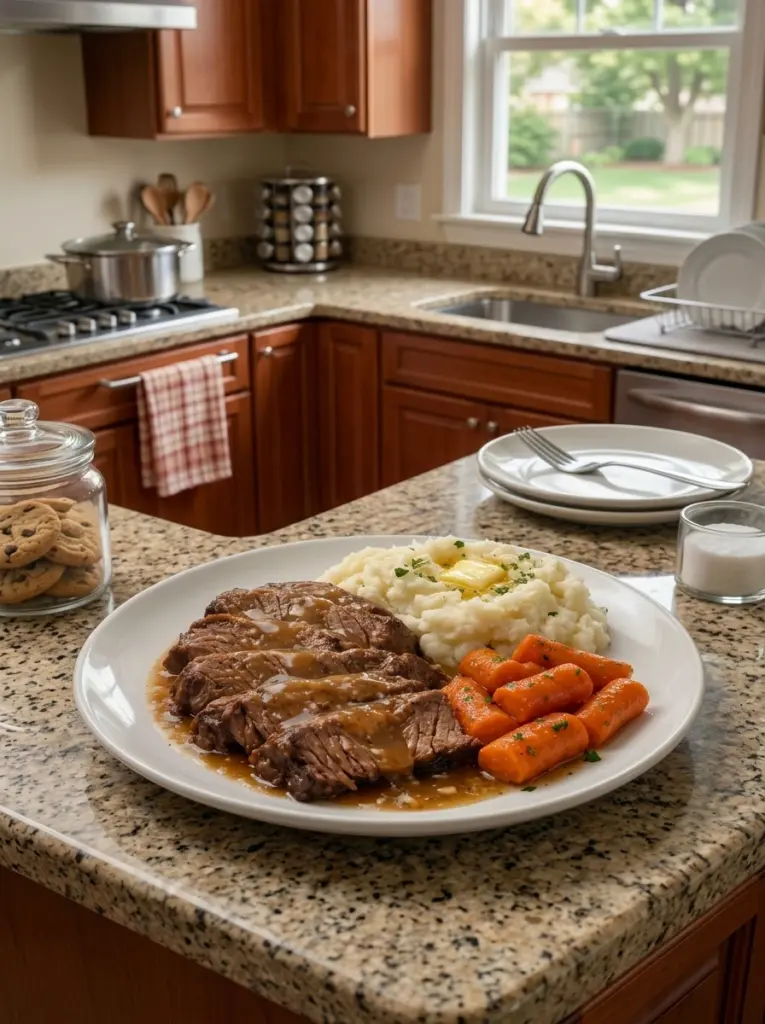
Slow-Cooked Beef with Mashed Potatoes & Glazed Carrots: The Ultimate Classic Comfort Dinner
There’s something deeply nostalgic about a plate of fall-apart tender beef, a generous mound of creamy mashed potatoes, and a side of sweet, buttery glazed carrots. Slow-Cooked Beef with Mashed Potatoes & Glazed Carrots is the kind of meal that feels like a warm hug at the end of a long day — the sort of dinner grandmothers have been perfecting for generations, and for good reason. This is comfort food in its purest form: a rich, slow-braised beef chuck roast simmered low and slow in a savory broth until it’s meltingly tender, paired with pillowy mashed potatoes and naturally sweet, glazed carrots that round out the plate beautifully.
What makes this meal special is the way each component builds real depth of flavor through patient, straightforward technique. The beef is seared first to develop a deep, browned crust, then braised slowly in a broth enriched with Worcestershire sauce, tomato paste, and herbs until it becomes fork-tender. The braising liquid itself gets transformed into a silky gravy using a simple butter-and-flour thickening technique. Meanwhile, the mashed potatoes are boiled until tender and whipped with butter and warm cream for the creamiest possible texture, and the carrots are gently glazed in butter, brown sugar, and a touch of water until they’re tender and caramelized. Together, this trio makes for a truly complete, comforting Sunday dinner — even on a weeknight.
In this article, we’ll walk through everything you need to make this meal a success: a complete ingredient breakdown for all three components, detailed step-by-step instructions, expert tips for the most tender beef and fluffiest mashed potatoes, creative variation ideas, storage and reheating instructions, and answers to the most frequently asked questions about this recipe.
Why This Recipe Works So Well
Classic, slow-cooked beef dinners have remained beloved staples for generations, and this particular combination brings together time-tested techniques that make each component shine:
The beef develops deep flavor through proper searing and slow braising. Taking the time to sear the chuck roast before braising it creates a foundation of rich, caramelized flavor that a quick-cooked piece of beef simply can’t achieve. The long, slow braise then breaks down the tougher connective tissue in the chuck roast, resulting in incredibly tender, fork-friendly meat.
The braising liquid becomes a rich, savory gravy. Rather than discarding the braising liquid, this recipe transforms it into a silky gravy using a classic butter-and-flour thickening method, ensuring nothing goes to waste and every component of the plate gets that same deep, beefy flavor.
The mashed potatoes are made using foolproof, classic technique. Using warm cream (rather than cold) and plenty of butter ensures the potatoes stay light and fluffy rather than gluey or dense.
The glazed carrots add natural sweetness and color. Balancing out the rich, savory beef and creamy potatoes, the carrots bring a touch of brightness and sweetness that keeps the entire plate from feeling one-note.
It’s a complete, balanced meal that feels like a special occasion. With protein, starch, and vegetables all represented, and with genuine depth of flavor in every component, this dinner feels like something worth gathering the family around the table for.
Ingredients You’ll Need
This recipe comes together in three components: the beef, the mashed potatoes, and the glazed carrots. Here’s exactly what you’ll need for each.
For the Beef
- 2½–3 lb (1.1–1.4 kg) beef chuck roast — chuck roast is ideal for slow cooking, as its marbling and connective tissue break down beautifully over a long braise, resulting in tender, flavorful meat
- 1½ tsp kosher salt — essential for properly seasoning the beef throughout
- 1 tsp black pepper — adds a gentle background heat
- 2 tbsp olive oil — used to sear the beef and develop a deep, flavorful crust
- 1 medium onion, diced — forms the aromatic base of the braising liquid
- 4 cloves garlic, minced — adds essential savory depth
- 2 cups beef broth — forms the flavorful braising liquid the beef cooks in
- 1 tbsp Worcestershire sauce — contributes deep, savory, umami-rich flavor
- 1 tbsp tomato paste — adds richness and a subtle tang to the braising liquid
- 1 tsp dried thyme — adds earthy, aromatic depth
- 1 tsp dried rosemary — contributes a fragrant, slightly piney note that pairs beautifully with beef
- 2 tbsp butter — used to make the roux that thickens the gravy
- 2 tbsp all-purpose flour — combined with butter to thicken the braising liquid into a silky gravy
For the Mashed Potatoes
- 2½ lb Yukon Gold or russet potatoes, peeled and cubed — Yukon Gold potatoes have a naturally creamy texture, while russets result in a fluffier, lighter mash; either works beautifully
- 5 tbsp butter — adds richness and flavor to the mashed potatoes
- ½–¾ cup warm heavy cream or whole milk — warming the dairy before adding it helps keep the potatoes light and prevents them from cooling too quickly
- 1 tsp salt, plus more to taste — essential for properly seasoning the potatoes
- Black pepper — adds a gentle background flavor
For the Glazed Carrots
- 1½ lb carrots, peeled and cut into thick pieces — thick pieces hold their shape nicely while still becoming tender through cooking
- 2 tbsp butter — the base for glazing the carrots
- 1½ tbsp brown sugar or honey — adds natural sweetness that caramelizes as the carrots cook
- ¼ tsp salt — balances the sweetness of the glaze
- 2–3 tbsp water — helps create steam to cook the carrots through while they glaze
- 1 tbsp chopped fresh parsley — adds a pop of color and freshness to the finished carrots
Step-by-Step Instructions
Step 1: Season and Sear the Beef
Pat the chuck roast dry with paper towels, then season generously on all sides with the kosher salt and black pepper.
Heat the olive oil in a large, heavy-bottomed pot or Dutch oven over medium-high heat. Once hot, add the chuck roast and sear for 3 to 4 minutes per side, until deeply browned all over. Don’t rush this step — a good sear builds significant flavor into the finished dish. Remove the beef from the pot and set it aside on a plate.
Step 2: Sauté the Aromatics
In the same pot, reduce the heat to medium and add the diced onion. Sauté for 3 to 4 minutes, stirring occasionally, until softened. Add the minced garlic and cook for another 30 to 60 seconds, until fragrant.
Step 3: Build the Braising Liquid
Stir the tomato paste into the onions and garlic, cooking for about 1 minute to deepen its flavor. Pour in the beef broth and Worcestershire sauce, stirring well and scraping up any browned bits from the bottom of the pot — this fond is packed with flavor from searing the beef. Add the dried thyme and rosemary, stirring to combine.
Step 4: Braise the Beef
Return the seared chuck roast to the pot, nestling it into the braising liquid. The liquid should come about halfway up the sides of the roast; add a splash more broth or water if needed.
Bring the liquid to a simmer, then reduce the heat to low, cover the pot, and let it braise gently for 3 to 3½ hours, checking occasionally to make sure the liquid is at a gentle simmer rather than a rolling boil. The beef is done when it’s fork-tender and easily shreds apart. Alternatively, this braise can be done in a 325°F (165°C) oven for the same amount of time, or in a slow cooker on low for 8 hours.
Step 5: Rest the Beef and Make the Gravy
Once the beef is tender, remove it from the pot and transfer it to a cutting board or plate, tenting loosely with foil to keep warm. Let the braising liquid in the pot continue to simmer gently.
In a small bowl or directly in a separate small saucepan, melt the 2 tablespoons of butter and whisk in the 2 tablespoons of flour, cooking for about 1 minute to form a roux. Gradually whisk this roux into the simmering braising liquid, stirring constantly, and let the gravy simmer for 3 to 5 minutes, until thickened to your desired consistency. Taste and adjust the seasoning with additional salt and pepper as needed.
Slice or shred the rested beef and return it to the pot, spooning the gravy generously over the top.
Step 6: Cook the Potatoes
While the beef braises (ideally starting this step about 30 minutes before you plan to serve), place the peeled, cubed potatoes in a large pot and cover with cold water by about an inch. Add a generous pinch of salt to the water. Bring to a boil over high heat, then reduce to a simmer and cook for 15 to 20 minutes, until the potatoes are fork-tender.
Step 7: Mash the Potatoes
Drain the potatoes well and return them to the pot, or transfer them to a large mixing bowl. Add the butter and mash using a potato masher or ricer until mostly smooth. Gradually add the warm heavy cream or milk, a little at a time, stirring or mashing until the potatoes reach your desired consistency — creamy and smooth, but not runny.
Season with the salt and black pepper to taste, adjusting as needed. Cover and keep warm until ready to serve.
Step 8: Glaze the Carrots
While the beef finishes braising and the potatoes cook, prepare the carrots. In a large skillet, combine the carrot pieces, butter, brown sugar or honey, salt, and water. Bring to a simmer over medium heat, then cover and cook for 8 to 10 minutes, until the carrots are just tender.
Remove the lid and increase the heat slightly to medium-high, letting the liquid reduce and thicken into a glaze, stirring occasionally, for another 3 to 5 minutes, until the carrots are nicely coated and slightly caramelized. Remove from heat and stir in the chopped fresh parsley.
Step 9: Plate and Serve
Serve a generous portion of the mashed potatoes topped with the tender braised beef and gravy, alongside a helping of the glazed carrots. Spoon any extra gravy over the potatoes as well, if desired.
Expert Tips for the Best Results
Don’t skip searing the beef. This step builds a foundation of deep, caramelized flavor that a braise alone cannot replicate. Take the time to develop a proper brown crust on all sides before adding the braising liquid.
Keep the braise at a gentle simmer, not a boil. A rolling boil can actually toughen the meat rather than tenderize it. Low and slow is the key to a fork-tender chuck roast.
Use warm cream or milk for the mashed potatoes. Adding cold dairy to hot potatoes can cause them to seize up and become gluey. Warming the cream or milk beforehand helps keep the potatoes light, smooth, and fluffy.
Don’t over-mix the mashed potatoes. Overworking potatoes, especially with an electric mixer, can release too much starch and result in a gummy texture. A potato masher or ricer, used with a gentle hand, is the safer choice.
Cut the carrots into evenly sized pieces. This ensures they cook through at the same rate, so you don’t end up with some pieces overdone while others remain firm.
Let the carrot glaze reduce properly. Removing the lid partway through cooking allows the liquid to concentrate into a glossy glaze rather than staying watery.
Rest the beef briefly before slicing or shredding. This helps retain its juices, resulting in more tender, flavorful bites once it’s returned to the gravy.
Delicious Variations to Try
This classic meal is a wonderful base for experimentation. Here are some popular ways to switch things up:
Red Wine Braise: Replace up to 1 cup of the beef broth with a dry red wine, such as Cabernet Sauvignon or Merlot, for an even richer, more complex braising liquid.
Root Vegetable Addition: Add chunks of parsnips, turnips, or additional carrots directly into the braising pot alongside the beef for a heartier, one-pot version of the dish.
Garlic Mashed Potatoes: Add several cloves of roasted garlic to the potatoes while mashing for a deeper, sweeter garlic flavor throughout.
Horseradish Kick: Stir a tablespoon or two of prepared horseradish into the mashed potatoes for a sharp, tangy contrast to the rich beef and gravy.
Maple-Glazed Carrots: Substitute maple syrup for the brown sugar or honey in the carrot glaze for a slightly different, autumnal sweetness.
Slow Cooker Version: For a fully hands-off approach, sear the beef and build the braising liquid as directed, then transfer everything to a slow cooker and cook on low for 8 hours, or high for 4 to 5 hours, before finishing with the gravy step.
What to Serve With Slow-Cooked Beef, Mashed Potatoes & Glazed Carrots
This meal is a complete, well-rounded dinner on its own, but a few additional touches can round out the table for a special occasion:
- Dinner rolls or crusty bread for sopping up any extra gravy
- A simple green salad with a light vinaigrette offers a fresh, crisp contrast to the richness of the meal
- A glass of full-bodied red wine, like Cabernet Sauvignon or Malbec, pairs beautifully with the rich, savory beef
- A light dessert, such as a fruit crumble or sorbet, provides a refreshing finish after such a hearty meal
Storage and Reheating Instructions
Refrigerating: Store the beef, mashed potatoes, and carrots separately in airtight containers in the refrigerator for up to 4 days.
Freezing: The beef and gravy freeze exceptionally well for up to 3 months. Mashed potatoes can also be frozen, though the texture may be slightly less creamy upon thawing. Carrots can be frozen as well, though they may soften further upon reheating. Thaw all components overnight in the refrigerator before reheating.
Reheating the beef: Warm gently in a saucepan over low heat with a splash of extra beef broth, if needed, to loosen the gravy, stirring occasionally until heated through.
Reheating the mashed potatoes: Reheat in a saucepan over low heat, stirring in a splash of warm milk or cream to restore their creamy texture, or microwave in short intervals, stirring between each.
Reheating the carrots: Warm in a skillet over medium-low heat, or microwave in short intervals until heated through.
Frequently Asked Questions
Why is my beef still tough after braising? This usually means it needs more time. Chuck roast requires a long, slow braise to break down its connective tissue fully — if it’s still tough, it likely just needs another 30 minutes to an hour of gentle simmering.
Can I use a different cut of beef? Chuck roast is ideal for this recipe due to its marbling and connective tissue, which break down beautifully over a long braise. Brisket can also work well as a substitute, though cooking times may vary slightly.
Why are my mashed potatoes gluey? This is typically caused by over-mixing the potatoes, especially with an electric mixer, which releases excess starch. Using a potato masher or ricer and mixing gently helps avoid this issue.
Can I make the components ahead of time? Yes. The beef and gravy actually improve in flavor after a day in the refrigerator, making this a great make-ahead option. Mashed potatoes and glazed carrots can also be made a day in advance and reheated gently before serving.
Can I make this dish in a slow cooker? Yes. Sear the beef and build the braising liquid as directed on the stovetop, then transfer everything to a slow cooker and cook on low for about 8 hours, or high for 4 to 5 hours, before finishing with the gravy thickening step.
Can I make this recipe gluten-free? Yes. Substitute an equal amount of a gluten-free all-purpose flour blend or cornstarch (using about half the amount, since cornstarch thickens more efficiently) for the flour in the gravy, and double-check that your beef broth and Worcestershire sauce are labeled gluten-free.
How many servings does this recipe make? This recipe typically serves 6 to 8 people, depending on portion size, with hearty portions of beef, mashed potatoes, and carrots for each serving.
Final Thoughts
Slow-Cooked Beef with Mashed Potatoes & Glazed Carrots is the kind of meal that reminds you why classic comfort food has stood the test of time. With deeply flavorful, fork-tender beef, a silky homemade gravy, creamy mashed potatoes, and naturally sweet glazed carrots, this dinner brings together everything a truly satisfying, complete meal should have. While it takes a bit of patience for the beef to braise properly, the hands-on effort is minimal, and the results are more than worth the wait.
Whether you’re making this for a Sunday family dinner, a holiday gathering, or simply because you’re craving the ultimate in cozy, homestyle comfort food, this recipe is one worth returning to again and again. Save it, bookmark it, or print it out — because once this tender, savory beef and its accompaniments hit your table, it’s guaranteed to become a cherished favorite in your household.