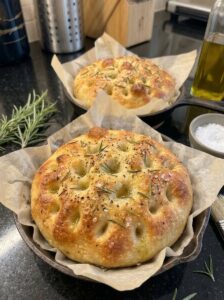
Soft and Buttery No-Knead Dinner Bread: Easy Homemade Loaf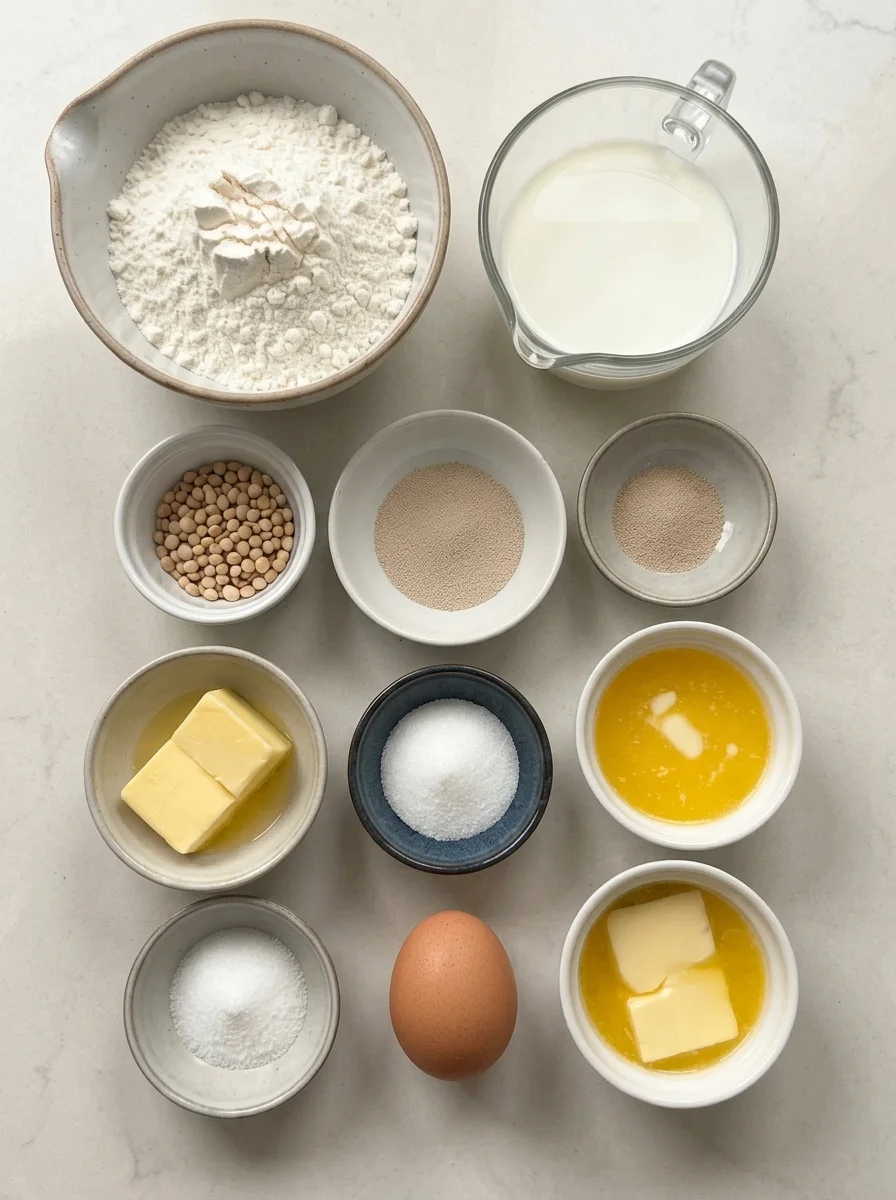
· @oussama
This soft, fluffy, buttery homemade dinner bread is perfect for serving alongside soups, pasta, roasted vegetables or your favorite family meals. The dough comes together with a spoon, so you do not need to knead or use a stand mixer. A little butter and milk create a tender crumb, while a final brush of melted butter gives the loaf its irresistible golden top.
If you have ever hesitated to bake bread because of the work involved, this no-knead dinner bread recipe is a gentle place to start. You stir the dough in one bowl, let it rise twice, pour it into a loaf pan and bake. The whole process takes about 2½ to 3 hours, but only around 15 minutes of that is hands-on time. The rest is waiting while the oven and the yeast do the work.
Why you will love this no-knead dinner bread
This loaf is simple, forgiving and rich in flavor. Here is what makes it special.
- No kneading required. A wooden spoon and a bowl are all you need to mix the dough.
- Soft and fluffy crumb. Milk, butter and an egg make a tender, pillowy texture.
- Buttery flavor. Butter in the dough and on top gives the loaf a rich aroma and a golden crust.
- One bowl, one pan. Cleanup is quick and easy.
- Simple pantry ingredients. Flour, milk, butter, sugar, yeast, salt and an egg are all you need.
- Great with almost any meal. It suits soups, stews, pasta, roasted vegetables and casseroles.
- Versatile. Turn it into garlic bread, herb bread, cheesy bread or pull-apart rolls with small changes.
What does buttery dinner bread taste like?
This bread tastes mild, slightly sweet and buttery, with a soft, springy crumb and a thin, golden crust. It is closer to a tender sandwich loaf than to a chewy artisan bread. The butter brushed on right after baking adds a glossy shine and a rich finish. It is delicious warm, and it slices cleanly once cooled for sandwiches and toast.
How does no-knead dough work?
Kneading develops gluten, the network of proteins that gives bread structure. A wetter, stickier dough can develop gluten on its own over time, because the flour absorbs the liquid and the yeast slowly builds strength during the rise. That is why this dough is soft and tacky, and why it is important not to add too much flour. Patience replaces effort, and you still get a soft, airy loaf.
No-knead dinner bread recipe details
This recipe makes 1 loaf of about 10 to 12 slices. Most of the time is hands-off rising.
- Prep time: 15 minutes
- Rise time: 1½-2 hours
- Bake time: 30-35 minutes
- Total time: about 2½-3 hours
- Oven temperature: 350°F (175°C)
- Loaf pan size: 9 x 5 inches (23 x 13 cm)
- Yield: 1 loaf, about 10-12 slices
Ingredients for soft and buttery dinner bread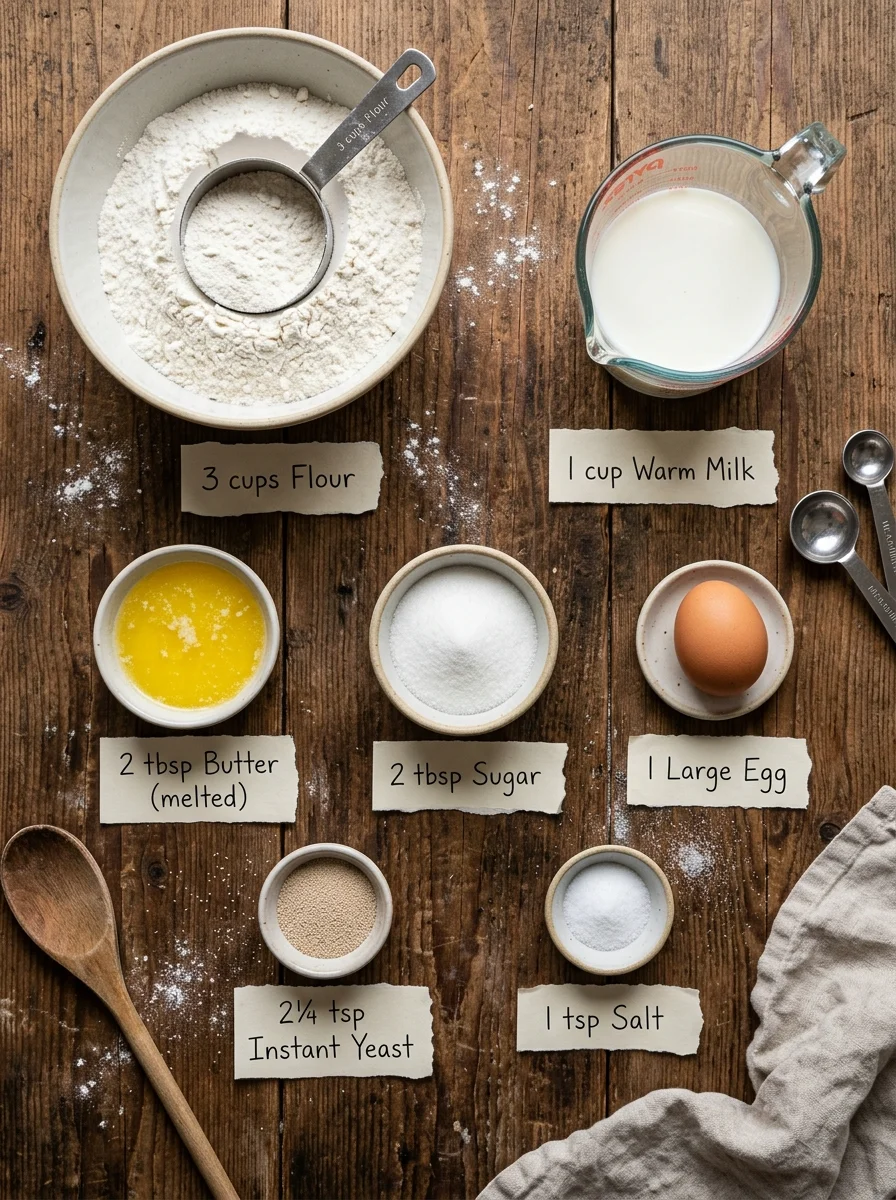
- 3 cups (375 g) all-purpose flour or bread flour
- 1 cup (240 ml) warm milk, about 100-110°F (38-43°C)
- 2 tablespoons (28 g) unsalted butter, melted and slightly cooled
- 2 tablespoons (25 g) sugar
- 2¼ teaspoons (7 g) instant yeast
- 1 teaspoon salt
- 1 large egg, room temperature
For the buttery topping
- 1-2 tablespoons (14-28 g) melted butter
Equipment you will need
- Large mixing bowl
- Wooden spoon or sturdy spatula
- 9 x 5-inch (23 x 13 cm) loaf pan
- Plastic wrap or a clean kitchen towel
- Pastry brush
- Wire cooling rack
- Instant-read thermometer, optional
How to make no-knead dinner bread, step by step
Follow these seven steps for a soft, golden loaf. Read through them once first, since the dough needs two rises.
Step 1: Activate the yeast
- In a large mixing bowl, combine the warm milk, sugar and yeast.
- Stir gently. If you are using active dry yeast, let it sit for 5-10 minutes until foamy.
- If you are using instant yeast, you can go straight to the next step.
Step 2: Mix the dough
- Add the melted butter and egg to the milk mixture and whisk until combined.
- Add the flour and salt.
- Stir with a wooden spoon or sturdy spatula until all the flour is incorporated and a sticky, soft dough forms.
- The dough should be tacky and a little shaggy. Avoid adding too much extra flour, as this can make the finished bread dry.
Step 3: Let the dough rise
- Cover the bowl with plastic wrap or a clean kitchen towel.
- Let the dough rise in a warm, draft-free place for 60-90 minutes, or until approximately doubled in size.
Step 4: Prepare the loaf pan
- Grease a 9 x 5-inch (23 x 13 cm) loaf pan with butter or oil.
- Lightly flour your hands or use a spatula to gently fold the dough over itself a few times.
- Transfer it into the prepared pan and spread it gently into an even layer.
- You do not need to knead the dough or shape it perfectly.
Step 5: Let it rise again
- Cover the pan loosely and allow the dough to rise for another 30-45 minutes, until noticeably puffy and approaching the top of the pan.
- Meanwhile, preheat the oven to 350°F (175°C).
Step 6: Bake until golden
- Bake for 30-35 minutes, until the top is golden brown and the loaf is cooked through.
- If the top browns too quickly, loosely cover it with foil during the final 10 minutes.
- For a reliable doneness check, the center should reach approximately 190-200°F (88-93°C).
Step 7: Brush with butter
- Remove the bread from the oven and immediately brush the top generously with melted butter.
- Let it cool in the pan for 10 minutes, then transfer it to a wire rack.
- Allow it to cool for at least 20-30 minutes before slicing for the softest, neatest slices.
How to tell when the bread is done
- Color: The top should be deep golden brown.
- Temperature: The center should read about 190-200°F (88-93°C) on an instant-read thermometer.
- Sound: Tap the bottom of the loaf after removing it from the pan. It should sound hollow.
- Sides: The loaf should pull slightly away from the pan and feel firm.
Tips for extra-soft bread
These habits help you get a tall, tender loaf every time.
- Use warm, not hot, milk. Very hot milk can damage the yeast, and cold milk slows the rise.
- Keep the dough soft. A sticky dough helps produce a fluffy crumb.
- Do not rush the rise. Let the dough rise until visibly puffy rather than relying only on the clock.
- Brush with butter while warm. This adds flavor and helps keep the crust tender.
- Avoid overbaking. Remove the loaf as soon as the center is cooked through.
- For a softer crust, let the loaf cool under a clean kitchen towel for the first 10-15 minutes.
- Use room temperature egg. It mixes in more evenly and does not cool the dough.
- Use a thermometer. It is the most reliable way to know the center is done.
Ingredient notes and substitutions
- Flour. All-purpose flour gives a soft, tender loaf. Bread flour gives a slightly taller, chewier one. Both work well.
- Milk. Whole milk gives the richest crumb. Low-fat milk works too. Plant milks can be used, though the flavor and softness may differ slightly.
- Butter. Unsalted butter lets you control the salt. If you only have salted butter, reduce the salt in the dough slightly.
- Yeast. Instant yeast can be mixed in directly. Active dry yeast should foam in the warm milk first, so allow 5-10 minutes.
- Sugar. A small amount feeds the yeast and gives a light sweetness. Honey can replace it.
- Egg. The egg adds richness and structure. Bring it to room temperature before using.
- Salt. It adds flavor and controls the yeast. Do not skip it.
Dinner bread troubleshooting
- Bread is dense: Too much flour was added, or the dough did not rise enough. Keep the dough sticky and let it become puffy.
- Bread is dry: It was overbaked or too much flour was used. Check the internal temperature and bake only until done.
- Dough did not rise: The yeast may be old, or the milk was too hot or too cold. Check the expiry date and use milk at 100-110°F (38-43°C).
- Top browns too quickly: Cover loosely with foil for the last 10 minutes of baking.
- Crust is too hard: Brush with melted butter right after baking and cool under a towel.
- Bread collapsed: The second rise went too long. Bake when the dough is puffy and near the top of the pan, not overflowing.
- Bread is gummy inside: It was cut too soon or underbaked. Cool for at least 20-30 minutes and check the center temperature.
- Dough is too sticky to handle: That is normal for no-knead dough. Use a spatula or lightly floured hands rather than adding more flour.
Easy variations
Once you know the base loaf, it is simple to change it up.
- Garlic butter bread. Add ½ teaspoon garlic powder to the dough and brush the baked loaf with garlic butter.
- Herbed dinner bread. Add 1 teaspoon dried rosemary, oregano or Italian seasoning.
- Honey butter bread. Replace the sugar with 2 tablespoons honey for a subtly sweet flavor.
- Cheesy dinner bread. Fold in ½ cup (about 55 g) shredded cheddar or mozzarella before transferring the dough to the pan.
- Pull-apart dinner rolls. Divide the dough into 9-12 portions, arrange them in a greased baking dish, let them rise until puffy and bake at 350°F (175°C) for about 20-25 minutes.
- Slightly sweeter bread. Increase the sugar to 3 tablespoons for a bread that pairs especially well with breakfast or brunch.
- Seeded top. Brush the loaf with milk or egg wash and sprinkle with sesame or poppy seeds before baking.
Serving ideas
- Serve warm with soups, stews or creamy pasta.
- Pair with roasted chicken, vegetables or a hearty casserole.
- Use slices for grilled cheese or simple sandwiches.
- Serve alongside olive oil, herb butter or garlic butter.
- Toast leftover slices and top with scrambled eggs or avocado.
- Turn day-old slices into French toast, bread pudding or croutons.
- Serve at holiday dinners with a bowl of flavored butter.
Storage
- Room temperature: Store in an airtight bag or container for up to 3 days.
- Refrigerator: Best avoided, since refrigeration can make bread stale more quickly.
- Freezer: Freeze the completely cooled loaf, whole or sliced, for up to 3 months in a freezer-safe bag.
- Reheating: Warm slices in a toaster or heat the loaf in a 300°F (150°C) oven for 8-10 minutes.
- Refreshing: If the bread has become slightly dry, warm a slice and spread with a little butter.
Make-ahead tips
- Refrigerate the dough overnight. After the first mix, cover the bowl and refrigerate it for 8-12 hours. Let it come to room temperature for about 30-45 minutes, then continue with the pan step.
- Slice before freezing. Cut the cooled loaf so you can take out only what you need.
- Bake ahead for gatherings. Bake the loaf the day before, then warm it in the oven just before dinner.
- Mix the butter topping early. Melt it and keep it ready so you can brush the loaf the moment it comes out of the oven.
No-knead dinner bread FAQ
Can I really make bread without kneading? Yes. A wet, sticky dough develops gluten on its own during the rise, so a spoon is enough to mix it.
Can I use active dry yeast instead of instant? Yes. Use the same amount and let it sit in the warm milk and sugar for 5-10 minutes until foamy before continuing.
Do I have to use milk? Milk gives a soft, tender crumb and a richer flavor. Water works, but the loaf will be less soft and less rich.
Can I make the dough ahead of time? Yes. Refrigerate the dough overnight after mixing, then let it warm up before putting it in the pan and letting it rise.
Why is my dough so sticky? That is normal for a no-knead dough. Use a spatula or lightly floured hands, and avoid adding more flour than necessary.
What is the best pan for this bread? A 9 x 5-inch (23 x 13 cm) loaf pan works best. A metal pan gives a golden crust, and a glass pan may need slightly less baking time.
How do I know when the loaf is fully baked? The top should be golden, and the center should reach about 190-200°F (88-93°C). A hollow sound when you tap the bottom is also a good sign.
Can I double the recipe? Yes. Make two loaves, using two pans, and bake them on the center rack. Check the doneness of each loaf, since baking times can vary slightly.
How do I keep the crust soft? Brush with melted butter right after baking and cool the loaf under a clean towel for the first 10-15 minutes.
Can I freeze the bread? Yes. Freeze the completely cooled loaf, whole or sliced, for up to 3 months.
Can I make it dairy-free? Yes. Use a plant-based milk and dairy-free butter. The flavor and texture may differ a little.
Final thoughts
This soft and buttery no-knead dinner bread gives you a tender, fluffy loaf with a buttery aroma, a delicate golden crust and a soft interior that is perfect for soaking up sauces or making sandwiches. It is simple enough for everyday meals but delicious enough to serve at a special family dinner.
Stir the dough tonight or tomorrow afternoon, let it rise while you cook and bring a warm, buttery loaf to the table. It is homemade bread without the hard work.
Print
Soft & Buttery No-Knead Dinner Bread
Ingredients
- 3 cups (375 g) all-purpose flour or bread flour
- 1 cup (240 ml) warm milk, about 100-110°F (38-43°C)
- 2 tablespoons (28 g) unsalted butter, melted and slightly cooled
- 2 tablespoons (25 g) sugar
- 2¼ teaspoons (7 g) instant yeast
- 1 teaspoon salt
- 1 large egg, room temperature
For the buttery topping
- 1–2 tablespoons (14–28 g) melted butter
Equipment you will need
- Large mixing bowl
- Wooden spoon or sturdy spatula
- 9 x 5-inch (23 x 13 cm) loaf pan
- Plastic wrap or a clean kitchen towel
- Pastry brush
- Wire cooling rack
- Instant-read thermometer, optional
Instructions
Follow these seven steps for a soft, golden loaf. Read through them once first, since the dough needs two rises.
Step 1: Activate the yeast
- In a large mixing bowl, combine the warm milk, sugar and yeast.
- Stir gently. If you are using active dry yeast, let it sit for 5-10 minutes until foamy.
- If you are using instant yeast, you can go straight to the next step.
Step 2: Mix the dough
- Add the melted butter and egg to the milk mixture and whisk until combined.
- Add the flour and salt.
- Stir with a wooden spoon or sturdy spatula until all the flour is incorporated and a sticky, soft dough forms.
- The dough should be tacky and a little shaggy. Avoid adding too much extra flour, as this can make the finished bread dry.
Step 3: Let the dough rise
- Cover the bowl with plastic wrap or a clean kitchen towel.
- Let the dough rise in a warm, draft-free place for 60-90 minutes, or until approximately doubled in size.
Step 4: Prepare the loaf pan
- Grease a 9 x 5-inch (23 x 13 cm) loaf pan with butter or oil.
- Lightly flour your hands or use a spatula to gently fold the dough over itself a few times.
- Transfer it into the prepared pan and spread it gently into an even layer.
- You do not need to knead the dough or shape it perfectly.
Step 5: Let it rise again
- Cover the pan loosely and allow the dough to rise for another 30-45 minutes, until noticeably puffy and approaching the top of the pan.
- Meanwhile, preheat the oven to 350°F (175°C).
Step 6: Bake until golden
- Bake for 30-35 minutes, until the top is golden brown and the loaf is cooked through.
- If the top browns too quickly, loosely cover it with foil during the final 10 minutes.
- For a reliable doneness check, the center should reach approximately 190-200°F (88-93°C).
Step 7: Brush with butter
- Remove the bread from the oven and immediately brush the top generously with melted butter.
- Let it cool in the pan for 10 minutes, then transfer it to a wire rack.
- Allow it to cool for at least 20-30 minutes before slicing for the softest, neatest slices.