Ultimate Herb Chicken with Creamy Gravy, Mashed Potatoes & Glazed Carrots
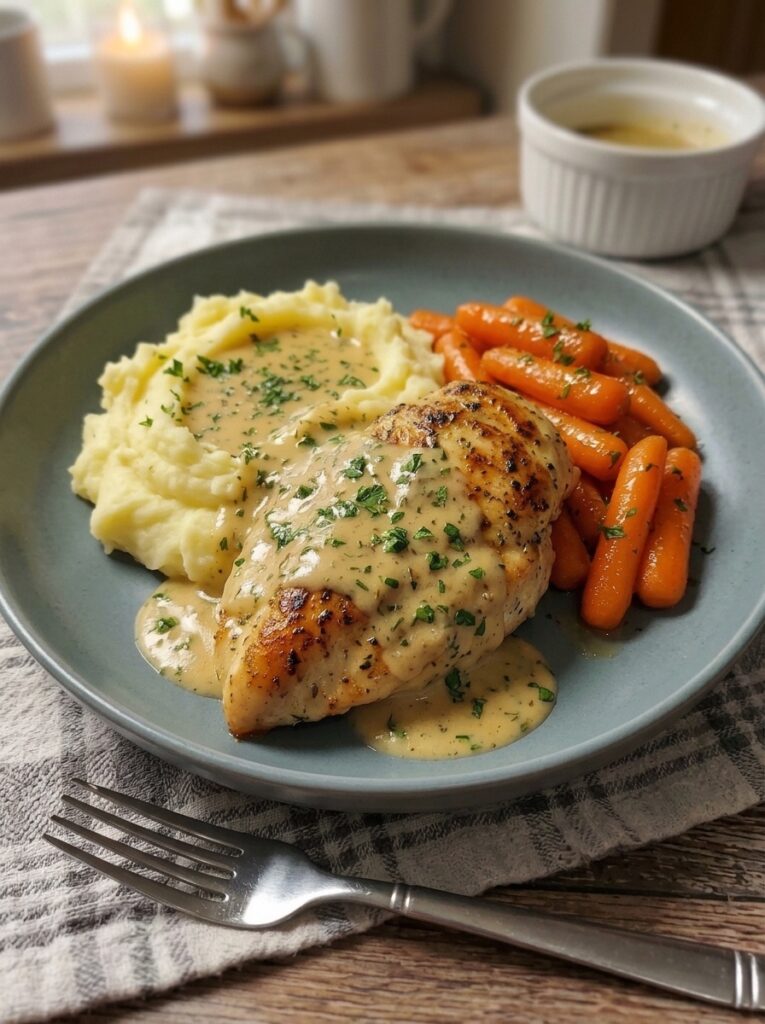
There’s a certain kind of dinner that stops everyone at the table mid-conversation — the kind that fills the kitchen with the smell of butter and herbs long before it hits the plate. This Ultimate Herb Chicken with Creamy Gravy, Mashed Potatoes & Glazed Carrots is exactly that meal. It’s juicy, herb-seasoned chicken breasts, pan-seared to a deep golden brown, smothered in a rich, velvety homemade gravy, and served over a bed of fluffy, buttery mashed potatoes. On the side, sweet, glossy honey-glazed carrots round everything out with a pop of color and a touch of natural sweetness.
This is comfort food in its purest form — the kind of recipe that feels like it belongs on a Sunday dinner table, at a holiday gathering, or on a random Tuesday night when you just need something warm, hearty, and satisfying. And despite how impressive it looks on the plate, it’s entirely achievable on a weeknight with a handful of pantry staples and about 45 minutes of your time.
In this guide, you’ll find everything you need to make this dish a success: a full ingredient breakdown, step-by-step instructions, expert tips for getting restaurant-quality results at home, ideas for variations and substitutions, storage and reheating advice, and answers to the most common questions home cooks ask about this recipe. Whether you’re cooking for a family dinner, meal prepping for the week, or hosting guests, this herb chicken dinner is guaranteed to become a regular in your rotation.
Why You’ll Love This Herb Chicken Dinner
There’s a reason variations of “chicken with gravy and mashed potatoes” show up on comfort food lists again and again — it’s a combination that simply works. Here’s what makes this particular version stand out.
It’s a complete, balanced meal in one recipe. You get lean protein from the chicken, hearty carbohydrates from the potatoes, and vegetables from the carrots, all tied together with one unifying, flavor-packed sauce. There’s no need to plan three separate side dishes; this recipe handles the whole plate.
The herb blend is simple but incredibly flavorful. Garlic powder, onion powder, dried thyme, dried rosemary, Italian seasoning, and paprika combine to create a savory, aromatic crust on the chicken without requiring any fresh herbs or complicated marinades. It’s the kind of seasoning blend you’ll want to use on everything once you try it.
The gravy does double duty. Made right in the same skillet used to cook the chicken, this gravy picks up all those flavorful browned bits (also known as fond) left behind, which means deeper flavor with zero extra dishes. It’s rich, silky, and the perfect finishing touch for both the chicken and the mashed potatoes.
The glazed carrots add brightness and balance. Sweet, sticky, and buttery, the honey garlic glaze keeps the carrots from feeling like an afterthought. They add color, texture, and a hint of sweetness that plays beautifully against the savory chicken and gravy.
It’s forgiving and beginner-friendly. Even if you’ve never made a pan sauce or homemade gravy before, this recipe walks you through it step by step. There’s no obscure technique here — just classic, tried-and-true cooking methods that deliver consistent results.
Ingredients You’ll Need
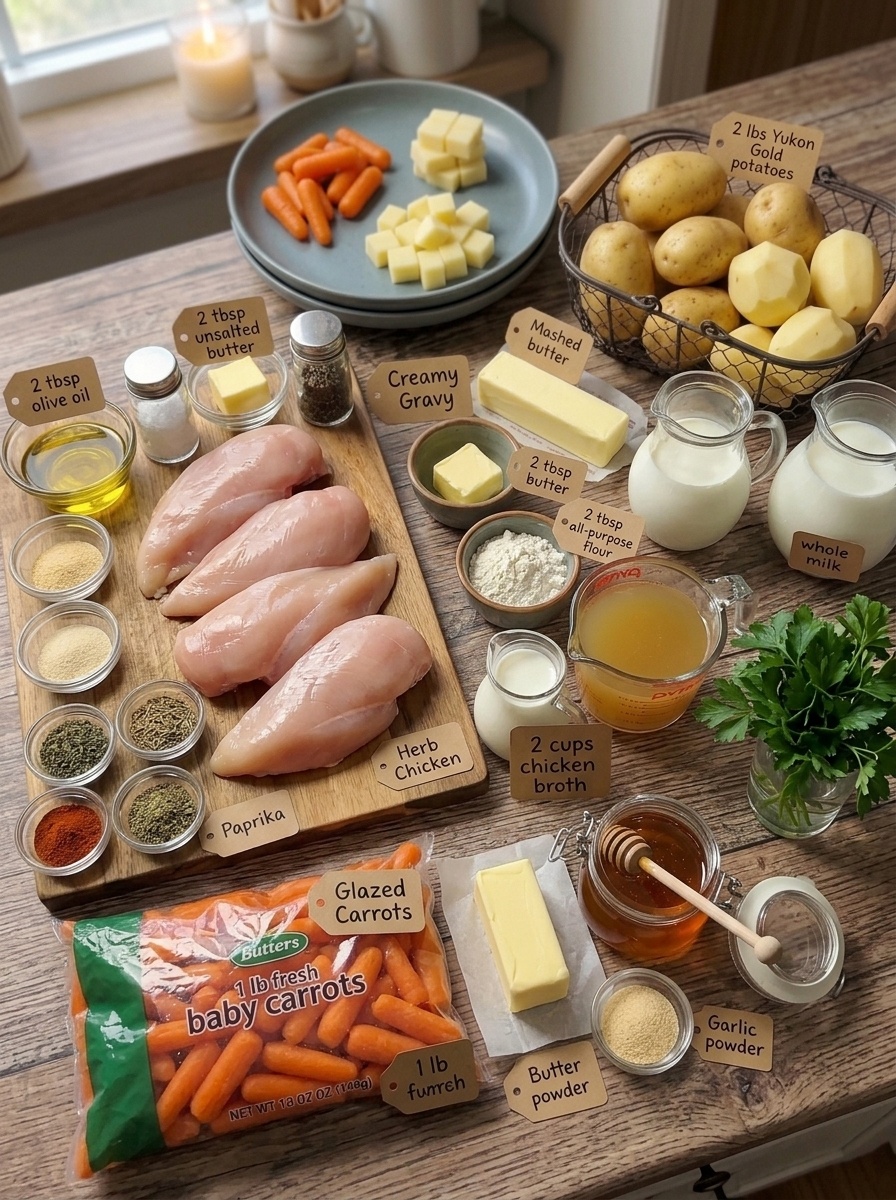
Let’s break down exactly what goes into each component of this dish and why.
For the Herb Chicken
- 4 boneless, skinless chicken breasts – The star of the dish. Boneless, skinless breasts cook quickly and evenly, making them ideal for a weeknight dinner.
- 2 tbsp olive oil – Helps create a beautiful golden-brown sear on the chicken.
- 2 tbsp unsalted butter – Adds richness and helps the seasoning form a flavorful crust.
- 1 tsp garlic powder – Delivers deep, savory flavor without the risk of burning like fresh garlic can.
- 1 tsp onion powder – Adds a subtle sweetness and rounds out the savory notes.
- 1 tsp dried thyme – A classic herb for poultry, earthy and slightly floral.
- 1 tsp dried rosemary – Adds a piney, aromatic depth that pairs perfectly with butter and chicken.
- 1 tsp Italian seasoning – A convenient blend that layers in extra herbal complexity.
- ½ tsp paprika – Contributes color and a mild, smoky-sweet flavor.
- Salt and black pepper, to taste – Essential for bringing all the flavors together.
For the Creamy Gravy
- 2 tbsp butter – The base of your roux.
- 2 tbsp all-purpose flour – Thickens the gravy to that perfect, spoon-coating consistency.
- 2 cups chicken broth – Forms the savory backbone of the sauce.
- ½ cup heavy cream – Makes the gravy silky, rich, and luxurious.
- 1 tsp Worcestershire sauce – Adds umami depth and a subtle tang.
- Salt and black pepper, to taste – Adjust to your preference once the gravy has thickened.
For the Mashed Potatoes
- 2 lbs Yukon Gold potatoes, peeled and cubed – Yukon Golds are naturally buttery and creamy, making them ideal for mashing.
- 4 tbsp butter – For richness.
- ½ cup heavy cream – Creates a smooth, luscious texture.
- ½ cup whole milk – Loosens the potatoes to the perfect consistency.
- Salt and black pepper, to taste – Season generously; potatoes need more salt than you’d expect.
For the Glazed Carrots
- 1 lb baby carrots – Naturally sweet and quick-cooking.
- 2 tbsp butter – The base of the glaze.
- 2 tbsp honey – Adds sweetness and helps create that glossy glaze.
- ½ tsp garlic powder – A savory contrast to the honey.
- Salt and black pepper, to taste – Balances the sweetness.
- 1 tbsp chopped fresh parsley – For a fresh, colorful garnish.
Step-by-Step Instructions
Step 1: Cook and Mash the Potatoes
Start by placing your cubed Yukon Gold potatoes in a large pot and covering them with cold, salted water. Bring the pot to a boil over high heat, then reduce to a steady simmer and cook for 15 to 20 minutes, or until the potatoes are fork-tender — meaning a fork slides in with almost no resistance.
Drain the potatoes thoroughly and return them to the pot. Add the butter, heavy cream, whole milk, salt, and pepper, then mash until smooth and creamy. For an ultra-silky texture, you can use a potato ricer or hand mixer instead of a traditional masher. Taste and adjust the seasoning, then cover the pot and keep the potatoes warm while you prepare the rest of the meal.
Step 2: Season the Chicken
While the potatoes are boiling, prepare your chicken breasts. Pat them dry with paper towels — this step is key for achieving a good sear, since excess moisture on the surface will cause the chicken to steam rather than brown.
In a small bowl, combine the garlic powder, onion powder, dried thyme, dried rosemary, Italian seasoning, paprika, salt, and pepper. Sprinkle this seasoning blend generously over both sides of the chicken breasts, pressing gently so it adheres.
Step 3: Sear the Chicken
Heat the olive oil and butter together in a large skillet over medium-high heat until the butter is melted and the pan is shimmering. Add the chicken breasts and cook for 5 to 6 minutes per side, without moving them too much, until they’re deeply golden brown and cooked through to an internal temperature of 165°F (74°C).
Transfer the chicken to a plate and tent loosely with foil to keep it warm. Don’t wipe out the skillet — those browned bits left behind are pure flavor and will become the base of your gravy.
Step 4: Make the Creamy Gravy
In the same skillet, reduce the heat to medium and melt the butter, scraping up any browned bits from the bottom of the pan as it melts. Whisk in the flour and cook for about 1 minute, stirring constantly, to eliminate the raw flour taste and form a light roux.
Gradually whisk in the chicken broth, a little at a time at first, to prevent lumps from forming. Once smooth, stir in the heavy cream and Worcestershire sauce. Let the gravy simmer for 3 to 5 minutes, stirring occasionally, until it thickens enough to coat the back of a spoon. Season with salt and pepper to taste.
Step 5: Cook the Carrots
While the gravy simmers, bring a separate pot of water to a boil and add the baby carrots. Cook for 8 to 10 minutes, until they’re tender but not mushy — you want them to hold their shape. Drain well.
Step 6: Glaze the Carrots
In a clean skillet, melt the butter over medium heat. Stir in the honey and garlic powder until combined, then add the drained carrots. Toss them in the glaze for 2 to 3 minutes, until they’re evenly coated, glossy, and slightly caramelized at the edges. Season with salt and pepper to taste.
Step 7: Combine the Chicken and Gravy
Return the seared chicken breasts to the skillet with the gravy. Spoon the gravy generously over the top of each piece and let everything simmer together for 2 to 3 minutes, just until the chicken is warmed through and infused with the sauce.
Step 8: Plate and Serve
To serve, spoon a generous bed of creamy mashed potatoes onto each plate. Top with a piece of herb chicken and a generous ladle of creamy gravy. Add the glazed carrots on the side, and finish the whole plate with a sprinkle of fresh chopped parsley for a pop of color and freshness.
Expert Tips for the Best Results
Don’t skip patting the chicken dry. Moisture is the enemy of a good sear. A few extra seconds with a paper towel makes a noticeable difference in how golden and crisp the exterior gets.
Pound the chicken breasts to an even thickness. If your chicken breasts are uneven — thicker on one side than the other — consider pounding them to a consistent ½-inch to ¾-inch thickness. This helps them cook evenly and prevents the thinner end from drying out while the thicker end finishes cooking.
Use room-temperature chicken. Letting the chicken sit out for about 15–20 minutes before cooking helps it cook more evenly, rather than going straight from a cold fridge into a hot pan.
Whisk constantly when making the roux and gravy. Lumps form when flour isn’t fully incorporated. Adding the broth gradually while whisking is the single most important step for a silky, lump-free gravy.
Warm your broth slightly before adding it to the roux. Cold liquid added to a hot roux can cause the butter to seize and create a grainy texture. Room-temperature or slightly warmed broth blends in more smoothly.
Rice your potatoes for the smoothest mash. If you have a potato ricer, use it. It produces a far silkier, lump-free texture than a hand masher, and it’s especially worth it for a dish this special.
Warm the cream and milk before adding to the potatoes. Cold dairy added to hot potatoes can make the mash gluey. Warming the cream and milk slightly (even just microwaving for 30 seconds) helps everything incorporate smoothly.
Don’t overcook the carrots. Carrots that are boiled too long will fall apart when you try to glaze them. Check for tenderness starting around the 7-minute mark.
Let the honey glaze reduce slightly. If you like a thicker, more caramelized glaze on your carrots, let them cook an extra minute or two after adding the honey mixture, watching closely so it doesn’t burn.
Recipe Variations and Substitutions
One of the best things about this recipe is how adaptable it is. Here are some ways to customize it based on what you have on hand or your dietary preferences.
Swap the protein. Boneless, skinless chicken thighs work beautifully in place of chicken breasts and tend to stay even juicier. Adjust the cooking time slightly, as thighs may need a minute or two longer depending on thickness.
Make it gluten-free. Substitute the all-purpose flour in the gravy with a 1:1 gluten-free flour blend or cornstarch (use half the amount of cornstarch, mixed with a little cold water to form a slurry before adding).
Lighten up the gravy and potatoes. Swap the heavy cream for half-and-half or whole milk in both the gravy and the mashed potatoes for a slightly lighter version, though the texture will be a bit less rich.
Add mushrooms to the gravy. Sauté sliced mushrooms in the skillet before making the roux for an earthy, savory upgrade — this turns the dish into a chicken and mushroom gravy variation.
Try different herbs. Fresh herbs can be substituted for dried at a ratio of about 3:1 (three times the amount of fresh herbs to dried). Fresh thyme and rosemary, finely chopped, will add a brighter, more fragrant flavor.
Swap the vegetable side. While glazed carrots are a classic pairing, honey-glazed green beans, roasted Brussels sprouts, or sautéed peas would all work well alongside the chicken and gravy.
Make it dairy-free. Use a plant-based butter alternative and a dairy-free cream substitute (like full-fat coconut cream or a cashew-based cream) in both the gravy and mashed potatoes.
What to Serve With Herb Chicken, Gravy, Potatoes, and Carrots
While this dish is a complete meal on its own, a few additional touches can round out the dinner table:
- A simple green salad with a light vinaigrette to add freshness and cut through the richness of the gravy.
- Warm dinner rolls or crusty bread for sopping up any extra gravy on the plate.
- A glass of chardonnay or pinot noir, both of which pair nicely with creamy, herb-forward chicken dishes.
- Roasted garlic green beans if you want to add a second vegetable to the spread.
Storage and Reheating Instructions
Refrigerating leftovers: Store the chicken, gravy, mashed potatoes, and carrots in separate airtight containers in the refrigerator for up to 3–4 days. Keeping the components separate helps everything reheat more evenly and prevents the potatoes from becoming soggy.
Reheating the chicken and gravy: Reheat gently in a skillet over medium-low heat, spooning the gravy over the chicken as it warms, until heated through. You can also microwave it in 30-second intervals, covered, to prevent the chicken from drying out.
Reheating the mashed potatoes: Warm on the stovetop over low heat, stirring in a splash of milk or cream to loosen the texture, as potatoes tend to thicken in the fridge. Alternatively, microwave in 30-second bursts, stirring between each.
Reheating the carrots: A quick sauté in a skillet over medium heat works best to revive their glossy glaze. Microwaving works in a pinch but may soften them further.
Freezing: The mashed potatoes and chicken with gravy can be frozen in airtight, freezer-safe containers for up to 2 months. Note that cream-based sauces and dairy-heavy mashed potatoes can sometimes separate slightly upon thawing — whisking or stirring vigorously after reheating usually restores the texture. Glazed carrots are best enjoyed fresh, as they tend to lose their texture after freezing.
Frequently Asked Questions
Can I make this recipe ahead of time? Yes. You can season the chicken and prep the vegetables up to a day in advance and store them separately in the refrigerator. The mashed potatoes can also be made a day ahead and reheated gently with a splash of milk or cream before serving. For the best texture, it’s ideal to cook the chicken and make the gravy fresh, but reheated leftovers still taste great.
What’s the best type of potato for mashed potatoes? Yukon Gold potatoes are ideal because of their naturally buttery flavor and creamy texture when mashed. Russet potatoes are a good alternative if you prefer a fluffier, lighter mash, though they require a bit more butter and cream to achieve the same richness.
How do I know when the chicken is fully cooked? The most reliable way is to use an instant-read meat thermometer inserted into the thickest part of the breast — it should read 165°F (74°C). If you don’t have a thermometer, cut into the thickest part; the juices should run clear and the meat should no longer be pink.
Why is my gravy lumpy? Lumpy gravy usually happens when the broth is added too quickly to the roux, or when it’s added while cold. Whisk constantly and pour the broth in slowly, in small increments, to keep the mixture smooth.
Can I use store-bought chicken broth? Absolutely. Store-bought low-sodium chicken broth works perfectly in this recipe. Using a low-sodium version gives you more control over the final seasoning of the gravy.
Can I make the gravy without cream? Yes, though it will be less rich. You can substitute the heavy cream with additional chicken broth or whole milk, keeping in mind the texture will be thinner and less luxurious.
How can I make this dish spicier? Add a pinch of cayenne pepper or red pepper flakes to the chicken seasoning blend, or stir a small amount into the gravy for a subtle kick.
What other vegetables can I glaze the same way as the carrots? This honey-butter glaze method works well with parsnips, sweet potatoes, or even Brussels sprouts, making it a versatile technique to keep in your back pocket for other meals.
Final Thoughts
This Ultimate Herb Chicken with Creamy Gravy, Mashed Potatoes, and Glazed Carrots recipe is proof that comfort food doesn’t need to be complicated to feel special. With a well-seasoned, perfectly seared chicken breast, a silky homemade gravy built right in the same pan, pillowy mashed potatoes, and sweet, glossy glazed carrots, every element on the plate works together to create a dinner that feels both nostalgic and elevated.
It’s a recipe worth keeping on repeat — easy enough for a weeknight, yet impressive enough for guests or a holiday table. Once you make it, don’t be surprised if it becomes a permanent fixture in your dinner rotation.
Print
Ultimate Herb Chicken with Creamy Gravy, Mashed Potatoes & Glazed Carrots
Ingredients
Let’s break down exactly what goes into each component of this dish and why.
For the Herb Chicken
- 4 boneless, skinless chicken breasts – The star of the dish. Boneless, skinless breasts cook quickly and evenly, making them ideal for a weeknight dinner.
- 2 tbsp olive oil – Helps create a beautiful golden-brown sear on the chicken.
- 2 tbsp unsalted butter – Adds richness and helps the seasoning form a flavorful crust.
- 1 tsp garlic powder – Delivers deep, savory flavor without the risk of burning like fresh garlic can.
- 1 tsp onion powder – Adds a subtle sweetness and rounds out the savory notes.
- 1 tsp dried thyme – A classic herb for poultry, earthy and slightly floral.
- 1 tsp dried rosemary – Adds a piney, aromatic depth that pairs perfectly with butter and chicken.
- 1 tsp Italian seasoning – A convenient blend that layers in extra herbal complexity.
- ½ tsp paprika – Contributes color and a mild, smoky-sweet flavor.
- Salt and black pepper, to taste – Essential for bringing all the flavors together.
For the Creamy Gravy
- 2 tbsp butter – The base of your roux.
- 2 tbsp all-purpose flour – Thickens the gravy to that perfect, spoon-coating consistency.
- 2 cups chicken broth – Forms the savory backbone of the sauce.
- ½ cup heavy cream – Makes the gravy silky, rich, and luxurious.
- 1 tsp Worcestershire sauce – Adds umami depth and a subtle tang.
- Salt and black pepper, to taste – Adjust to your preference once the gravy has thickened.
For the Mashed Potatoes
- 2 lbs Yukon Gold potatoes, peeled and cubed – Yukon Golds are naturally buttery and creamy, making them ideal for mashing.
- 4 tbsp butter – For richness.
- ½ cup heavy cream – Creates a smooth, luscious texture.
- ½ cup whole milk – Loosens the potatoes to the perfect consistency.
- Salt and black pepper, to taste – Season generously; potatoes need more salt than you’d expect.
For the Glazed Carrots
- 1 lb baby carrots – Naturally sweet and quick-cooking.
- 2 tbsp butter – The base of the glaze.
- 2 tbsp honey – Adds sweetness and helps create that glossy glaze.
- ½ tsp garlic powder – A savory contrast to the honey.
- Salt and black pepper, to taste – Balances the sweetness.
- 1 tbsp chopped fresh parsley – For a fresh, colorful garnish.
Instructions
Start by placing your cubed Yukon Gold potatoes in a large pot and covering them with cold, salted water. Bring the pot to a boil over high heat, then reduce to a steady simmer and cook for 15 to 20 minutes, or until the potatoes are fork-tender — meaning a fork slides in with almost no resistance.
Drain the potatoes thoroughly and return them to the pot. Add the butter, heavy cream, whole milk, salt, and pepper, then mash until smooth and creamy. For an ultra-silky texture, you can use a potato ricer or hand mixer instead of a traditional masher. Taste and adjust the seasoning, then cover the pot and keep the potatoes warm while you prepare the rest of the meal.
While the potatoes are boiling, prepare your chicken breasts. Pat them dry with paper towels — this step is key for achieving a good sear, since excess moisture on the surface will cause the chicken to steam rather than brown.
In a small bowl, combine the garlic powder, onion powder, dried thyme, dried rosemary, Italian seasoning, paprika, salt, and pepper. Sprinkle this seasoning blend generously over both sides of the chicken breasts, pressing gently so it adheres.
Heat the olive oil and butter together in a large skillet over medium-high heat until the butter is melted and the pan is shimmering. Add the chicken breasts and cook for 5 to 6 minutes per side, without moving them too much, until they’re deeply golden brown and cooked through to an internal temperature of 165°F (74°C).
Transfer the chicken to a plate and tent loosely with foil to keep it warm. Don’t wipe out the skillet — those browned bits left behind are pure flavor and will become the base of your gravy.
In the same skillet, reduce the heat to medium and melt the butter, scraping up any browned bits from the bottom of the pan as it melts. Whisk in the flour and cook for about 1 minute, stirring constantly, to eliminate the raw flour taste and form a light roux.
Gradually whisk in the chicken broth, a little at a time at first, to prevent lumps from forming. Once smooth, stir in the heavy cream and Worcestershire sauce. Let the gravy simmer for 3 to 5 minutes, stirring occasionally, until it thickens enough to coat the back of a spoon. Season with salt and pepper to taste.
While the gravy simmers, bring a separate pot of water to a boil and add the baby carrots. Cook for 8 to 10 minutes, until they’re tender but not mushy — you want them to hold their shape. Drain well.
In a clean skillet, melt the butter over medium heat. Stir in the honey and garlic powder until combined, then add the drained carrots. Toss them in the glaze for 2 to 3 minutes, until they’re evenly coated, glossy, and slightly caramelized at the edges. Season with salt and pepper to taste.
Return the seared chicken breasts to the skillet with the gravy. Spoon the gravy generously over the top of each piece and let everything simmer together for 2 to 3 minutes, just until the chicken is warmed through and infused with the sauce.
To serve, spoon a generous bed of creamy mashed potatoes onto each plate. Top with a piece of herb chicken and a generous ladle of creamy gravy. Add the glazed carrots on the side, and finish the whole plate with a sprinkle of fresh chopped parsley for a pop of color and freshness.