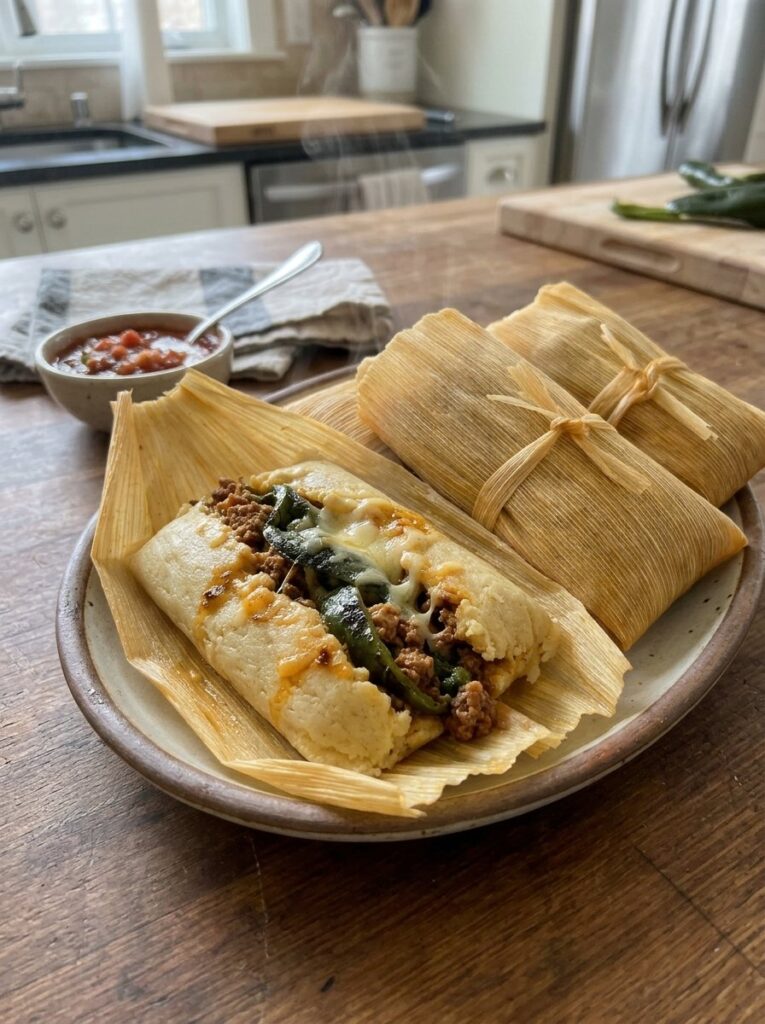
There is something deeply comforting about unwrapping a steaming corn husk and finding a soft, fluffy tamale waiting inside. Now imagine that tamale is oversized, stuffed with smoky roasted poblano peppers, savory seasoned ground beef, and ribbons of melted Monterey Jack cheese. These giant Mexican poblano, beef and cheese tamales are exactly that: a hearty, satisfying meal wrapped in a natural corn husk package, perfect for family gatherings, weekend cooking projects, and special homemade dinners.
If you have ever been intimidated by tamales, this guide is for you. Below, you will find a complete ingredient list, clear step-by-step instructions, troubleshooting advice, make-ahead and freezing tips, serving ideas, and answers to the most common tamale questions. By the end, you will be ready to make a batch of giant, bakery-worthy… or rather, kitchen-table-worthy tamales that taste like they came from a family recipe box.
What Makes These Giant Mexican Tamales Special?
Traditional tamales are made by spreading masa (a dough made from corn flour) on a corn husk, adding a filling, folding the husk, and steaming the bundle until the masa turns tender and cooked through. They are a staple of Mexican cuisine and a centerpiece of celebrations, holidays, and family get-togethers.
This version takes that tradition and scales it up in both size and flavor:
- Giant size: Larger tamales mean more filling in every bite and a more generous, meal-sized portion. One or two per person makes a satisfying dinner.
- Roasted poblano peppers: Poblanos have a mild, earthy heat and a deep, smoky flavor once charred. They bring a fresh, vegetal richness that balances the beef and cheese.
- Seasoned ground beef: Cooked with onion, garlic, chili powder, cumin, and smoked paprika, the beef is juicy, savory, and full of warm spice.
- Melted Monterey Jack cheese: Mild, creamy, and an excellent melter, Monterey Jack creates gooey pockets of cheese throughout the tamale.
- Fluffy homemade masa: Beaten lard or shortening, masa harina, baking powder, and warm chicken broth combine into a light, flavorful dough that steams up soft and tender.
The result is a tamale that is hearty, balanced, and packed with texture: tender masa on the outside, juicy beef and silky peppers in the center, and stretchy cheese holding it all together.
Why You Will Love This Recipe
It is perfect for feeding a crowd. A batch of giant tamales is ideal for family dinners, holiday tables, potlucks, and weekend gatherings. Because tamales hold well and reheat beautifully, they are also a smart choice for entertaining.
The flavors are familiar but exciting. Ground beef and cheese feel comforting and approachable, while the roasted poblanos add a traditional Mexican-inspired twist that makes every bite more interesting.
It is great for making ahead. Tamales freeze exceptionally well, so you can cook once and enjoy them for weeks.
It is a fun group activity. Assembling tamales is a wonderful hands-on project. Set up an assembly line with family or friends and the work goes quickly.
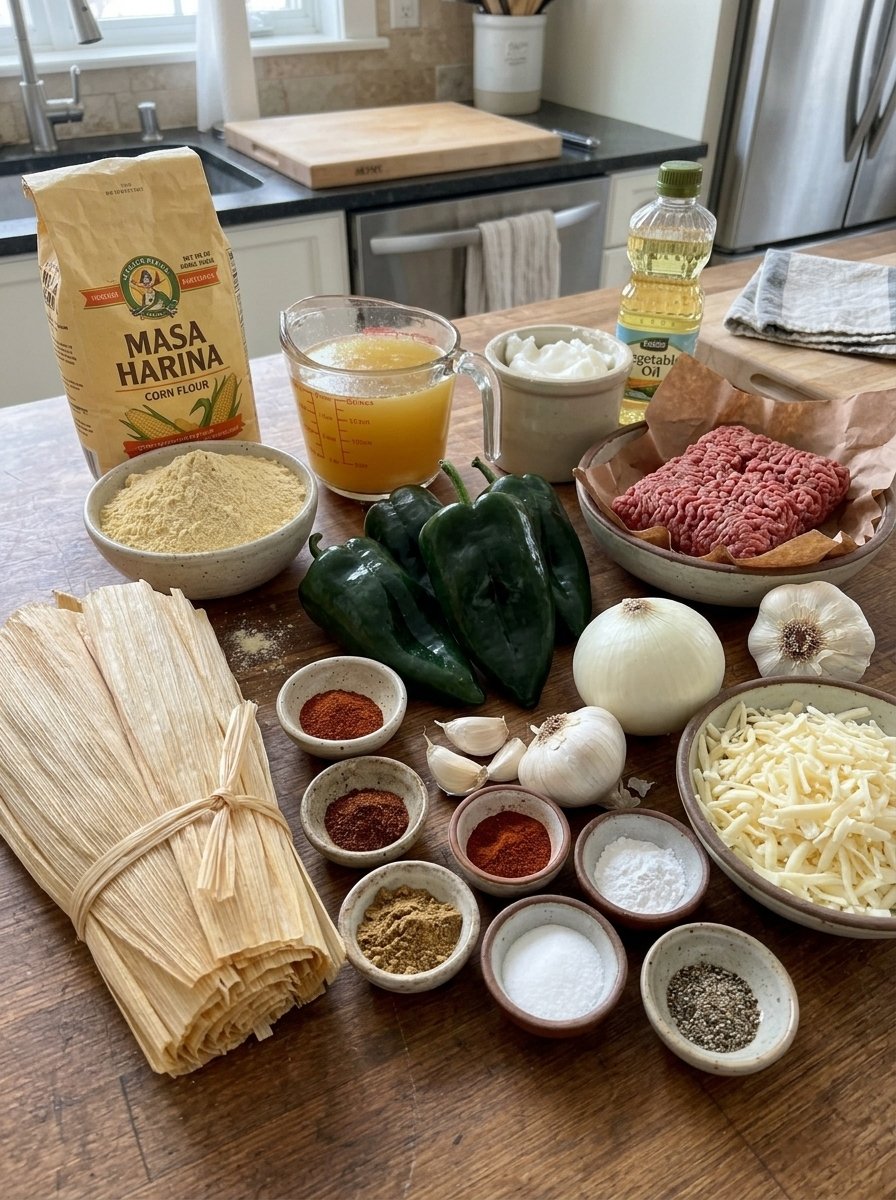
Ingredients for Giant Poblano, Beef and Cheese Tamales
For the Masa Dough
- 4 cups masa harina
- 3 cups warm chicken broth, plus more as needed
- 1 cup lard or vegetable shortening
- 1 teaspoon baking powder
- 1½ teaspoons salt
- 1 teaspoon ground cumin
For the Beef Filling
- 1½ lbs ground beef
- 1 small white onion, finely diced
- 2 garlic cloves, minced
- 1 teaspoon chili powder
- 1 teaspoon ground cumin
- ½ teaspoon smoked paprika
- Salt and black pepper, to taste
- 1 tablespoon vegetable oil
For Assembly
- 4 large poblano peppers
- 2 cups shredded Monterey Jack cheese
- 25 to 30 dried corn husks, plus extra if needed
- Water, for soaking and steaming
Ingredient Notes and Substitutions
Masa harina. This is the corn flour used for tamale dough. It is made from corn that has been treated with lime (nixtamalized), which gives masa its characteristic flavor and texture. Look for a brand labeled for tamales or masa harina in the baking or international aisle. Regular cornmeal or cornstarch is not a substitute.
Lard or vegetable shortening. Traditional tamales use lard for rich flavor and a tender, fluffy texture. Vegetable shortening works well too and is a good option if you prefer to avoid pork products. Whichever you choose, beat it until light and creamy before adding the other masa ingredients.
Chicken broth. Warm chicken broth adds savory depth to the masa. For extra flavor, you can use a rich homemade broth. Keep extra warm broth nearby to adjust the consistency of the dough.
Poblano peppers. Choose large, firm, dark green poblanos with smooth skin, which are easier to roast and peel. Poblanos are typically mild, though heat can vary from pepper to pepper.
Monterey Jack cheese. Shredding your own cheese from a block gives you the best melt. Pre-shredded cheese often contains anti-caking agents that can make it melt less smoothly.
Corn husks. Dried corn husks are sold in the international aisle of many grocery stores, Latin markets, and online. Buy more than you need, since some husks tear or are too small for giant tamales.
How to Make Giant Mexican Poblano, Beef and Cheese Tamales
This recipe makes a generous batch. Read through the steps first, set up your workspace, and take your time. Tamales are worth the effort.
Step 1: Soak the Corn Husks
Place the dried corn husks in a large bowl or pot and cover them with warm water. Weigh them down with a plate so they stay completely submerged. Soak for at least 30 minutes, or until the husks are soft and flexible. Properly soaked husks fold without cracking.
Step 2: Roast the Poblano Peppers
Place the poblanos over a gas flame, under a broiler, or on a hot skillet. Turn them occasionally until the skins are charred and blistered on all sides. Do not be afraid of a deep char. It is where the smoky flavor comes from.
Step 3: Steam and Peel the Poblanos
Transfer the roasted peppers to a covered bowl and let them steam for about 10 minutes. This loosens the skins. Gently remove the charred skins, discard the stems and seeds, and slice the peppers into strips.
Step 4: Cook the Ground Beef
Heat the vegetable oil in a large skillet over medium heat. Add the ground beef and diced onion. Cook, breaking the beef into small crumbles, until browned and the onion begins to soften.
Step 5: Season the Filling
Stir in the minced garlic, chili powder, cumin, smoked paprika, salt, and black pepper. Cook for another 1 to 2 minutes until fragrant and well combined. Drain any excess grease and set the filling aside to cool slightly. Draining the grease matters, because too much fat in the filling can make the tamales greasy.
Step 6: Prepare the Masa Dough
In a large mixing bowl, beat the lard or vegetable shortening until light and fluffy. Add the masa harina, baking powder, salt, and cumin. Gradually pour in the warm chicken broth, mixing until a soft, smooth, spreadable dough forms.
Step 7: Check the Masa Consistency
Continue mixing until the masa is moist and fluffy, similar to a thick spreadable dough. If it feels too dry, add a little more warm broth, one tablespoon at a time. The masa should be soft and easy to spread, not dry or crumbly.
Step 8: Prepare the Corn Husks for Filling
Remove the softened corn husks from the water and pat them dry. Select the largest, widest husks for the giant tamales. If some are too narrow, overlap two husks slightly to create a wider surface.
Step 9: Spread the Masa
Lay a large corn husk flat with the smooth side facing up. Spread a generous layer of masa across the center, leaving enough space around the edges for folding.
Step 10: Add the Beef and Poblano Filling
Spoon a portion of the seasoned ground beef down the center of the masa. Add roasted poblano strips and a generous sprinkle of Monterey Jack cheese.
Step 11: Fold the Tamales
Carefully bring the sides of the corn husk together around the filling, enclosing it with the masa. Fold the bottom end upward to secure the tamale. Tie with a thin strip of corn husk if needed.
Step 12: Prepare the Steamer
Fill a large tamale steamer or deep pot with water, making sure the water level stays below the steaming rack. Bring the water to a gentle boil.
Step 13: Arrange the Tamales
Stand the tamales upright in the steamer with their open ends facing upward. Pack them snugly together so they remain upright during cooking.
Step 14: Steam Until Tender
Cover the pot with a tight-fitting lid and steam over medium-low heat for approximately 1½ to 2 hours. Check the water level occasionally and add more hot water as needed so the pot never boils dry.
Step 15: Check for Doneness
Carefully remove one tamale and let it rest for a few minutes. It is ready when the masa pulls away easily from the corn husk and feels firm rather than sticky. If it still sticks, continue steaming for another 15 to 20 minutes.
Step 16: Rest and Serve
Turn off the heat and let the tamales rest for 10 to 15 minutes before serving. Carefully unwrap and enjoy the fluffy masa, savory beef, smoky poblanos, and melted Monterey Jack cheese.
Pro Tips for the Best Giant Mexican Tamales
Soak the corn husks thoroughly. At least 30 minutes in warm water makes husks soft and pliable. Keep them submerged under a plate so they soak evenly.
Roast the poblanos well. Char the skins evenly to develop a deep smoky flavor before peeling. Pale, lightly roasted peppers taste greener and less complex.
Keep the masa fluffy. Beat the lard or shortening until light and creamy before adding the masa harina. This step is the foundation of a tender, airy tamale.
Check the masa consistency. The dough should be soft and spreadable. If it looks dry or crumbly, add a little extra broth. A well-hydrated masa steams into a moist, tender tamale.
Do not overfill. Giant tamales are tempting to overstuff, but leave enough room around the edges to fold and seal each one properly. Overfilled tamales can burst open during steaming.
Steam gently. Keep the water below the tamales and maintain a steady simmer throughout cooking. Boiling water that touches the tamales will make them soggy.
Let them rest. Allow the tamales to stand for 10 to 15 minutes after steaming so the masa can firm up. Cutting in too early is the most common reason tamales seem mushy.
Common Tamale Problems and How to Fix Them
My tamales are mushy or wet. This usually means the tamales were not steamed long enough, the water touched them, or they were not rested before serving. Make sure the water level stays below the rack, steam until the masa pulls cleanly from the husk, and let the batch rest.
My masa stuck to the husk. Sticking is the classic sign of undercooked tamales. Return them to the steamer for another 15 to 20 minutes and test again.
My tamales are dry or crumbly. The masa was probably too dry to begin with. Add warm broth a tablespoon at a time until the dough is soft and spreadable, and make sure you are using enough fat.
My tamales fell apart while steaming. They may have been overfilled, folded loosely, or packed too loosely in the pot. Fold firmly, tie with a thin husk strip, and pack the tamales snugly so they stay upright.
The husks tore. Dry or under-soaked husks crack easily. Soak longer, keep them wet while you work, and overlap two husks when needed for giant tamales.
How to Make Tamales Ahead of Time
Tamales are one of the best make-ahead foods, and there are several ways to split up the work.
- Prep components in advance. Roast and slice the poblanos, cook the beef filling, and shred the cheese a day ahead. Refrigerate everything in separate airtight containers.
- Assemble ahead. Spread, fill, and fold the tamales, then refrigerate them tightly covered for a day before steaming.
- Cook fully, then store. Steam the tamales completely, cool them, and refrigerate or freeze.
How to Store and Freeze Tamales
Refrigerator. Cool the cooked tamales completely, then store them in an airtight container or sealed bag in the refrigerator. Plan to enjoy them within a few days.
Freezer. Wrap tamales individually or in small groups and place them in freezer-safe bags, pressing out as much air as possible. Label the bag with the date. Frozen tamales keep well for several months.
How to Reheat Tamales
- Steamer (best method). Steam refrigerated tamales for about 10 to 15 minutes, or frozen ones a bit longer, until hot all the way through. This restores the soft, fluffy texture of freshly steamed tamales.
- Microwave. Wrap a tamale in a damp paper towel and heat in short intervals until hot throughout.
- Skillet. For crisp edges, unwrap a reheated tamale and brown it in a lightly oiled skillet for a minute or two per side.
Always make sure leftovers are heated until steaming hot before serving.
What to Serve with Giant Poblano Beef and Cheese Tamales
These tamales are a complete meal on their own, but a few simple sides make the plate feel even more festive:
- Salsa. A bowl of fresh tomato salsa, salsa roja, or salsa verde adds brightness and a little heat. Spooning salsa over the opened tamale is a classic move.
- Mexican rice. Fluffy tomato-seasoned rice pairs beautifully with the savory beef.
- Refried or charro beans. Creamy beans add heartiness and round out the plate.
- Crema or sour cream. A cool drizzle balances the smoky, spiced filling.
- Fresh toppings. Sliced avocado, chopped cilantro, diced onion, and a squeeze of lime make a fresh finish.
- A crisp salad. A simple cabbage slaw or cucumber salad adds crunch and acidity.
- Drinks. Horchata, agua fresca, Mexican hot chocolate, or a cold limeade all go well with tamales.
Recipe Variations to Try
Once you have mastered the base recipe, it is easy to make it your own.
- Shredded chicken or pork. Swap the ground beef for shredded chicken or slow-cooked pork seasoned with the same spices.
- Pepper Jack or Oaxaca cheese. Pepper Jack adds extra heat, while Oaxaca cheese offers a stretchy, mild melt.
- Add corn or beans. Stir sweet corn kernels or black beans into the filling for extra texture.
- Spicier version. Add diced jalapeños or a pinch of cayenne to the beef, or serve with a hotter salsa.
- Vegetarian tamales. Skip the beef and fill with roasted poblano strips, cheese, black beans, and sautéed vegetables. Use vegetable broth and vegetable shortening in the masa.
- Mini tamales. Use smaller portions of masa and filling for bite-sized tamales that are great for parties.
Why Poblanos and Beef Work So Well Together
The pairing of roasted poblanos and ground beef is a good example of how contrast creates flavor. The beef is rich, savory, and warmly spiced. The poblanos are smoky, slightly sweet, and gently vegetal, which cuts through the richness and adds complexity. The Monterey Jack sits between the two, creamy and mild, tying the filling together. Wrapped in corn masa, which has its own sweet, toasty corn flavor, the combination hits every note: smoky, savory, creamy, and tender.
Tamale Making Tips for Beginners
- Read the recipe all the way through first. Knowing the full process prevents surprises.
- Organize your workspace. Set out the masa, filling, husks, and a tray for finished tamales before you start.
- Work in an assembly line. Spread, fill, fold, and stack. If you have helpers, assign each person a job.
- Make a test tamale. Steaming one first lets you check the seasoning and the masa texture before you commit to the whole batch.
- Do not rush the steaming. Tamales need time. Patience gives you tender, fully cooked masa.
- Be generous with extra husks. Having spares makes folding giant tamales much easier.
Frequently Asked Questions
How many tamales does this recipe make?
The recipe calls for 25 to 30 dried corn husks, with extra on hand in case some tear or are too small. The final count depends on how large you make each tamale. Because these are giant tamales, expect a generous batch suited to feeding a group, with leftovers for the freezer.
What is the difference between masa and masa harina?
Masa is the fresh corn dough used for tamales and tortillas. Masa harina is the dried, powdered form that you mix with liquid to make the dough at home. This recipe uses masa harina mixed with warm chicken broth and beaten fat.
Can I make tamales without lard?
Yes. Vegetable shortening works well in this recipe and produces a soft, fluffy masa. Lard offers a more traditional flavor, but both are good options.
How do I know when tamales are done?
A finished tamale pulls away easily from the corn husk and feels firm rather than sticky. Remove one from the steamer, let it rest a few minutes, and test it. If it sticks, steam for another 15 to 20 minutes.
Do I eat the corn husk?
No. The corn husk is a natural wrapper that holds the tamale together and protects it during steaming. Unwrap the tamale and discard the husk before eating.
Can I freeze tamales before steaming them?
You can freeze cooked tamales with excellent results, and this is the most common approach. Cooked tamales reheat quickly and keep their texture. Stick with freezing after steaming for the most reliable outcome.
Why are my tamales sticking to the husks?
Sticking almost always means the tamales need more steaming time. Keep steaming and check again. Resting the tamales after cooking also helps the masa firm up and release.
What can I use instead of Monterey Jack cheese?
Pepper Jack, Oaxaca, mozzarella, or a mild white cheddar all melt well. Choose a cheese that melts smoothly and does not overpower the poblanos and beef.
Are poblano peppers very spicy?
Poblanos are generally mild, with an earthy, smoky flavor once roasted. Heat levels can vary slightly from pepper to pepper, but they are usually much milder than a jalapeño.
Can I make these tamales in advance for a party?
Absolutely. You can prep the filling and masa components ahead, assemble the tamales a day early, or steam them fully and reheat on the day of your gathering. Steam to reheat for the best texture.
Final Thoughts
These giant Mexican poblano, beef and cheese tamales prove that homemade tamales are absolutely within reach. With smoky roasted peppers, juicy seasoned beef, creamy melted Monterey Jack, and a fluffy, flavorful masa, every bite delivers the comfort and tradition that make tamales so beloved. Soak your husks well, keep the masa soft and spreadable, steam gently, and give the tamales a short rest before serving, and you will be rewarded with tender, generously filled tamales that taste like a labor of love.
Make a big batch, invite family or friends to help with assembly, and stock your freezer for easy meals later. Serve them hot with your favorite salsa, and enjoy a truly satisfying homemade Mexican-inspired meal.
Print
Giant Mexican Poblano, Beef & Cheese Tamales
Ingredients
For the Masa Dough
- 4 cups masa harina
- 3 cups warm chicken broth, plus more as needed
- 1 cup lard or vegetable shortening
- 1 teaspoon baking powder
- 1½ teaspoons salt
- 1 teaspoon ground cumin
For the Beef Filling
- 1½ lbs ground beef
- 1 small white onion, finely diced
- 2 garlic cloves, minced
- 1 teaspoon chili powder
- 1 teaspoon ground cumin
- ½ teaspoon smoked paprika
- Salt and black pepper, to taste
- 1 tablespoon vegetable oil
For Assembly
- 4 large poblano peppers
- 2 cups shredded Monterey Jack cheese
- 25 to 30 dried corn husks, plus extra if needed
- Water, for soaking and steaming
Instructions
This recipe makes a generous batch. Read through the steps first, set up your workspace, and take your time. Tamales are worth the effort.
Step 1: Soak the Corn Husks
Place the dried corn husks in a large bowl or pot and cover them with warm water. Weigh them down with a plate so they stay completely submerged. Soak for at least 30 minutes, or until the husks are soft and flexible. Properly soaked husks fold without cracking.
Step 2: Roast the Poblano Peppers
Place the poblanos over a gas flame, under a broiler, or on a hot skillet. Turn them occasionally until the skins are charred and blistered on all sides. Do not be afraid of a deep char. It is where the smoky flavor comes from.
Step 3: Steam and Peel the Poblanos
Transfer the roasted peppers to a covered bowl and let them steam for about 10 minutes. This loosens the skins. Gently remove the charred skins, discard the stems and seeds, and slice the peppers into strips.
Step 4: Cook the Ground Beef
Heat the vegetable oil in a large skillet over medium heat. Add the ground beef and diced onion. Cook, breaking the beef into small crumbles, until browned and the onion begins to soften.
Step 5: Season the Filling
Stir in the minced garlic, chili powder, cumin, smoked paprika, salt, and black pepper. Cook for another 1 to 2 minutes until fragrant and well combined. Drain any excess grease and set the filling aside to cool slightly. Draining the grease matters, because too much fat in the filling can make the tamales greasy.
Step 6: Prepare the Masa Dough
In a large mixing bowl, beat the lard or vegetable shortening until light and fluffy. Add the masa harina, baking powder, salt, and cumin. Gradually pour in the warm chicken broth, mixing until a soft, smooth, spreadable dough forms.
Step 7: Check the Masa Consistency
Continue mixing until the masa is moist and fluffy, similar to a thick spreadable dough. If it feels too dry, add a little more warm broth, one tablespoon at a time. The masa should be soft and easy to spread, not dry or crumbly.
Step 8: Prepare the Corn Husks for Filling
Remove the softened corn husks from the water and pat them dry. Select the largest, widest husks for the giant tamales. If some are too narrow, overlap two husks slightly to create a wider surface.
Step 9: Spread the Masa
Lay a large corn husk flat with the smooth side facing up. Spread a generous layer of masa across the center, leaving enough space around the edges for folding.
Step 10: Add the Beef and Poblano Filling
Spoon a portion of the seasoned ground beef down the center of the masa. Add roasted poblano strips and a generous sprinkle of Monterey Jack cheese.
Step 11: Fold the Tamales
Carefully bring the sides of the corn husk together around the filling, enclosing it with the masa. Fold the bottom end upward to secure the tamale. Tie with a thin strip of corn husk if needed.
Step 12: Prepare the Steamer
Fill a large tamale steamer or deep pot with water, making sure the water level stays below the steaming rack. Bring the water to a gentle boil.
Step 13: Arrange the Tamales
Stand the tamales upright in the steamer with their open ends facing upward. Pack them snugly together so they remain upright during cooking.
Step 14: Steam Until Tender
Cover the pot with a tight-fitting lid and steam over medium-low heat for approximately 1½ to 2 hours. Check the water level occasionally and add more hot water as needed so the pot never boils dry.
Step 15: Check for Doneness
Carefully remove one tamale and let it rest for a few minutes. It is ready when the masa pulls away easily from the corn husk and feels firm rather than sticky. If it still sticks, continue steaming for another 15 to 20 minutes.
Step 16: Rest and Serve
Turn off the heat and let the tamales rest for 10 to 15 minutes before serving. Carefully unwrap and enjoy the fluffy masa, savory beef, smoky poblanos, and melted Monterey Jack cheese.